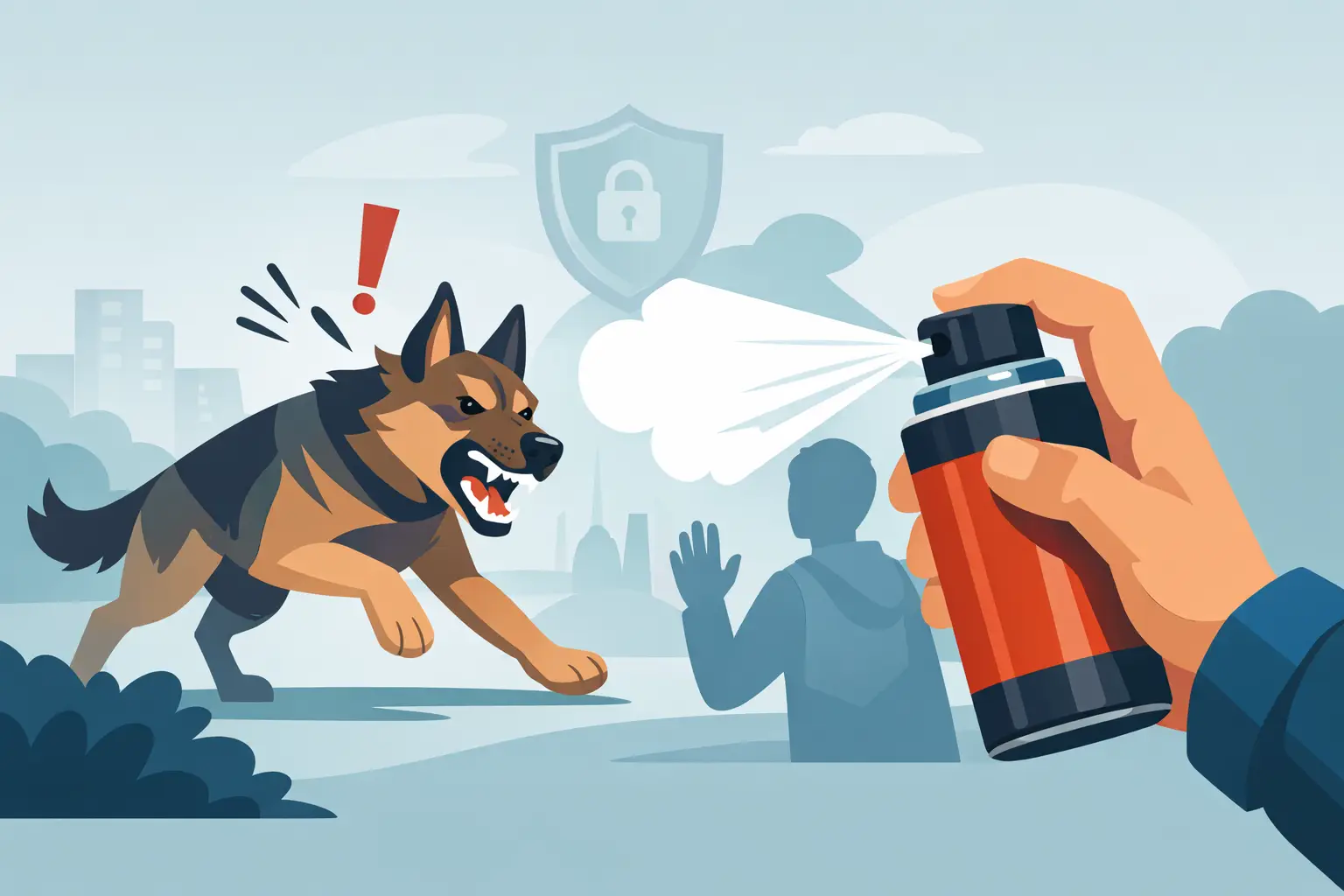
A loose dog can change your day fast. One second you are walking, jogging, delivering a package, or getting to your car, and the next you are dealing with barking, charging, or aggressive posturing. This dog repellent spray guide is built for that moment – the one where clear decisions matter and hesitation can cost you.
The goal is simple: create distance, stop the approach, and give yourself time to get safe. That is why dog repellent spray has become a practical tool for people who take personal security seriously. It is compact, fast to deploy, and designed to interrupt aggressive behavior without relying on physical force.
What dog repellent spray is designed to do
Dog repellent spray is not a magic fix, and it is not a substitute for awareness. It is a defensive tool meant to deter an attacking or advancing dog by causing temporary discomfort to the eyes, nose, and respiratory system. That brief disruption is what gives you the opening to back away, move to shelter, or end the encounter before it turns into a bite.
That distinction matters. A lot of people assume any spray on the market works the same way, but performance can vary based on formula strength, spray pattern, range, and how quickly it can be accessed under stress. If you are choosing one for real-world protection, those details are not small.
Dog repellent spray guide: what to look for
The best choice depends on how and where you plan to carry it. A runner may need something ultra-light and easy to grip. A dog walker may want more range. Someone working outdoors or making deliveries may care most about quick access and reliability in changing weather.
Spray pattern matters more than most people think
A stream usually offers better range and is less likely to blow back in light wind. That can make it a strong option for outdoor carry. The trade-off is that it requires more precise aim.
A fog or cone pattern can be easier to land under stress because it covers a wider area. The downside is that it may be more affected by wind, which can matter a lot if you are using it outside on a breezy day.
There is no universal winner here. If you expect close-range encounters in tight spaces, a wider pattern may feel more forgiving. If you are concerned about distance and outdoor conditions, a stream often makes more sense.
Range is a safety feature
A short-range spray can still work, but it gives you less margin. More range means you may be able to stop a dog before it gets close enough to make contact. For many buyers, that extra distance is the difference between feeling prepared and feeling exposed.
Still, longer range is only useful if the canister is easy to control. A strong stream from a poorly designed unit is not much help if it is awkward to activate or hard to aim.
Size affects whether you actually carry it
People often buy the largest can they can find, then leave it at home because it is bulky. A smaller unit that stays with you is usually more useful than a bigger one sitting in a drawer.
Think honestly about your routine. If it needs to fit in a pocket, attach to a keychain, or ride comfortably during walks, size matters. Consistent carry is part of real preparedness.
Safety features should not slow you down
A flip-top safety or similar design can help prevent accidental discharge while still allowing fast use. That balance matters. You want protection that stays secure during daily carry but can be deployed in one smooth motion when needed.
Before carrying any spray, get familiar with how the safety mechanism works. Under pressure, fine motor skills drop. If the design feels confusing now, it will not improve when your heart rate spikes.
When dog repellent spray makes sense
This kind of spray is most useful for people who may encounter unfamiliar dogs during normal daily activities. Walkers, runners, cyclists, delivery drivers, rideshare drivers, landscapers, and homeowners all face situations where an unsecured dog can become a real threat.
It can also make sense for people who walk their own pets. Even a well-behaved dog can be put at risk by an aggressive off-leash animal. In those situations, having a deterrent can help protect both you and your pet without forcing you into a physical struggle.
That said, repellent spray works best as one layer of a broader safety mindset. Awareness, distance, verbal commands, and route choices still matter. The spray is there for the moment when those precautions are not enough.
How to use it effectively under pressure
When a dog is acting aggressively, time feels compressed. The key is keeping your response simple.
If possible, create space first. Avoid sudden frantic movement that may escalate the chase instinct. Stand your ground as much as you safely can, keep the dog in view, and prepare the spray before the animal closes too much distance.
Aim toward the face, especially the eyes and nose area, and use a short burst. You do not need to empty the canister all at once. The objective is to interrupt the advance, not keep spraying longer than necessary.
Once the dog breaks off or hesitates, move away steadily. Get behind a barrier if one is available, such as a car, fence, gate, or doorway. Then leave the area and contact local authorities if the situation calls for it, especially if there was an attempted attack or the dog remains loose.
What people get wrong about dog attacks
One common mistake is waiting too long because they hope the dog will stop on its own. Sometimes it does. Sometimes it does not. If a dog is charging, showing teeth, snarling, or closing distance aggressively, that is not the time to second-guess your safety.
Another mistake is carrying spray without ever practicing access. Defensive tools are only useful if you can reach them quickly. If your repellent is buried in a bag, tangled in gear, or fitted with a safety you have never tested, response time suffers.
People also underestimate environmental factors. Wind can change your plan. Tight hallways or entryways may reduce your available space. If you are holding a leash, groceries, or a phone, deployment becomes harder. Real preparedness means thinking about those details before you need the product.
Legal and practical considerations
Laws on defensive sprays can vary by state and local area, so it is wise to review the rules where you live and where you travel. Pay attention to purchase restrictions, carry rules, and any limits on formula strength or container size.
You should also check the expiration date. Spray products do not last forever, and pressure or potency can decline over time. Replacing an expired unit is basic maintenance, not an extra step.
Storage matters too. Extreme heat can damage canisters, and careless storage can create safety issues. Keep it secured, accessible, and in a condition you trust.
Choosing with confidence, not guesswork
A strong dog repellent spray guide should leave you with more than product specs. It should help you choose based on your actual risk, not marketing language. Ask yourself where encounters are most likely, how you prefer to carry, what kind of range you need, and whether you can operate the spray quickly.
If you are buying for daily personal protection, simplicity usually wins. You want a unit that feels natural in hand, has a reliable safety mechanism, and offers enough range to create a meaningful buffer. Fancy features mean very little if the product is slow to access or hard to control.
For many people, affordability matters too, and it should. Personal security should not feel out of reach. Reliable defensive tools need to be practical for everyday people, not just specialists. That is part of what makes brands like Elite Warrior Defense relevant to customers who want straightforward protection they can actually carry and use.
The best setup is the one you will keep with you, understand fully, and trust when things get tense. Confidence comes from preparation, not luck. If a loose or aggressive dog ever forces a split-second decision, having the right spray in reach can turn a dangerous moment into one you walk away from safely.