
A dark parking lot, a quiet neighborhood sidewalk, a trail that looked familiar in daylight – these are the moments when preparation matters. The right night walking safety devices do more than make you feel better. They improve visibility, buy you time, draw attention fast, and help you stay in control when a routine walk stops feeling routine.
Not every device solves the same problem, and that is where many people get it wrong. Some tools help you be seen. Some help you assess what is ahead. Some are built to create distance and stop a threat. If you walk at night for exercise, commuting, dog walks, campus travel, or shift work, your setup should match the real conditions you face.
The best gear is not the gear with the longest feature list. It is the gear you will actually carry, reach quickly, and use under stress. That means size matters, placement matters, and simple operation matters more than fancy packaging.
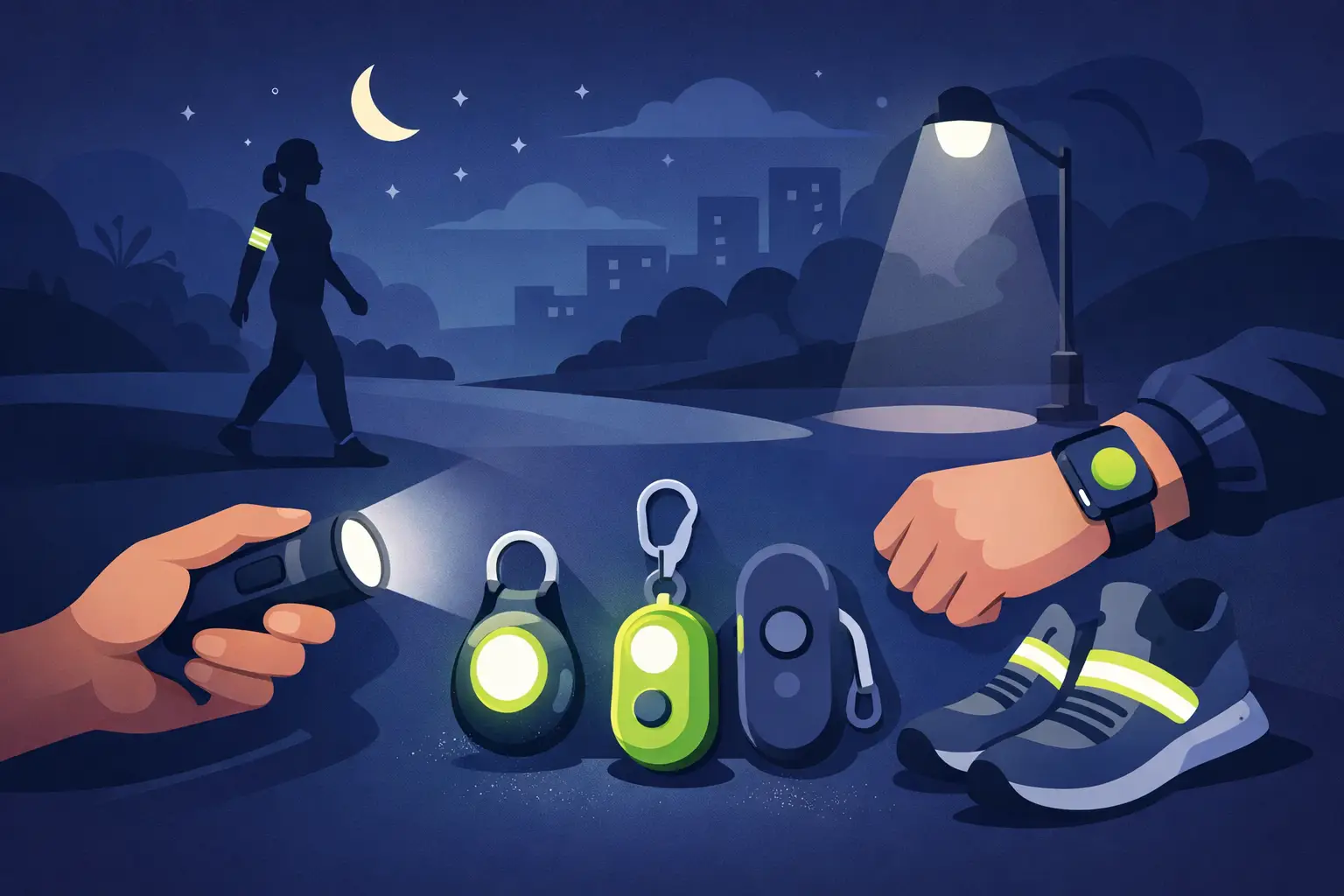
A solid nighttime safety setup usually covers three jobs. First, you want visibility so drivers, cyclists, and other pedestrians notice you sooner. Second, you want awareness so you can identify hazards before they are close. Third, you want a response option if a person or animal becomes a direct threat.
That is why one device is rarely enough. A flashlight can help you see, but it does not replace a loud alarm. Pepper spray can create distance, but it does not make you more visible to traffic. The strongest approach is layered, not overloaded.
If drivers cannot see you, they cannot avoid you. That sounds obvious, but low-light visibility is one of the biggest risks on evening walks. Clip-on safety lights, flashing LED markers, and reflective wearables are some of the easiest upgrades you can make.
A small strobe or clip light works well because it asks very little from you. You attach it to a jacket, waistband, backpack, or dog leash and leave it there. Flashing mode is often better than steady mode in areas with vehicle traffic because it catches attention faster. Reflective bands help too, but they depend on someone else shining light your way. Active lighting puts more control in your hands.
This type of device is especially valuable for runners, dog walkers, and anyone near intersections or roads without great street lighting. The trade-off is simple. Visibility tools help prevent accidents, but they do not stop a determined attacker. They are part of the foundation, not the full plan.
A dependable flashlight belongs near the top of the list. It helps you spot uneven pavement, identify someone ahead, check around parked cars, and avoid walking blindly into a bad situation. Brightness matters, but usability matters more. If a flashlight is too bulky for your routine, it will end up left behind.
Look for a model that fits comfortably in one hand and activates fast. Many people prefer a compact tactical-style flashlight because it combines a focused beam with easy carry. A strong beam can also disrupt someone’s vision for a moment, which may give you time to change direction or create distance.
There is one important trade-off here. A flashlight is excellent for awareness and can be useful in a confrontation, but it is not a substitute for a dedicated self-defense tool. Think of it as a way to reduce surprises and improve decision-making before a problem escalates.
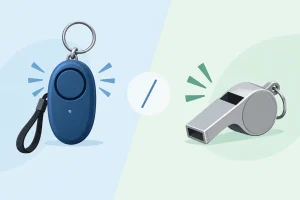
A personal alarm is one of the smartest choices for people who want a non-contact safety option. When activated, it produces a loud sound designed to draw attention and pressure an aggressor to back off. It can also help first responders, neighbors, or passersby locate you faster.
This makes alarms especially useful for students, older adults, solo walkers, and anyone who wants a simple device with almost no learning curve. In many cases, ease of use is the deciding factor. Under stress, a one-step alarm is often easier to trigger than a tool that requires precise aim or close contact.
The limitation is that alarms depend on nearby people hearing and responding. In a crowded area, that can be a major advantage. On a quiet trail or empty industrial block, it may not be enough by itself. That is why alarms are often best paired with a light or a self-defense option.
When the concern is a direct personal threat, pepper spray remains one of the most practical tools available. It is compact, affordable, and designed to create distance by causing intense irritation to the eyes and respiratory system. For many night walkers, that combination of portability and stopping power makes it a core part of their carry.
Pepper gel is also worth considering. It tends to have less airborne spread than traditional spray, which can make it a better fit in windy conditions or tighter spaces. That said, gel may require more precise aim. Spray can be more forgiving in close, fast-moving situations, but it may be more affected by the environment. This is a classic it-depends choice.
Whichever version you choose, access is everything. It should be carried where your hand can reach it immediately, not buried inside a bag. And like any defensive tool, it works better when you know how to deploy it before you need it. Confidence comes from familiarity, not just ownership.
Some walkers prefer stun guns or stun batons as an added layer of defense. These tools can be effective, but they come with a serious consideration: they generally require close proximity to the threat. That makes them less about early intervention and more about last-resort response.
A compact stun gun may appeal to people who want a strong deterrent in a small package. A stun baton adds reach, which can be an advantage, but it is also less discreet and less convenient for casual walks. In real life, the best tool is the one you can carry consistently without hesitation.
Before choosing a stun device, think honestly about your walking routine. Are you moving through parking structures at night? Walking a dog in a suburban neighborhood? Crossing a dim campus lot after work? Your environment should shape your choices, along with local laws and your comfort level using the tool.
The best night walking safety devices for you depend on where you walk, how long you are out, and what risks show up most often. A person walking city blocks near traffic needs a different setup than someone walking a dog near wooded areas. The first may prioritize visibility and a personal alarm. The second may care more about flashlight range and animal deterrence.
Your clothing matters too. If you wear athletic gear with limited pockets, compact tools become more important. If you carry a bag every night, you have more room, but you still need your primary device somewhere immediately accessible. A defensive tool in the bottom of a tote bag will not help when seconds count.
It also pays to think in layers. A small safety light plus a flashlight plus pepper spray is a practical combination for many adults. It covers visibility, awareness, and response without becoming cumbersome. Elite Warrior Defense focuses on exactly this kind of practical protection – tools that are accessible, easy to carry, and built for real-world use rather than shelf appeal.
The biggest mistake is relying on one item to do everything. No device can replace awareness, route choice, and quick access. Another common problem is buying something that feels powerful but is too inconvenient to carry daily. Consistency beats theory every time.
People also underestimate how stress changes behavior. Fine motor skills drop. Decision-making narrows. That is why simple tools usually outperform complicated ones. If a device takes too many steps to activate, it is less dependable when adrenaline hits.
And finally, there is the habit problem. Safety tools only help if they are charged, legal where you live, and ready to use. Test lights. Check batteries. Replace expired spray. Practice reaching for your device without looking down. Small habits create real confidence.
There is a difference between being prepared and being fearful. Carrying the right tools does not mean expecting the worst every time you step outside. It means respecting the fact that bad lighting, low traffic, isolated spaces, and unpredictable encounters can change the equation fast.
Good safety gear supports calm, not panic. It lets you walk with a clearer head because you know you have options if something shifts. That confidence matters. It changes how quickly you notice problems, how decisively you respond, and how much control you keep in moments that feel uncertain.
If you walk at night regularly, your gear should earn its place by being easy to carry, fast to access, and useful in the situations you are most likely to face. Start with visibility. Add awareness. Finish with a response tool that matches your comfort level and local laws. The goal is not to carry more. The goal is to walk smarter, with protection that is ready when you are.


YOU’RE IN!
Use this code on every order
🎉
Here’s Your Code!
Use it now an on every future order.
YOUR DISCOUNT CODE
We also sent this code to your email for safekeeping.
EXCLUSIVE OFFER
Every order – not just your first!
Unlock Your Discount Instantly
Enter your email below and your personal 15% discount code appears right here – no need to check your inbox.
🔒 We respect your privacy. Unsubscribe anytime.