A dark parking lot, an unlit apartment walkway, a roadside breakdown – these are moments when a phone screen is not enough. This guide to personal safety lights will help you choose a light you can reach quickly, operate under stress, and carry every day without giving it a second thought.
A personal safety light is not about looking tactical. It is about seeing hazards sooner, being seen by others, and creating a moment of attention when something does not feel right. The best choice is the one that fits your routine and stays with you when you need it.
What Personal Safety Lights Actually Do
A dependable safety light gives you three practical advantages. First, it helps you identify what is ahead of you: uneven pavement, a dark stairwell, a car approaching from a distance, or someone standing near your vehicle. Seeing clearly can prevent injuries and help you make better decisions before you get too close.
Second, a light makes you more visible. A bright beam or flashing mode can help drivers, cyclists, neighbors, and first responders notice you. That matters when walking a dog near traffic, waiting for a ride, jogging before sunrise, or dealing with a vehicle issue on the shoulder.
Third, some safety lights include a strobe or high-output setting intended to create a brief visual distraction. This is not a guarantee of protection and should never replace awareness, distance, or a plan to leave. Used properly, however, a bright light can draw attention to a situation and give you a second to move toward safety.
Think of a safety light as part of a layered personal-security plan. It works especially well alongside good situational awareness, charged communication devices, and self-defense tools you understand how to use.
Guide to Personal Safety Lights: Choose the Right Features
The right light depends on where and how you travel. Someone walking from a garage to an office needs a different setup than a runner using trails before dawn or a driver who spends long hours on the road. Focus on real use, not just the biggest number on the package.
Brightness: Enough Light for Your Environment
Brightness is typically measured in lumens. Higher output can light up a wider or longer area, but more is not always better. An extremely powerful light may be larger, drain its battery faster, and feel excessive for short walks through well-lit neighborhoods.
For close-range tasks, such as finding keys, checking a doorway, or walking through a dim lot, a compact light with a useful medium setting is often the most practical choice. If you regularly walk in poorly lit areas, work late shifts, hike, or want a stronger beam for vehicle emergencies, choose a higher-output model with a focused beam.
Pay attention to usable brightness, not only maximum brightness. A light that runs at its highest setting for a few minutes before dimming may be less helpful than one that provides steady output for a full walk home.
Controls You Can Use Under Stress
Complicated controls can become a problem when your hands are cold, you are carrying groceries, or you are uneasy about someone nearby. Look for a button or switch you can find by feel. A textured button, a tail switch, or a simple press-and-hold activation can make a real difference.
Consider whether the light turns on immediately or requires cycling through several modes. Multiple modes are useful, but you should not need to click through low, medium, high, and flash just to get the beam you need. Practice the operation at home until it feels automatic.
Strobe and Flashing Modes
A flashing mode can help make you visible in low-light traffic situations. A strobe mode may also draw attention if you need help quickly. Still, there is a trade-off: strobe patterns can be disorienting for the user as well as the person facing the light, particularly in close quarters or reflective spaces.
Choose a light with a strobe option if it fits your comfort level, but do not buy one solely because it has that feature. A steady, bright beam that you can activate instantly is the foundation. The strobe is an additional option, not your whole plan.
Size, Carry Method, and Durability
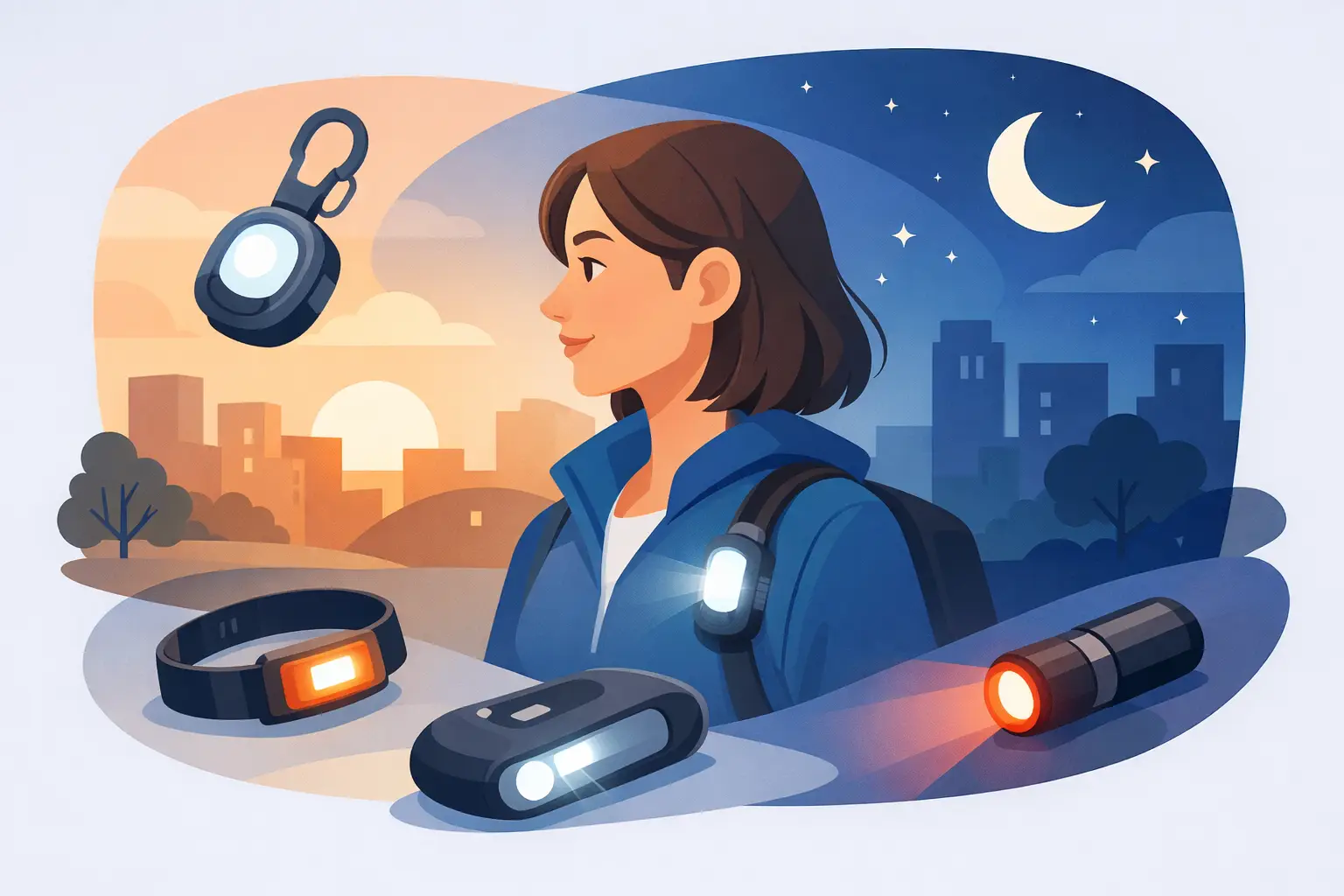
A safety tool left in a drawer cannot help you outside. Compact keychain lights are easy to keep with you, but they may have shorter battery life and smaller controls. Pocket-sized flashlights provide more grip and output, yet they need a secure place in a purse, pocket, jacket, or vehicle console.
For daily carry, consider a clip, lanyard point, or keyring attachment. A light that stays upright in a purse or has a consistent location in your bag is easier to find than one loose among receipts and chargers. If you work outdoors, walk in rain, or keep a light in your vehicle, look for a durable housing and weather-resistant design.
Battery Choices: Rechargeable vs. Replaceable
Rechargeable personal safety lights are convenient for frequent users. You can top them off with a charging cable, making them a strong option for commuters, dog walkers, and anyone who already charges devices regularly. The responsibility is simple: build charging into your routine. A powerful rechargeable light is of little use when it has been sitting empty for weeks.
Replaceable-battery lights are a practical choice for emergency kits, glove compartments, and locations where charging may not be available. Keeping fresh batteries nearby can provide peace of mind during power outages or long trips. The drawback is maintenance: batteries can leak or lose power over time, so inspect stored lights regularly.
There is no single winner. Choose rechargeable if you will use the light often and can maintain it. Choose replaceable batteries if long-term storage and backup readiness are your priority.
Carry Your Light Where It Can Be Reached
Accessibility matters more than most people realize. If your light is buried at the bottom of a backpack, it may not be available when you are approaching a dark entrance or hearing something unexpected behind you.
Create a consistent carry habit. Keep it clipped to the same pocket, attached to a keyring, secured in an outer purse pocket, or placed in a designated vehicle compartment. Avoid leaving it visible on a car seat, where it can attract attention or be lost under other items.
When walking after dark, have the light ready before you enter a poorly lit space. You do not need to shine it at everyone you pass. Use it to scan your path, locate your car, and identify obstacles. If someone makes you uncomfortable, increase distance, move toward people or a staffed location, and use the light to help you see your route out.
Build a Simple Safety-Light Routine
A safety light becomes more valuable when it is part of a habit, not an item you remember only after something goes wrong. Before leaving work late, check that the light is charged or functioning. Before a road trip, test the beam and confirm that your vehicle light is in its usual spot.
Use your light during ordinary tasks too. Take it on evening dog walks, use it to check the area around your vehicle, and keep it accessible during neighborhood power outages. Familiarity builds confidence. You want the controls to feel natural before a stressful moment arrives.
It is also wise to avoid tunnel vision. A bright beam can help you see, but do not become so focused on the light that you stop noticing your surroundings. Keep your head up, avoid distractions when possible, and trust your instincts when a place or person feels wrong.
When a Safety Light Is Not Enough
Personal safety lights are useful tools, but they have limits. They cannot replace calling for help, moving to a safer area, locking your doors, or paying attention to warning signs. They are also not a substitute for understanding local laws and carrying any self-defense product responsibly.
If your safety plan includes pepper spray, a personal alarm, or another defense tool, practice carrying each item so they do not compete for the same pocket or hand. Elite Warrior Defense believes personal security should be practical, accessible, and ready when you are – not complicated or intimidating.
The strongest safety light is the one you carry consistently, test regularly, and can activate without hesitation. Put it where your hand can find it, learn what each setting does, and let that small preparation make your next walk to the car feel more controlled.