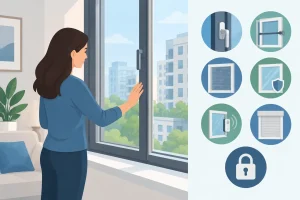
A ground-floor window left cracked for fresh air, a child opening the front door, an elderly parent moving through the house – these are moments when a simple alert can make a real difference. When comparing window alarms vs door chimes, the right choice comes down to what you need to know: whether an entry point has been opened, or whether someone has crossed through it.
Both devices are affordable, easy to use, and valuable additions to a home safety plan. But they serve different purposes. A window alarm is designed to warn you of an opened or disturbed window or door. A door chime is designed to notify you when a door opens, usually without the piercing alarm sound. Knowing the difference helps you place the right protection where it matters most.
What Window Alarms Do Best
Most window alarms use two magnetic pieces: one attaches to the window frame and the other attaches to the moving window. When the window opens and the magnets separate, the device sounds an alarm. Many models can also be installed on doors, cabinets, sliding glass doors, and other entry points.
Their greatest strength is deterrence. A loud alarm immediately draws attention to an attempted entry. Someone trying to enter through a protected window is no longer working quietly, and that loss of privacy can be enough to make an intruder leave.
Window alarms are especially useful for accessible entry points, including first-floor windows, basement windows, garage side doors, rear doors, and sliding patio doors. They also give renters a practical way to add security without installing a permanent, professionally monitored system.
A window alarm is not a substitute for sturdy locks, reinforced frames, exterior lighting, or good habits. It is an additional layer that gives you a loud, immediate warning when an entry point is breached. For many households, that warning is exactly what turns uncertainty into time to react.
Where Window Alarms Make the Most Sense
Prioritize the places an intruder could reach without much effort. Ground-level windows are an obvious starting point, but do not overlook a window near a fence, porch roof, air-conditioning unit, or deck that makes climbing easier.
Think beyond burglary as well. Window alarms can alert you when a young child opens a window that should stay secured. They can also help monitor a door leading to a pool area, workshop, storage room, or garage. The sound is forceful by design, so it works best when you want the opening itself to trigger an urgent response.
What Door Chimes Do Best
A door chime makes a tone when a door opens. It is generally a notification tool rather than a deterrent device. Depending on the model and setup, the chime may sound at the door, through a receiver elsewhere in the home, or both.
That quieter alert is useful in situations where you need awareness without panic. A door chime can tell you when a customer enters a small office, when a child opens the front door after school, or when an older family member heads toward an exterior exit. It can also be useful for caregivers who need to monitor movement without making the home feel like a high-security facility.
For a home with frequent visitors, a chime is often more practical than an alarm. You do not want a loud siren every time someone brings in groceries or lets the dog out. You do want to know when the door opens, particularly if you are in a basement, backyard, home office, or another part of the house where you might not hear it.
The Limits of a Door Chime
A chime should not be mistaken for a strong intrusion deterrent. A person entering through a door may hear the tone, but a standard chime is not meant to frighten them off or wake the whole household. It also depends on someone being within hearing range and recognizing that the sound requires attention.
That does not make it less useful. It simply means its job is different. Door chimes are about awareness and supervision. Window alarms are about creating a loud response to unauthorized access.
Window Alarms vs Door Chimes: The Key Differences
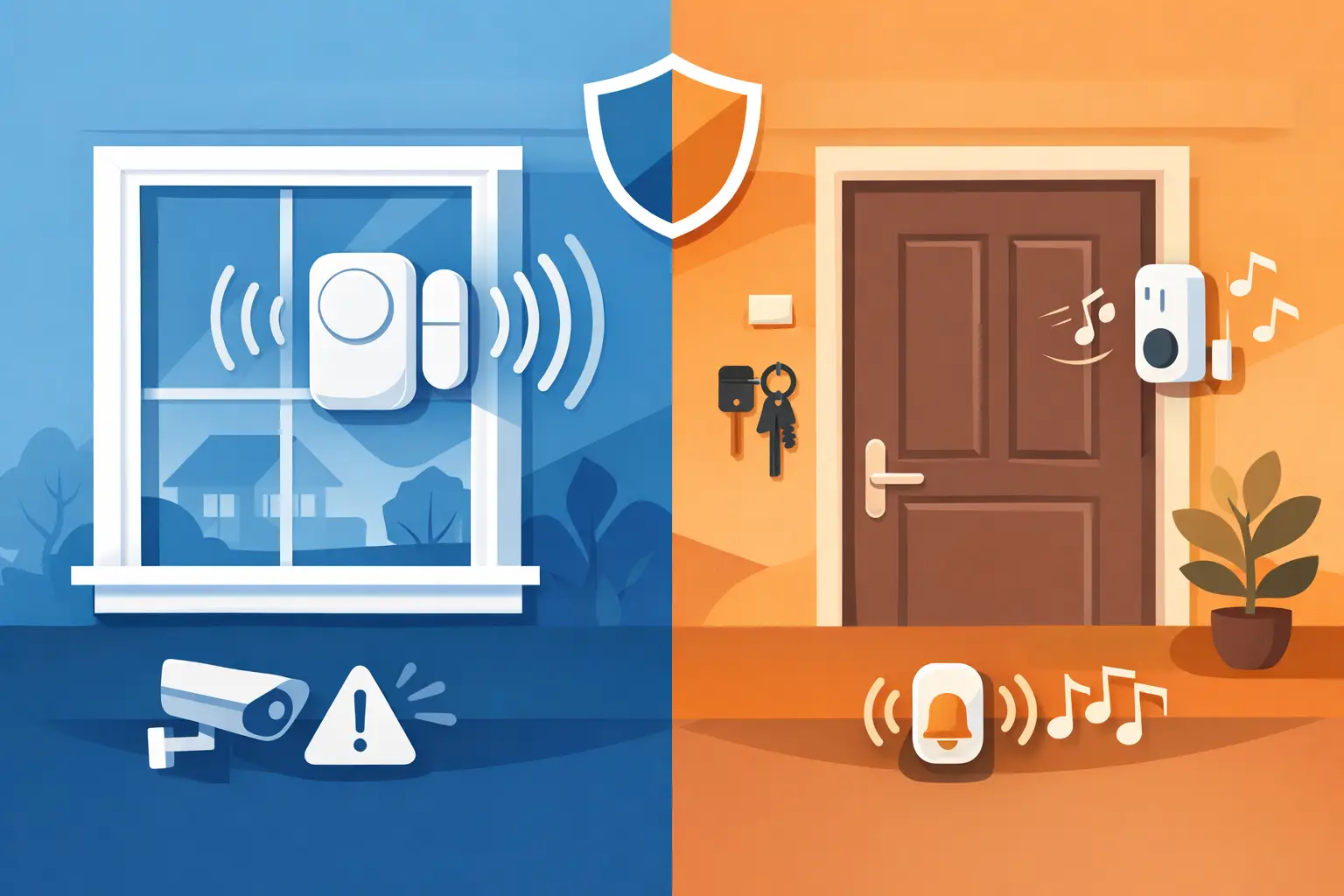
The simplest way to compare window alarms vs door chimes is to focus on the response you want. If an opening should produce a loud warning and potentially discourage an intruder, choose an alarm. If an opening should produce a manageable notification so you can check what is happening, choose a chime.
Sound level is the first major difference. Window alarms commonly use a high-decibel siren intended to be heard throughout the home and, in some cases, beyond it. Door chimes use a softer, recognizable tone. This makes chimes better for daily traffic and alarms better for vulnerable entry points.
The second difference is purpose. An alarm protects an entry point by making unauthorized opening difficult to ignore. A chime helps you monitor activity. A family may use a chime on the main entrance during the day and an alarm on a basement window that should never be opened without permission.
The third difference is how people react to them. A door chime tells you to check. A window alarm tells everyone nearby that something needs immediate attention. Neither approach is universally better. The best choice depends on the opening, who uses it, and the level of risk involved.
When to Choose an Alarm, a Chime, or Both
Choose a window or door alarm when the entry point is rarely used, hidden from view, accessible from outside, or connected to an area where you want a strong warning. Examples include basement windows, patio doors, rear entrances, detached garages, and doors leading from the house into a garage.
Choose a door chime when the door is used regularly and you need to know when it opens. This can be helpful at a front door, a home-based business entrance, or an exterior door used by children and caregivers. It is also a practical choice when you want to monitor an exit without startling pets or disrupting normal routines.
Using both can be the smart move. A chime can provide everyday awareness at a frequently used door, while an alarm can be armed at night or whenever the home is unoccupied. If you use a device with selectable chime and alarm modes, you may be able to adjust the response as your routine changes.
This layered approach is especially helpful for families. During busy daytime hours, a chime can keep you aware of people coming and going. At night, a loud alarm on less-used entry points adds another barrier between your household and a potential threat.
Installation and Placement Tips That Matter
Before placing any magnetic alarm or chime sensor, clean and dry both surfaces. The sensor and magnet need to remain aligned when the door or window is closed. If the gap is too wide, or if the pieces shift over time, the device may not trigger reliably.
Test every unit after installation. Open the window or door slowly, then test it again at normal speed. Make sure everyone in the household knows what the sound means and how to turn the device off when necessary. A security device only helps when the people relying on it understand how it works.
Avoid placing a loud alarm on an entry point that family members constantly use unless it has an easy mode switch or can be disarmed consistently. False alarms can lead people to ignore the sound, which defeats the purpose. Put your strongest alerts where they will remain meaningful.
Battery checks belong in your regular home safety routine. Test devices monthly, replace batteries when performance weakens, and inspect adhesive mounts after major temperature changes. Affordable security works best when it is maintained.
Build Protection Around Your Real Routine
Home security is not one product or one habit. It is a set of choices that makes your home harder to enter unnoticed and makes your family more prepared to respond. Door and window alarms, chimes, quality locks, outdoor lighting, and clear household rules all work better together.
Elite Warrior Defense believes practical protection should be within reach, not reserved for expensive systems or complicated installations. Start with the entry point that concerns you most, test your setup, and expand from there. The best alert is the one that gives you notice early enough to protect the people who count on you.