A collision can turn a familiar vehicle into a confined space in seconds. A jammed door, locked seat belt, smoke, rising water, or damaged electrical system can make a normal exit impossible. Vehicle emergency escape tools give you a practical backup plan when time matters most – but only if you choose the right tools and place them where you can reach them under stress.
The goal is not to fill your car with gadgets. It is to prepare for the few problems that can trap an occupant: a seat belt that will not release, a side window that will not open, or an emergency that makes the door unusable. A compact, dependable escape tool can be one of the simplest safety upgrades you make.
What Vehicle Emergency Escape Tools Should Do
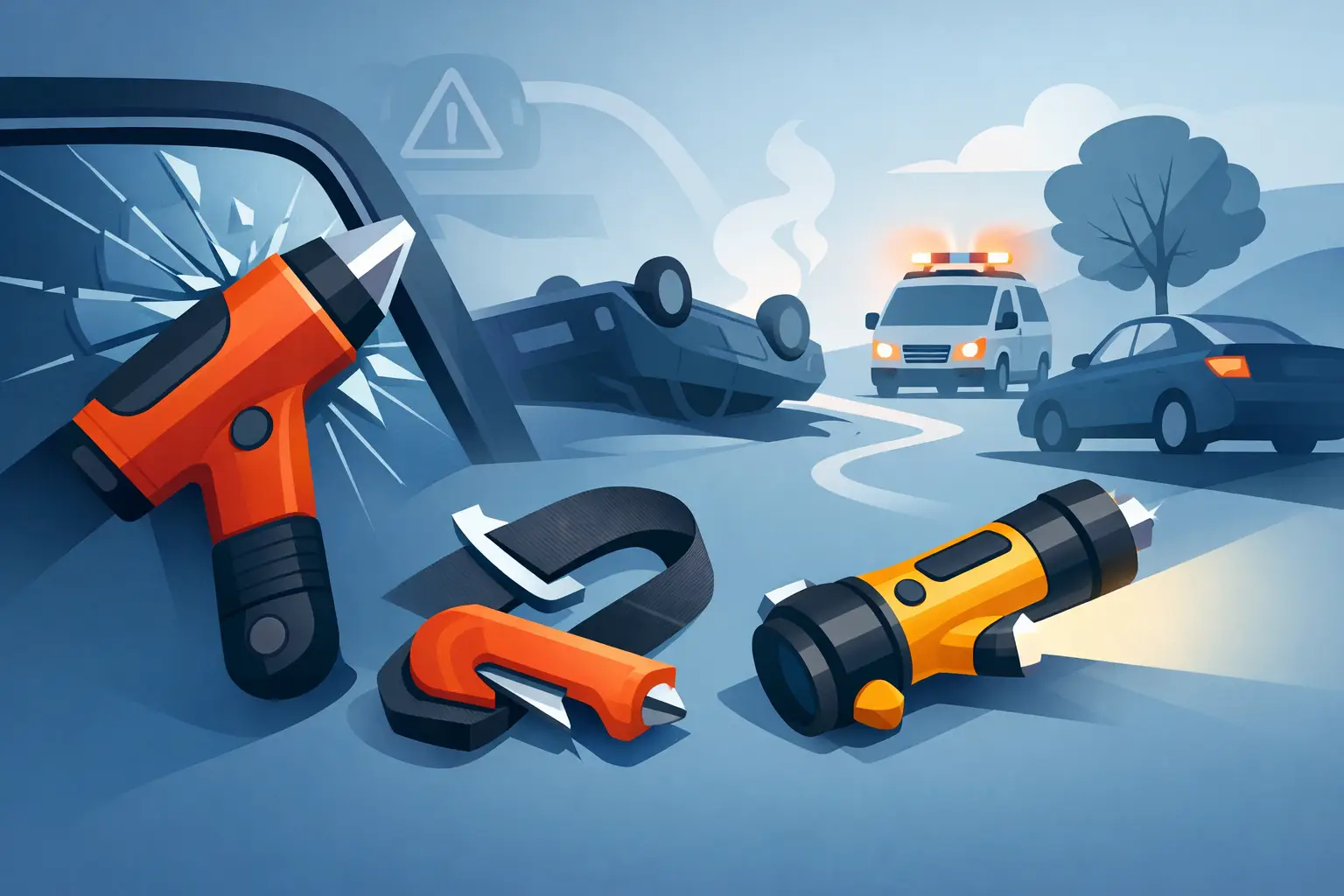
A useful vehicle escape tool handles two jobs: cutting a jammed seat belt and breaking an accessible side window. Many models combine both functions in one compact device, which makes sense when you need to act quickly and with limited movement.
A seat belt cutter uses a protected blade set inside a narrow slot. You guide the belt into that slot and pull firmly to cut the webbing. The protected design matters because a loose exposed blade is not something you want stored near passengers, children, or everyday gear.
A window breaker uses a hardened steel point or spring-loaded punch to concentrate force in a tiny area of glass. It is designed for the side windows, not the windshield. Windshields are laminated safety glass and are extremely difficult to break with a handheld emergency tool. Many newer vehicles also use laminated glass in some side windows, so do not assume every window will respond the same way.
That detail is worth checking before an emergency happens. Look in your owner’s manual or inspect the glass marking in a calm moment. If your rear side windows or rear windshield use tempered glass, they may be the most realistic emergency exit points. Knowing this now prevents hesitation later.
Where to Keep Your Vehicle Escape Tool
The best escape tool is the one you can reach while buckled in, upside down, injured, or sitting in a dark vehicle. The center console can work only if it is close enough and easy to open. A locked glove compartment, deep cargo bag, trunk, or under-seat storage area is usually a poor choice.
Mount the tool within arm’s reach of the driver’s seat, such as on the center console, lower dashboard, door pocket, or a secure seat-belt-mounted holder. If your vehicle has multiple regular occupants, consider a tool for the front passenger as well. A crash can block one person from reaching the other side of the cabin.
Avoid leaving a tool loose in a cup holder or door pocket if it can become a projectile during hard braking or a collision. Use the supplied mount or a secure holder. Also make sure the tool does not interfere with air bags, pedals, seat adjustments, door handles, or normal vehicle controls.
A small tool on your key ring can be useful when you drive different vehicles, but it should not be your only plan. Keys may be thrown out of reach in a crash, left in the ignition, or separated from you during an evacuation. A mounted tool in the cabin provides more reliable access.
How to Use an Escape Tool Under Pressure
You should never need to learn a safety tool for the first time during an emergency. Take a minute to hold it, identify the cutter, and understand whether the glass breaker is a spring-loaded button, exposed pointed tip, or concealed strike mechanism. Read the product instructions and show other adult drivers in your household where it is stored.
If the seat belt will not release, take a breath and locate the belt section across your torso or hip. Place the webbing into the cutter slot and pull the tool with a firm, controlled motion. Keep the blade slot away from your body and from a child passenger. Once free, move toward the nearest usable exit immediately.
If a door will not open and a side window is your exit, remove any loose items around you if time permits. Aim for a lower corner of the side window rather than the center. Corner areas are generally more effective for breaking tempered glass. Strike or press according to the tool’s instructions, protect your eyes and face with an arm if possible, then clear remaining glass carefully before climbing out.
Do not waste time striking the windshield. It is built to stay intact in a crash. Do not repeatedly hit the same window if it clearly will not break, either. Move to another exit, try a different side window, or use a door if conditions allow. A prepared response is decisive, but it is never reckless.
If Your Vehicle Enters Water
Water emergencies create panic because the car may sink quickly or begin to fill. Your priority is getting out before the water pressure makes doors difficult or impossible to open. If the vehicle is still afloat, unbuckle first, attempt to open a window immediately, and exit through that opening. Power windows may still work for a short time after water entry, so try them first.
If the window will not open, use the glass breaker on a side window. Leave the windshield alone. Help children out first when possible, but do not unbuckle them before you have a clear exit plan if doing so could make it harder to control or locate them in a moving, flooding vehicle.
The exact sequence can depend on the vehicle’s position, the speed of flooding, passenger needs, and the available exits. What does not change is the need for a tool that is accessible before water reaches the cabin.
Choose Tools for Reliability, Not Novelty
An escape tool is emergency equipment, not a novelty keychain. Look for a sturdy body, a clearly protected belt cutter, and a hardened steel or spring-loaded window-breaking mechanism. A bright color can make the tool easier to find in a dark interior. A mount is equally valuable because it keeps the tool in the same location every time.
Be cautious with tools that make broad claims without explaining how they work. Some compact devices rely on a spring-loaded punch that must be pressed squarely against the glass. Others use a pointed striker that requires a controlled impact. Neither design is automatically better, but you need to know which one you carry and whether you can operate it with one hand.
Battery-powered devices can add features such as flashlights or alarms, but the escape function should not depend on a battery. In a crash, cold weather, water exposure, or a dead battery can take those extras off the table. Mechanical cutting and glass-breaking functions are the foundation.
Price matters, but this is not the place to buy the cheapest unknown option and forget about it. Choose a purpose-built tool from a security-focused retailer, inspect it periodically, and replace it if the cutter is damaged, the mounting system fails, or the device shows corrosion. Elite Warrior Defense supports practical preparedness with personal safety products that are built around real-world readiness, not false confidence.
Build an Escape Plan for Every Passenger
A tool is only one part of vehicle readiness. Keep your doors unlocked when driving if doing so fits your personal safety situation, and make sure older children understand how to unbuckle and exit safely. Teach them not to play with emergency cutters or glass breakers. These are protective tools, not toys.
For families with car seats, practice the adult’s role in an emergency. You may need to release your own belt, create an exit, then assist a child. Keep bulky storage, sports gear, and loose bags from blocking rear doors or trapping a mounted tool out of reach.
Drivers with limited hand strength, mobility limitations, or injuries should pay special attention to tool design and placement. A spring-loaded punch may be easier for one person, while another may find a larger handled tool easier to grip. The right choice is the one you can operate confidently from your normal seated position.
Your vehicle protects you in most collisions. Air bags, seat belts, and reinforced frames are designed to keep you alive. Vehicle emergency escape tools are there for the rare moment when those protections leave you unable to get out. Mount one where you can reach it, learn how it works, and let that preparation ride quietly with you on every trip.