A rental should feel like home, not like a place where you hesitate at every unexpected sound in the hallway. Renter friendly security devices give you practical ways to strengthen vulnerable entry points, monitor your space, and feel more prepared without drilling holes, replacing locks, or risking your security deposit.
The goal is not to turn an apartment, dorm, or rental house into a fortress. It is to create smart layers of protection that are easy to use, easy to remove, and suited to the way you actually live. Start with the places an intruder would most likely use, then add visibility and everyday safety tools where they make the biggest difference.
What Makes a Security Device Renter Friendly?
A renter-friendly device installs without permanent alterations and can leave with you when your lease ends. Adhesive-backed alarms, battery-powered cameras, portable door locks, pressure-mounted devices, and freestanding safes usually fit that description.
That does not mean every no-drill device is automatically right for every rental. Read your lease and ask your landlord or property manager before changing a lock, mounting a camera in a shared area, or placing equipment that could affect fire safety. A device should never block your own emergency exit or prevent first responders from entering when necessary.
The best choice also depends on your living situation. Someone in a first-floor apartment may prioritize window alarms and privacy curtains. A renter who travels frequently may value a camera and door sensor. A college student may need portable tools that pack easily at the end of the semester.
Renter Friendly Security Devices for Your Doors
Your front door is the first place to focus. A standard lock is only one layer of defense. If the door feels weak, has a loose strike plate, or opens directly into a public hallway, adding a removable backup can provide valuable peace of mind.
Door alarms add an immediate warning
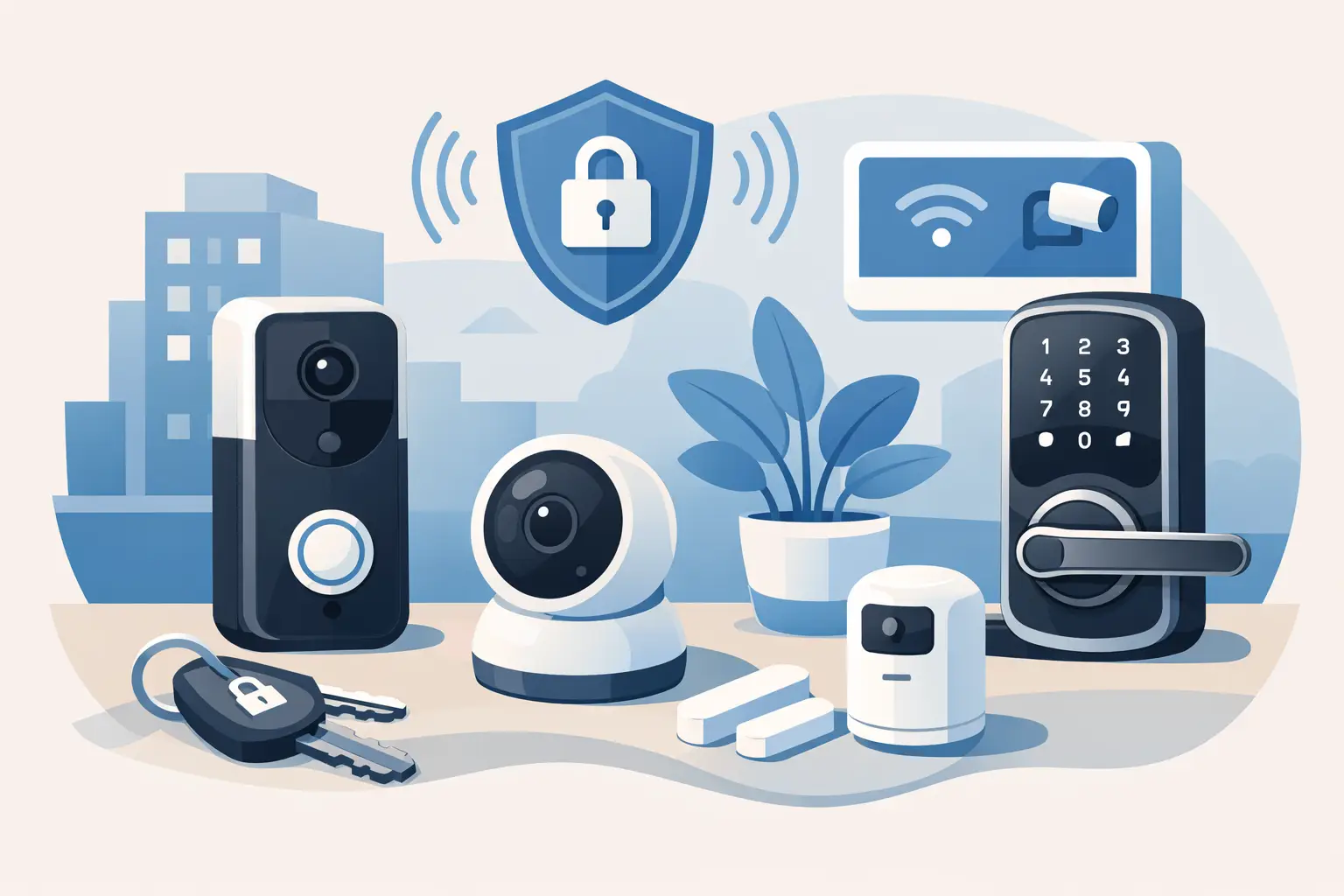
A door alarm uses a sensor and magnet. When the door opens and the connection separates, the device sounds a loud alarm. Many models attach with adhesive, so installation takes minutes and removal is simple when done carefully.
Door alarms are especially useful when you are home sleeping, when children are in the home, or when you want to know if someone has entered while you were away. They do not physically stop a door from opening, but a loud alarm can draw attention and may cause an intruder to leave quickly.
Portable door locks and security bars add resistance
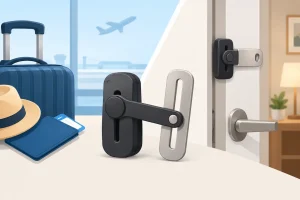
A portable door lock or security bar can make an inward-swinging door harder to force open while you are inside. These devices are commonly used in apartments, hotels, and temporary living spaces because they require no permanent installation.
Use them only while you are inside and only if you can remove them quickly in an emergency. Practice releasing the device before you rely on it at night. Security that traps you during a fire or other emergency is not real protection.
For a door that opens outward, a door alarm and a conversation with your landlord about the existing lock and frame may be the more practical route. Never alter a lock or add a device that violates building rules without permission.
Protect Windows Without Damaging the Frame
Windows are often overlooked, particularly on ground floors, near stairwells, or beside a secluded patio. They can also be an easy point of entry if they are left partially open for ventilation.
Window alarms offer a simple solution. Like door alarms, they sound when the window opens. They are affordable, battery-operated, and can be placed on windows, sliding glass doors, or even cabinets holding medications or valuables.
For sliding windows and doors, a removable security bar or track blocker may add another layer. Measure carefully before buying anything. A poor fit can create a false sense of security, while a properly sized device helps limit movement in the track.
Do not forget visibility. Keep shrubs or outdoor furniture from creating hidden areas near accessible windows if your lease allows you to manage the space. At night, close blinds or curtains so valuable items are not on display. Simple habits support the devices you choose.
Cameras Can Help You See What Is Happening
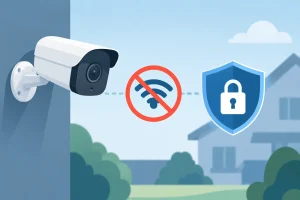
A small indoor security camera can alert you to motion, help you check on pets, and document activity inside your rental. Battery-powered or plug-in models can sit on a shelf, desk, or other flat surface, avoiding wall damage altogether.
Camera placement matters. Aim one at the main entry area or a room where valuables are stored, but avoid private spaces such as bathrooms and guest sleeping areas. If you share your home with roommates, tell them where cameras are placed and obtain consent. Respect for privacy protects everyone in the household.
Outdoor and door-facing cameras require extra care in rentals. Your lease, homeowner association rules, and local laws may limit where cameras can be installed and what they can record. A camera should focus on your own entrance or property, not a neighbor’s windows, private patio, or interior living space.
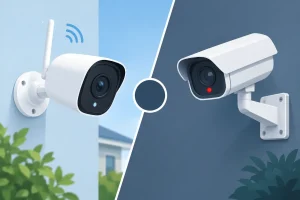
A visible camera may discourage unwanted behavior, while a hidden camera may document it. Neither is a substitute for a secure door, working locks, or calling law enforcement when there is an immediate threat. Think of cameras as awareness tools, not a guarantee.
Dummy cameras have a limited role
Dummy cameras can create the appearance of surveillance at a low cost, but they cannot record evidence or send an alert. They work best as a visible deterrent paired with real alarms, locks, and good lighting. If a suspicious event occurs, a dummy camera cannot tell you what happened.
Build a Layered Plan, Not a Pile of Gadgets
Buying every device available is not the same as being prepared. Strong home security comes from layers that cover different needs: delay, detection, visibility, and response.
Start by walking through your rental as if you were checking it for the first time. Test every lock, inspect window latches, and identify areas that cannot be seen from the street or hallway. Then choose devices that address the weakest points first.
A practical renter setup may include a door alarm for the main entry, window alarms for accessible windows, a portable lock for use while home, and a small indoor camera aimed at the entry. Add a safety light near your bed, in a dark hallway, or by the door so you are not left searching for a flashlight during a power outage or late-night disturbance.
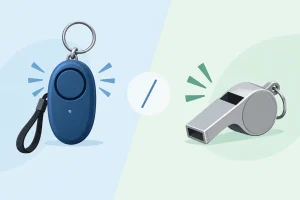
Keep essential items where you can reach them without thinking. Your phone should be charged, emergency contacts should be current, and keys should have a consistent location. If you choose personal safety products such as pepper spray, a stun device, or a tactical pen, learn your local laws and practice safe handling. Keep these tools accessible to responsible adults, but away from children and unauthorized users.
Check the Details Before You Buy
Before selecting any security device, confirm that it works with your door or window style and that its removal method is appropriate for your walls, paint, and trim. Adhesive products can vary widely. Clean surfaces as directed, and test a small, hidden area if you are concerned about paint damage.
Battery life matters, too. A security device with a dead battery is only decoration. Put battery checks on your calendar, especially for alarms, cameras, and lights. Test alarms regularly so you know what they sound like and so others in your household understand what to do if one activates.
Avoid storing every valuable item in one obvious location. A diversion safe can help keep small valuables less conspicuous, but it should blend naturally into your environment and should not be your only method of protection. For high-value items or critical documents, consider the level of protection and access you truly need.
Elite Warrior Defense offers practical security options built around the idea that protection should be accessible, affordable, and ready when you need it. The right device is the one you understand, maintain, and use consistently.
Your rental may be temporary, but your safety should never feel temporary. Choose one vulnerable point to improve this week, test the solution, and build from there. A prepared home sends a clear message: you are paying attention, and you are ready to protect your space.