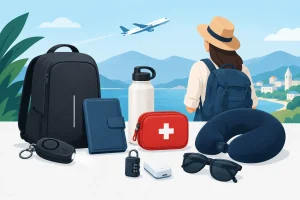
A parking lot can feel routine until it does not. Maybe it is late, your hands are full, and someone is moving too close behind you. In a moment like that, personal sirens provide one immediate advantage: they make it hard for a threatening situation to stay quiet.
A personal siren is a compact alarm designed to emit a piercing sound when activated. It is not meant to replace awareness, good judgment, or other self-defense tools. It is a fast, nonviolent way to create attention, disrupt an aggressor’s focus, and give yourself a better chance to move toward safety.
Why Personal Sirens Belong in a Safety Plan
Most people do not need a complicated safety plan. They need practical tools they can carry, reach, and operate under stress. Personal sirens fit that role well because they require no physical strength, no special skill, and no close contact with another person.
The sound is the point. A loud alarm can startle someone who expected an easy, quiet encounter. It may alert nearby shoppers, neighbors, coworkers, security staff, or passersby. Just as important, it gives you a clear signal to act: create distance, move to a populated area, call 911 if needed, and keep the alarm active while you get help.
That does not mean an alarm will solve every threat. A siren cannot physically stop an attacker, and a loud environment may reduce how noticeable it is. But safety is rarely about relying on one perfect product. It is about adding layers that improve your options before a situation escalates.
For many people, a personal alarm is especially useful when they want a tool that is simple, legal in many settings, and comfortable to carry daily. Students walking across campus, commuters heading to a garage, runners on neighborhood routes, older adults, and parents shopping with children can all benefit from an alarm that is ready in seconds.
How a Personal Siren Works
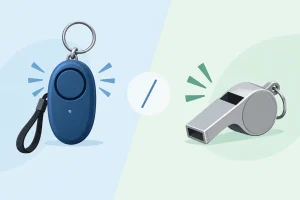
Most personal sirens use a small battery-powered alarm. Depending on the design, you activate it by pulling a pin, pressing a button, or separating part of the device from its keychain attachment. Once activated, the siren produces a sharp, high-decibel sound until the pin is replaced, the button is pressed again, or the device is reset.
Pull-pin designs are popular because activation is straightforward. Grip the body of the alarm, pull the attached pin, and the sound begins. A model with a lanyard or keyring can be useful because it gives you something to hold onto as you move away.
Button-operated alarms can be convenient, but they should have a control that is easy to find without looking. Under stress, fine motor skills can suffer. The best activation method is usually the one you can use immediately with the hand position you naturally have while carrying your keys, bag, or phone.
Some alarms include a flashing light. That feature can make you more visible at night and may help draw attention from a greater distance. Still, the alarm sound should remain the primary consideration. A bright light is helpful, but it is not a substitute for a loud, dependable siren.
Decibels Matter, but So Does Real-World Use
It is natural to look for the highest decibel rating, but the number alone does not tell the whole story. Where you carry the alarm, how quickly you can activate it, and whether it stays powered all matter just as much.
A high-volume alarm buried at the bottom of a backpack is less useful than a slightly less powerful model clipped where you can reach it instantly. Choose a siren that feels secure in your hand and is easy to locate by touch. If you hesitate while trying to find it, you lose the main advantage of carrying it.
Choosing the Right Personal Siren
Start with your routine. The right alarm for a dog walker may be different from the right one for a college student or someone who works late shifts. Think about where you are most likely to use it and what you typically carry.
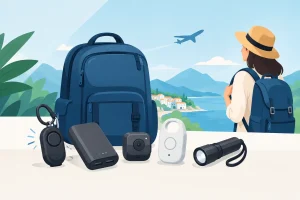
If you keep keys in your hand while walking to your car, a keychain-style alarm may be the natural choice. If you carry a purse, gym bag, or backpack, a clip-on model can stay near an outer pocket or zipper pull. For runners, a lightweight alarm that attaches securely to a waistband, wrist strap, or running belt may be more practical.
Look for a model with a durable housing and a simple activation method. Avoid anything so small, smooth, or complicated that it could slip from your grip. An alarm should be easy to use with cold hands, shaky hands, or limited visibility.
Battery considerations matter too. Some personal sirens use replaceable batteries, while others are rechargeable. Replaceable batteries can be convenient when you want a quick swap. Rechargeable models reduce the need to keep spare batteries on hand, but only if you build charging into your routine. Neither option is automatically better. Choose the one you are most likely to maintain.
At Elite Warrior Defense, the goal is to make everyday protection accessible, not intimidating. A personal siren is often one of the easiest tools to add to a larger personal safety setup because it is compact, affordable, and simple to learn.
Where to Carry a Personal Siren for Fast Access
The best place for an alarm is not necessarily the safest pocket. It is the place you can reach without searching. Keep it visible enough to grab quickly but secured enough that it will not fall off or activate by accident.
For a purse or backpack, attach the alarm to an exterior zipper pull, a dedicated clip near the top opening, or a strap close to your body. Do not leave it loose at the bottom under wallets, chargers, and other items. In a vehicle, keep one within reach of the driver’s seat, not in the trunk or a crowded glove compartment.
At home, a personal siren can also be useful near an entryway, beside a bed, or in a garage. If you hear suspicious activity outside, the sound can help alert others in the home or nearby. It can also be useful for older adults who may need to call attention quickly after a fall or medical emergency, provided they understand how to activate it.
If you buy alarms for family members, make sure everyone has their own device and knows where it stays. A tool shared by several people often ends up misplaced exactly when it is needed.
Practice Before You Need It
A personal siren is simple, but simple does not mean you should never practice. Read the instructions, identify the activation method, and test the alarm briefly in a safe location where the volume will not harm anyone’s hearing. Never hold an activated alarm close to your ears.
Practice removing it from the place you carry it. Do this while standing, sitting in your car, and walking with bags in your hands. The goal is not to turn safety into a stressful drill. It is to make the movement familiar enough that you do not have to think through it in a real emergency.
Check the alarm regularly. Test it according to the manufacturer’s directions, inspect the pin or button for damage, and replace or recharge batteries as needed. A calendar reminder every few months is often enough to prevent a neglected device from becoming dead weight.
Using a Siren During a Concerning Encounter
Trust your instincts. If someone is following you, approaching aggressively, refusing to respect your space, or making you feel unsafe, you do not need to wait for proof that their intentions are bad. Move toward people, light, open businesses, or a staffed area as soon as possible.
Activate your personal siren early when attention could help. Use a firm voice if you can: “Stay back!” “Help!” or “Call 911!” Specific, direct words tell bystanders that something is wrong and that action may be needed. Keep moving rather than standing still to argue or explain yourself.
If there is an immediate emergency, call 911 as soon as you can do so safely. A siren can attract attention, but it does not contact emergency services or document what happened. If you are able, tell dispatch where you are, what is happening, and a description of the person or vehicle involved.
Personal safety tools work best when they support a simple priority: get away. Do not stay in a dangerous situation to retrieve dropped belongings, confront someone, or prove a point. Your phone, keys, and bag can be replaced. You cannot replace your safety.
A personal siren is a small item with a serious purpose. Carry it where your hand can find it, keep it maintained, and give yourself permission to use it when something feels wrong. The loudest sound it makes may be the one that creates the opening you need to get home safely.