

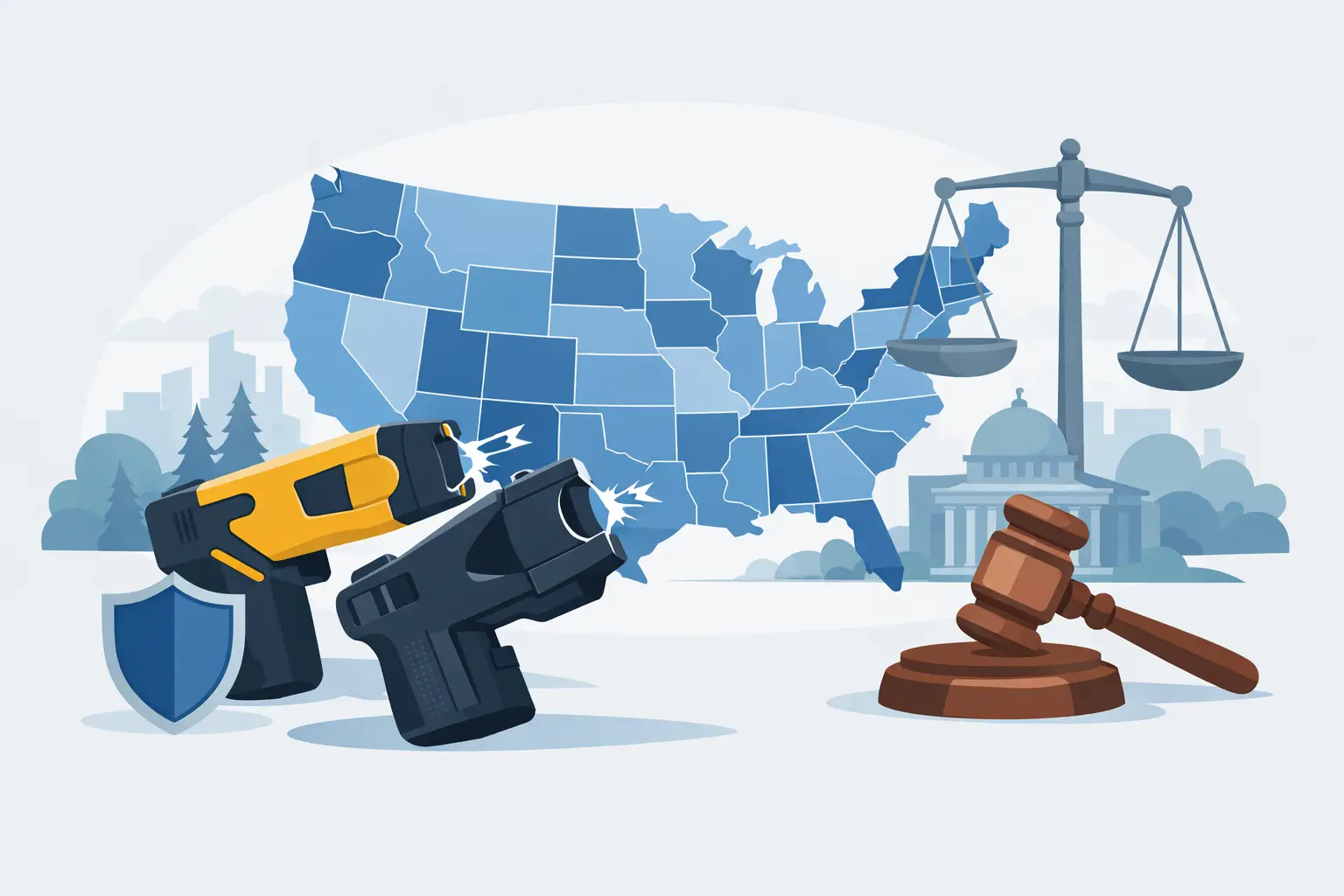
A stun gun can be a practical part of a personal safety plan, but only if you can legally possess and carry it where you are. So, are stun guns legal? In much of the United States, they are legal for qualified adults, but the real answer depends on your state, your city, your age, where you carry it, and how you use it.
Personal protection is about being prepared, not making assumptions. Before you buy or carry any self-defense tool, take a few minutes to confirm the rules that apply to your exact situation.
There is no single federal rule that makes stun guns legal or illegal everywhere in the country. State and local laws control most questions about possession and carry. Many states allow civilian ownership of stun guns, sometimes called electronic weapons or conducted energy devices. Yet legal ownership does not automatically mean you can carry one everywhere or use one in every situation.
Some jurisdictions impose age limits, licensing requirements, background-related restrictions, or rules for concealed carry. Certain cities and counties may add their own restrictions. Even in places where a stun gun is generally legal, carrying one into a school, courthouse, airport security area, government building, correctional facility, or private business that prohibits weapons can create serious legal trouble.
The law can also treat a handheld contact stun gun differently from a projectile device commonly referred to by a brand name. Never assume that rules for one apply to the other. Read the legal definition used by your state and local code before deciding what device to carry.
A quick online search may tell you that stun guns are permitted in your state, but that is only the starting point. The details matter. A responsible owner checks the rules for possession, carrying, transportation, and use.
States often limit stun gun possession to adults. Some laws also restrict access for people with certain criminal convictions, active protective orders, or other legal disqualifications. The exact standards vary, so do not rely on a general statement that the product is “legal” without checking whether you personally qualify.
If you are buying a self-defense device for a college student or another family member, verify both the recipient’s age and the laws in the city where they live or attend school. Campus policies can be stricter than state law.
Location-based restrictions are among the easiest rules to overlook. A stun gun that is lawful in your home or vehicle may be prohibited in a particular building or on particular property. Schools, government offices, public meetings, secure areas of transportation hubs, and certain public venues often have their own rules.
Private property owners can also set policies. A workplace, apartment community, concert venue, or retail store may prohibit weapons on the premises. Violating a posted policy may have consequences even if state law generally permits stun gun ownership.
Legal language is rarely as simple as the label on a product package. Depending on the jurisdiction, a stun gun may be categorized as an electronic weapon, electric weapon, dangerous weapon, or conducted energy device. That definition can determine whether a permit, training, storage practice, or specific carry method is required.
Look for the definition in the current state statute and any applicable municipal code. If the wording is unclear, contact a qualified local attorney or the appropriate government office for guidance. Retail product descriptions and social media comments are not legal authority.
Start with official sources, not rumors. Laws change, court rulings can affect enforcement, and local ordinances may be updated without much public attention. Check your state legislature’s current statutes, then review the code for your city or county.
Use this simple process before purchasing or carrying a stun gun:
Save the official information you find and revisit it periodically. A law that was accurate when you purchased your device may not remain unchanged. If your situation includes a prior conviction, a protective order, a professional license, or any other factor that could affect eligibility, personalized legal advice is the safest route.
Crossing a state line can change the legal picture quickly. A stun gun that is lawful at home may face different possession, carry, or transportation rules at your destination. This matters for road trips, business travel, vacations, and moves.
Air travel requires extra care. Transportation security and airline policies can limit where electronic self-defense devices may be packed, how batteries must be handled, and whether a particular device is accepted at all. Do not wait until you reach the airport to figure it out. Check current rules directly with the relevant transportation authority and your airline before packing.
The same principle applies to public transit, rideshares, sporting events, and entertainment venues. Legality is not always the only question. A venue’s entry policy can still prevent you from bringing the device inside.
A stun gun is a defensive tool, not a way to settle an argument, intimidate someone, or respond to ordinary frustration. Even where ownership is legal, using or displaying a stun gun without a lawful self-defense justification can lead to criminal charges, civil liability, or both.
Self-defense laws differ by state, but a common principle applies: force must be reasonable under the circumstances. The threat you faced, what you reasonably believed at the time, whether you could safely leave, and how you responded can all matter. A person who uses a device after a threat has ended may face a far different legal outcome than someone responding to an immediate threat of harm.
If you ever use a self-defense tool in an emergency, get to safety, call 911, request medical help if anyone is injured, and follow the instructions of responding law enforcement. Avoid making assumptions about your legal position in the moment. The facts and local law will matter.
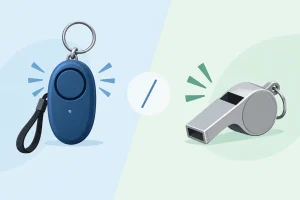
Carrying a legal device is only one layer of personal security. Situational awareness, a charged phone, good lighting, clear boundaries, and a plan for getting home safely are equally valuable. A safety light or personal alarm may also be a better fit in settings where carrying a stun gun is restricted.
If you choose a stun gun that is lawful for you to own, learn its controls before an emergency. Keep it charged according to the manufacturer’s instructions, store it securely away from children and unauthorized users, and check it regularly. Training should focus on safe handling, legal awareness, and recognizing when avoiding a confrontation is the strongest choice.
Elite Warrior Defense believes practical preparation should build confidence, not false certainty. The best self-defense tool is one you understand, can legally carry, and can use responsibly within a broader plan for staying safe.
It depends on your state and local laws. Some jurisdictions allow concealed carry of electronic self-defense devices, while others regulate it differently or restrict it in certain locations. Check the current rules where you live and where you plan to carry.
Vehicle carry is often treated differently from carry on your person. Rules may address where the device is stored, whether it must be secured, and whether your route crosses into another jurisdiction. Review the laws for every state and city on your trip.
Many states restrict possession by minors, and some may have narrow exceptions. Parents and guardians should confirm state law, local rules, and school policies before purchasing any self-defense device for a young person.
Your safety deserves serious preparation. Check your local law, choose tools you can handle responsibly, and make every carry decision with confidence and care.




YOU’RE IN!
Use this code on every order
🎉
Here’s Your Code!
Use it now an on every future order.
YOUR DISCOUNT CODE
We also sent this code to your email for safekeeping.
EXCLUSIVE OFFER
Every order – not just your first!
Unlock Your Discount Instantly
Enter your email below and your personal 15% discount code appears right here – no need to check your inbox.
🔒 We respect your privacy. Unsubscribe anytime.