A canister that looks bigger is not automatically the better choice. In the decision between pepper spray versus bear spray, the right answer depends on the threat you are preparing for, where you carry it, and how the spray is designed to work. Both products use an irritating pepper-based formula, but they are built for very different encounters.
Choosing the wrong one can leave you carrying a tool that is awkward, ineffective for the situation, or not permitted where you live. Personal safety starts with knowing the purpose of the tool in your hand.
Pepper Spray Versus Bear Spray: The Core Difference
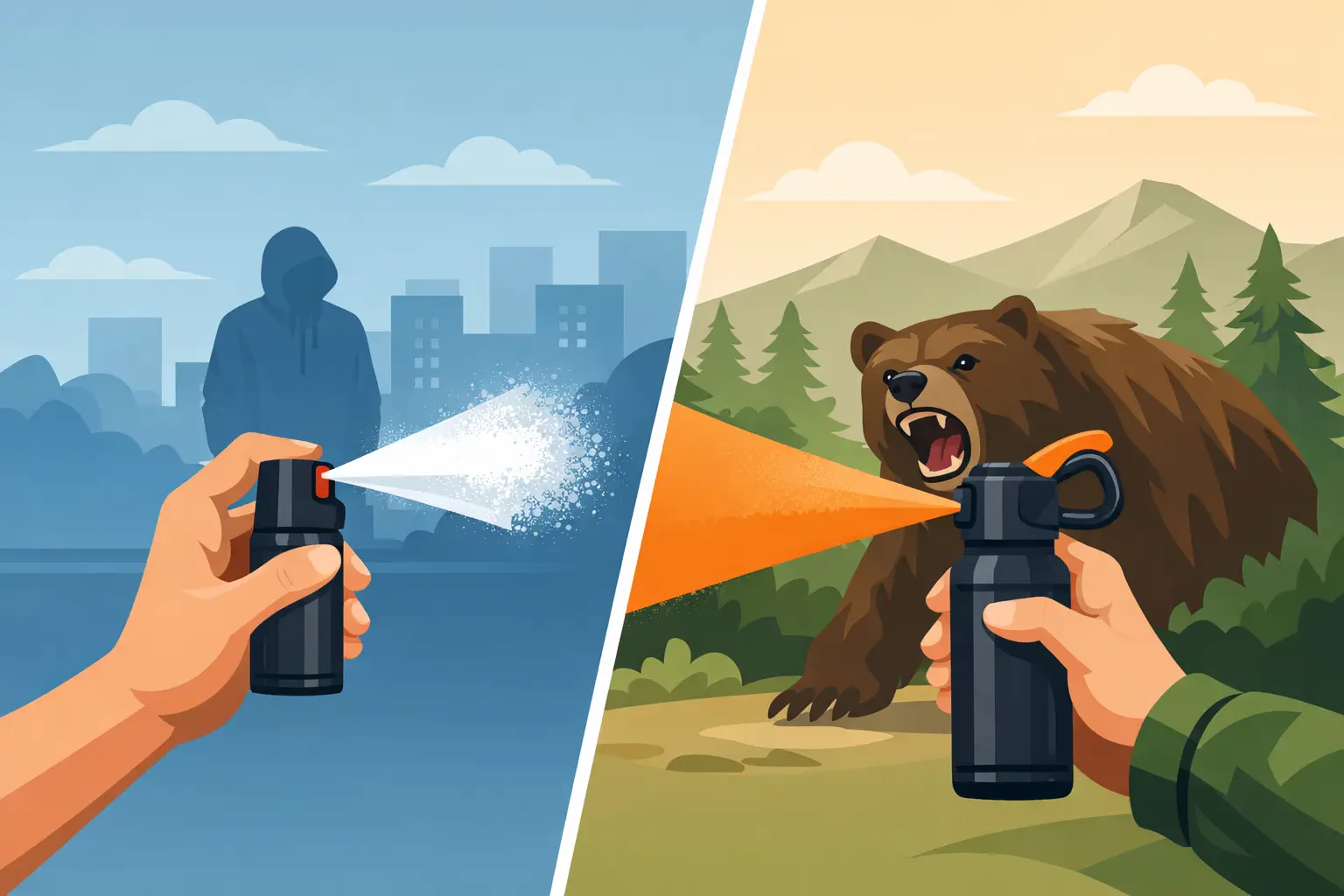
Pepper spray is made for defense against human attackers. It is compact enough for everyday carry and generally designed to give a person an opportunity to create distance, escape, and call for help. Common delivery patterns include a narrow stream, a wider cone, gel, and foam. Each has advantages depending on wind, distance, and the chance of affecting bystanders.
Bear spray is an animal deterrent intended for use against an aggressive bear at greater distances. It typically comes in a larger canister and releases a broad cloud or fog. The goal is not pinpoint accuracy. It is to put a substantial airborne barrier between you and a charging animal, giving the bear a reason to stop or turn away.
That difference in purpose drives nearly every other difference: canister size, spray pattern, range, duration, portability, and instructions for use.
Why Bear Spray Is Not “Extra-Strength” Pepper Spray
It is easy to assume bear spray must be stronger because the canister is larger and the stated range is longer. That assumption can lead to a bad purchasing decision.
The percentage of pepper ingredients on a label does not tell the whole story. Spray effectiveness depends on the formula, delivery system, plume size, spray time, canister pressure, wind conditions, and whether the product is used as intended. A wide bear-spray fog is designed to deter a large animal through an airborne cloud. A personal-defense pepper spray may use a stream or gel pattern designed to be easier to direct toward an attacker from closer range.
Bear spray is also not designed as a personal-defense product for human threats. Its large fog pattern can create significant blowback in a confined space, a parking garage, a hallway, or a windy sidewalk. It may affect you, nearby people, and anyone downwind. A larger cloud is useful in bear country. It is not automatically useful during a close-range assault.
Range and Spray Pattern Matter More Than Most People Expect
When seconds count, you need a defensive tool you can access, aim, and use without overthinking it. That is why the spray pattern deserves as much attention as the formula.
A stream pepper spray is usually a practical everyday option because it projects in a more focused line. It can help reduce overspray and can perform better than a fog in light wind. The trade-off is that it requires more precise aim. Gel travels as a thick stream and can reduce airborne drift even further, though it may take a moment longer to take effect because it needs to make direct contact.
Fog or cone pepper spray creates a wider coverage area and can be easier to deploy under stress when precise aim is difficult. However, wind can push it back toward the user. This is especially important outdoors. No aerosol defense spray is immune to wind, but broad fog patterns demand more awareness of your position and surroundings.
Bear spray commonly projects farther than personal-defense spray and releases for longer. Those features are appropriate when a large animal is approaching in open terrain. They also make the canister bulkier. You are unlikely to keep a full-size bear-spray canister conveniently clipped inside a purse, carried in a pocket, or available in the exact moment a human threat develops.
Choose Based on the Threat You Actually Face
For daily walks, commuting, errands, campus travel, rideshare pickups, or arriving at your car after dark, a properly sized personal-defense pepper spray is generally the more appropriate choice. Look for a canister you can carry consistently, with a safety mechanism you understand and a format that fits your environment.
For hiking, camping, fishing, or working in established bear habitat, bear spray is the responsible choice. Carry it where it is immediately reachable, not buried at the bottom of a backpack. Learn how to remove the safety clip and deploy it before entering the trail. If an animal encounter happens, there is no time to read the label.
Some people spend time in both settings. In that case, carrying the right spray for each activity makes more sense than trying to make one product do both jobs. A compact pepper spray can support your personal-security plan in town, while bear spray belongs with your outdoor gear when traveling through bear country.
Size, Access, and Training Affect Real-World Use
The best defensive device is one you can reach quickly and operate under stress. A powerful canister stored in a glove compartment or backpack may not help during a sudden encounter. For everyday personal protection, choose a pepper spray that fits naturally into your routine – on a keychain, in a pocket, in an accessible bag compartment, or attached to an approved carrying clip.
Before carrying any spray, practice the motions without discharging it. Locate the safety cap or flip-top. Learn which direction the nozzle faces. Build the habit of holding the canister firmly and extending your arm away from your face. Never test-fire a live canister indoors or around other people.
Your goal is not to stand and fight. Defensive spray is a tool to interrupt an attack long enough to move toward safety. Create distance, get to a populated or secure location, call 911, and seek medical attention if you have been injured.
Legal Rules Can Differ by State and City
Pepper spray laws vary across the United States. States and local jurisdictions may regulate canister size, formula, purchase age, where it can be carried, or whether it is allowed in certain buildings. Schools, government facilities, airports, courthouses, and private venues may have separate restrictions.
Bear spray can also be subject to location-specific rules, especially in national parks, campgrounds, and transportation settings. Never assume that a product legal at home can be carried anywhere you travel.
Check the current laws where you live, work, study, and travel before purchasing or carrying any defensive spray. Use the product only for lawful self-defense or its stated animal-deterrent purpose. Misuse can cause serious injury and legal consequences.
Common Mistakes to Avoid
Do not buy based on the biggest number printed on the label. Range and pepper concentration alone do not determine which product suits your needs. Match the product to the threat, then consider carry method and spray pattern.
Do not carry an expired, damaged, or untested canister indefinitely. Check the expiration date, inspect it for leaks or corrosion, and replace it according to the manufacturer’s instructions. Keep it away from extreme heat, including a hot vehicle.
Finally, do not treat spray as a complete security plan. Awareness still matters. Keep your phone charged, pay attention to your surroundings, trust your instincts, and have a simple plan for getting help. At Elite Warrior Defense, the goal is practical protection that gives you confidence without creating a false sense of security.
The right choice is straightforward: carry pepper spray for personal defense and bear spray for bear country. Select a product you can use responsibly, keep it accessible, and make your safety plan before you need it.