
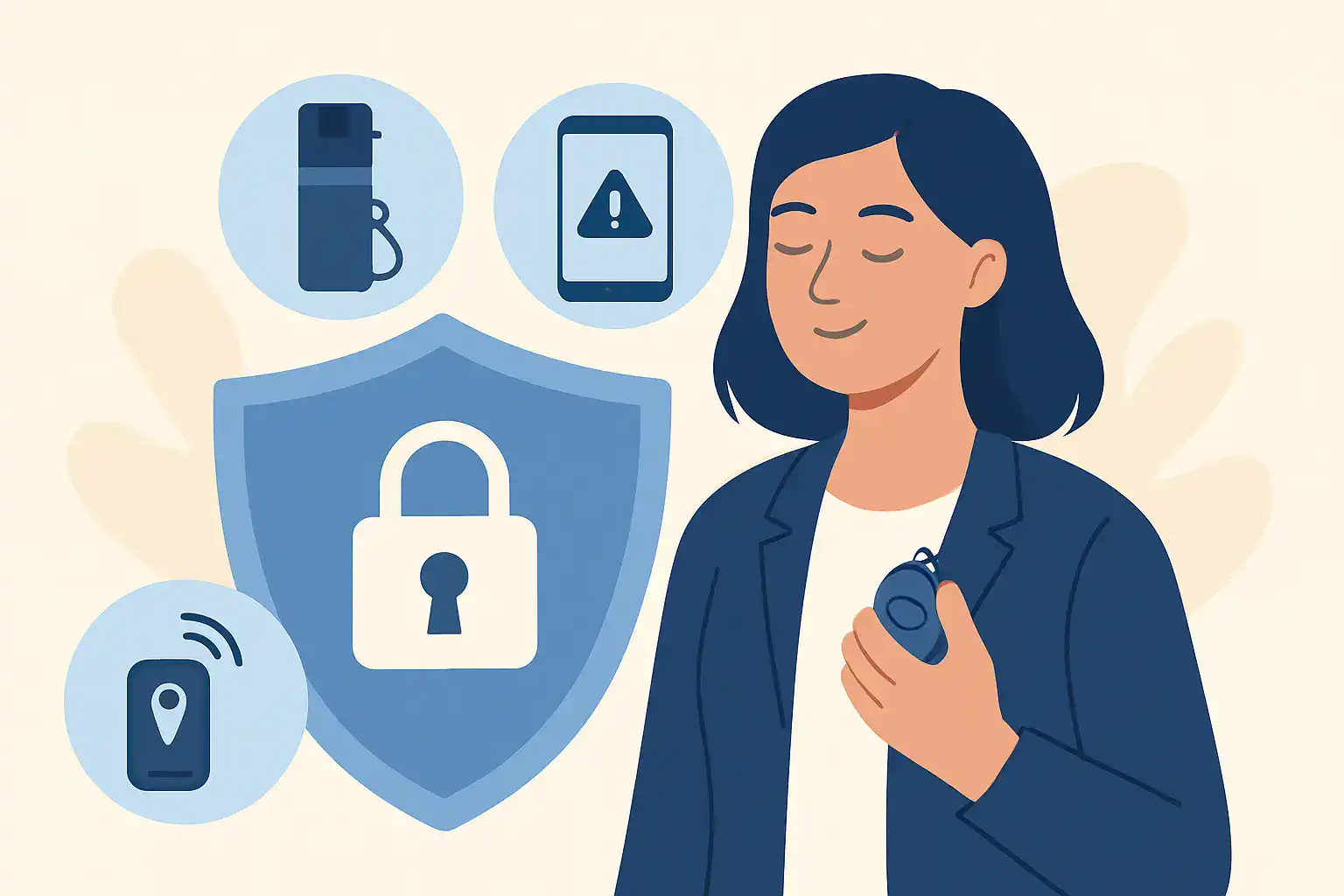
You don’t buy a personal security device because you’re paranoid. You buy it because you’ve stood at a gas pump a little too late at night, walked to your car with your keys threaded through your fingers, or watched a stranger’s attention linger a second too long. You’re not looking for drama—you’re looking for control.
That’s where personal security devices earn their keep. They’re not magic, and they’re not a substitute for awareness or smart choices. But used correctly, they can shift a situation in your favor fast. Below are the real, practical benefits of personal security devices—and what they can and can’t do for you.
Most dangerous encounters aren’t long. They’re quick, messy, and decided in seconds. The biggest advantage a personal security device offers is time—time to create distance, time to get attention, time to break someone’s focus, time to get to safety.
That can look different depending on the device. A personal alarm buys time by pulling eyes and ears toward you. Pepper spray buys time by disrupting vision and breathing long enough for you to move. A stun device can buy time by creating a shock moment that makes someone hesitate.
The common thread is this: you’re not trying to “win a fight.” You’re trying to interrupt the threat and exit.
A lot of people imagine self-defense as a single dramatic moment. In reality, prevention is the win.
Many personal security tools work simply because they change the math for an attacker. Someone looking for an easy target doesn’t want complications. The sound of a personal alarm, the visible readiness of a defensive tool in your hand, or the knowledge that you’re not caught off guard can push a would-be threat to move on.
That deterrent effect is one of the most overlooked benefits of personal security devices. You’re not only preparing for the worst-case scenario—you’re making that scenario less likely.
Calling for help matters, but help isn’t always immediate. You might be in a parking structure with weak reception. You might be in a neighborhood where response times aren’t great. You might be indoors where your voice doesn’t carry.
Personal security devices are immediate. You don’t have to unlock your phone, find the right contact, or explain where you are while your heart is racing. A loud alarm is instant. Defensive sprays and impact tools are instant. That speed can be the difference between getting away clean and getting pulled into a longer confrontation.
There’s a trade-off here: “instant” only applies if the device is accessible. If it’s buried in a bag, at the bottom of a purse, or left in the glove box, it’s basically décor. The benefit comes from carry habits—on your key ring, clipped where you can reach it, or staged consistently.
Confidence isn’t about acting tough. It’s about reducing the fear tax you pay for normal life.
When you know you have a tool you can use, you’re less likely to freeze. You’re more likely to set boundaries, speak clearly, and move decisively. That’s not just psychological fluff—predators often test for uncertainty. If you carry yourself like you’ve already made a plan, you’re harder to target.
The key is honest confidence. It comes from choosing a device you can actually use and practicing with it (safely) so it’s not a foreign object when stress hits.
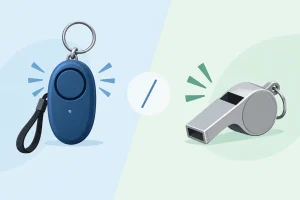
A personal alarm isn’t “just noise.” It’s a force multiplier.
Noise draws witnesses, interrupts isolation, and can trigger a threat’s fear of getting caught. It also gives you something simple to do under stress: pull, press, and move. For many people—especially those who don’t want physical contact—an alarm is a strong first line of defense.
The limitations are worth saying out loud. Some environments are loud already. Some people ignore sounds. And an alarm doesn’t physically stop someone. That’s why alarms work best as part of a plan: create noise, create distance, and head toward light, people, or a controlled access point.
Pepper spray is popular for a reason. It creates space.
Used correctly, it can disrupt an attacker’s ability to see and breathe comfortably long enough for you to get away. That “long enough” is the point. Your goal is not to stand there and evaluate results. Your goal is to move.
There are trade-offs. Wind can affect spray direction outdoors, and tight indoor spaces raise the chance of blowback. Some people are more resistant than others. You still need awareness and a route to safety. But as a practical tool that doesn’t require you to be stronger than the other person, pepper spray delivers a real-world advantage.
Stun guns are often misunderstood. They’re not about launching someone across the room. They’re about creating a moment—pain, shock, surprise—so you can disengage.
That benefit is significant if you can access the device quickly and you’re close enough to use it effectively. But closeness is also the trade-off. You’re in grabbing range. That’s why stun devices work best for people who are willing to train positioning and who understand that the device supports an escape, not a prolonged struggle.
If your goal is to keep distance, you may prefer a tool that works from farther away. If your environment makes spray tricky, a stun device can be a practical alternative. It depends on your day-to-day reality.
A big benefit of certain personal security devices is that they fit into normal life. A tactical pen can live in a pocket, bag, or desk without raising eyebrows, and it still gives you a solid grip tool if you need to protect yourself at close range.
Keychain defense tools have a similar advantage: they’re already in your hand when you’re walking to your car or unlocking your door. That’s often the moment people feel most exposed.
The trade-off is that close-range tools demand awareness and commitment. If you carry them, you should also carry the mindset: create distance when you can, don’t let someone close the gap for free, and don’t hesitate once you’ve decided you’re in danger.
Personal security devices aren’t only for when you’re out. They influence how you set up your home life.
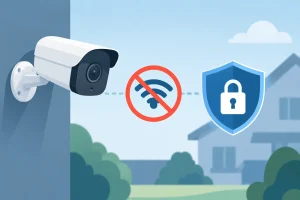
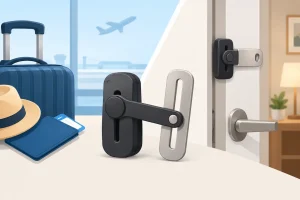
A simple door alarm or window alarm can reduce the “Did I hear something?” anxiety that keeps people awake. Dummy cameras and visible deterrents can make your home less attractive to opportunistic crime. Diversion safes help protect valuables from quick grab-and-go theft.
None of these items replaces strong locks, good lighting, and smart habits. But they tighten your security posture without turning your house into a fortress. The benefit is peace of mind backed by practical friction—making it harder for the wrong person to act quickly.
Here’s an underrated benefit: carrying a security tool trains your brain to think in plans.
When you commit to having a device, you naturally start asking smarter questions. Where will I park? Which entrance is best lit? Do I have my keys ready? Where’s the nearest open business if I need to step inside? Who’s around me?
That mindset is the foundation of personal safety. The device is the backup that supports your decision-making.
Personal security is personal for a reason. The best device depends on your routine, comfort level, local laws, and how you’re willing to carry.
If you hate carrying extra items, a keychain tool or compact spray may be realistic. If you want something simple under stress, a loud alarm may be your best start. If you’re often out alone at night, layering tools—like an alarm plus spray—can be a smart way to cover different scenarios.
Also be honest about training. Even five minutes of practice at home—finding it in your pocket, activating it without looking, rehearsing your exit direction—can raise your odds dramatically. A tool you can’t deploy smoothly is just expensive reassurance.
When you’re evaluating options, think in outcomes:
Do you want to create noise, create distance, or handle a close-range threat? Do you need something that can ride on your keychain every day? Are you buying for yourself, a college student, a night-shift worker, or someone who travels?
A solid personal security setup isn’t about buying the “strongest” thing. It’s about buying the thing you will actually carry, access, and use correctly.
If you want a straightforward place to compare practical options—from personal alarms and pepper sprays to stun devices and everyday-carry tools—Elite Warrior Defense keeps it simple and affordable, so you can pick what fits your life and start carrying it consistently.
Safety shouldn’t depend on luck. The benefits of personal security devices show up when you stop outsourcing your peace of mind to perfect circumstances—perfect lighting, perfect neighborhoods, perfect timing.
Carry something you understand. Practice once or twice until it feels natural. Then walk out the door with a plan you can execute.
The goal isn’t to live scared. It’s to live ready—so your life stays yours.

YOU’RE IN!
Use this code on every order
🎉
Here’s Your Code!
Use it now an on every future order.
YOUR DISCOUNT CODE
We also sent this code to your email for safekeeping.
EXCLUSIVE OFFER
Every order – not just your first!
Unlock Your Discount Instantly
Enter your email below and your personal 15% discount code appears right here – no need to check your inbox.
🔒 We respect your privacy. Unsubscribe anytime.