
You don’t rise to the occasion in a scary moment—you fall to your training and your preparation. That’s why the best self-defense setup isn’t the most expensive or the most “tactical.” It’s the one you’ll actually carry, can actually use under stress, and can access in a half-second when your heart rate spikes.
This guide breaks down the best personal self defense products for real life: parking lots, apartment hallways, rideshares, jogging routes, and everyday errands. You’ll see what each tool is best at, where it can let you down, and how to choose a simple loadout you’ll stick with.
The right product depends on your routine and your comfort level. A tool that lives in your nightstand won’t help you in a stairwell. And a tool that’s buried at the bottom of a tote bag is basically wishful thinking.
Start with three filters.
First: speed of access. If you can’t get to it while holding groceries, a leash, or a phone, it’s not truly “everyday carry.” Second: ease under stress. Fine motor skills disappear when you’re scared; simple is strong. Third: legal and practical fit. Some tools are restricted in certain areas, and some locations (workplaces, venues, travel) may prohibit items even when they’re legal.
From there, pick tools that give you at least one of these advantages: distance, disruption, attention, or control. The strongest setups combine two.
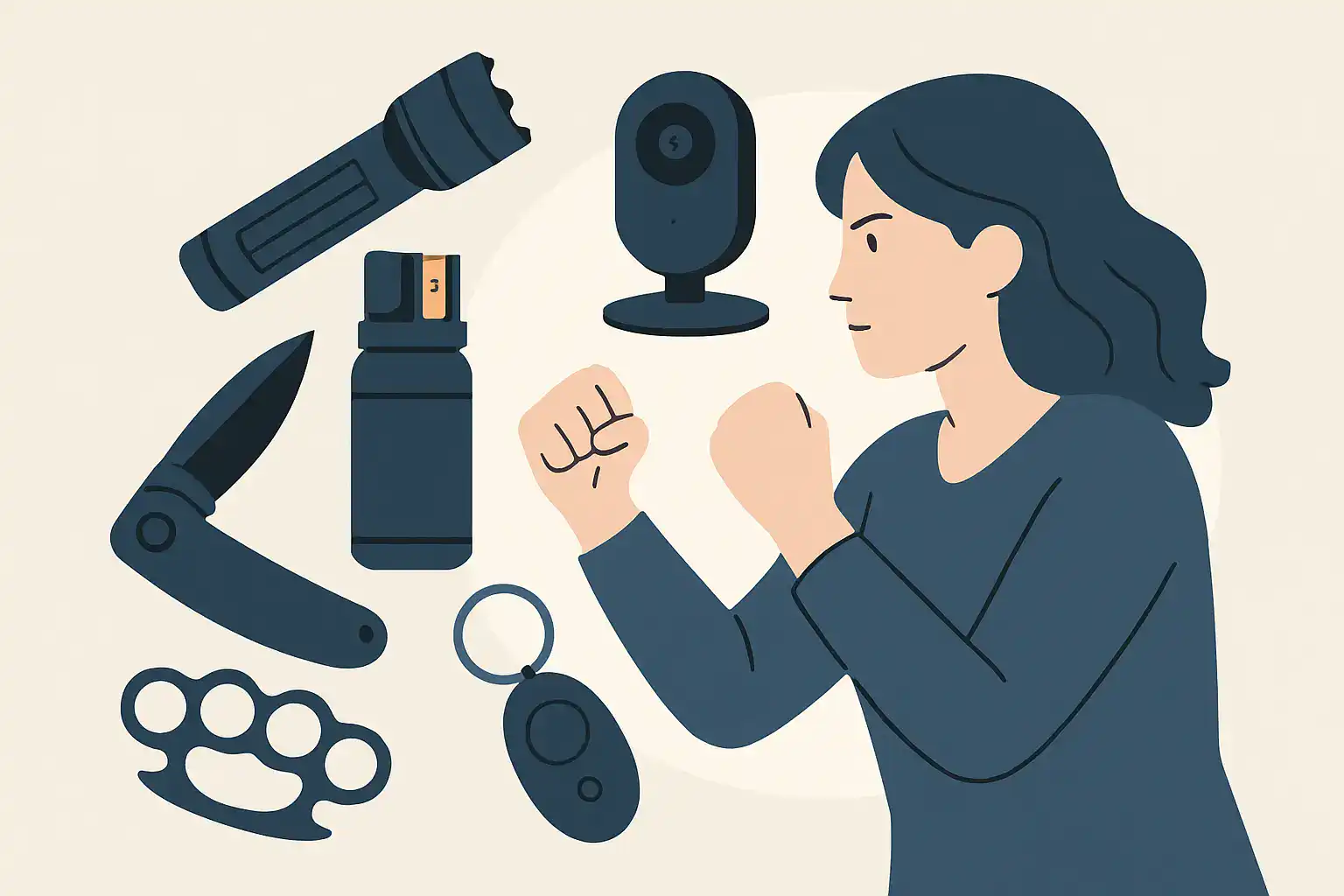
If you want a self-defense option that’s compact, affordable, and widely legal in many places, pepper spray is hard to beat. It creates distance and buys time, which is the point. You’re not trying to “win.” You’re trying to break contact and get to safety.
Look for a delivery style that matches your environment. A tighter stream tends to reach farther, while a fog-style spray may be more affected by wind and can blow back. Whichever you choose, you need two things: confidence in the safety mechanism and a habit of carrying it in the same place every day.
The trade-off is real: pepper spray can be less effective on someone highly intoxicated or determined, and it requires awareness of wind and enclosed spaces. Still, for most people, it’s the best first purchase because it’s straightforward and effective when deployed quickly.
A stun gun is designed to deliver a painful electrical shock that can disrupt an attacker’s focus and intent long enough for you to escape. It’s not magic, and it’s not the same thing as a law enforcement Taser. You’re working at close range, and that’s the key consideration.
Stun guns shine when you can’t rely on distance—think tight corridors, car-side encounters, or a situation where an aggressor is already within arm’s reach. Many models also include a bright flashlight, which is more useful than people realize: light helps you identify someone early and creates hesitation.
The trade-off is obvious: you must be close enough to use it, and that requires commitment. If you’re not comfortable with a close-contact tool, pair a stun gun with a distance option like pepper spray and focus on access and practice. Also, always check local rules where you live and where you travel.
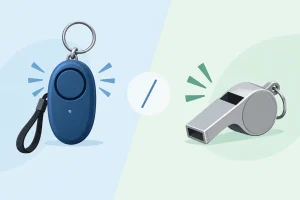
A personal alarm doesn’t require strength, pain compliance, or pinpoint accuracy. You pull a pin or press a button and it screams—often loud enough to pull attention through walls and across parking lots.
Alarms are especially effective as a deterrent and as a way to disrupt “testing” behavior, like someone crowding your space, following you too closely, or trying to steer you somewhere. They’re also ideal for teens, college students, and anyone who can’t carry other tools at work or on campus.
The trade-off is that alarms don’t physically stop an attacker. They change the social environment by creating witnesses and pressure. That’s powerful, but it works best when you’re ready to move immediately toward people, light, and exits.
A tactical pen is one of the most carry-friendly self-defense tools because it looks like something you’d reasonably have. That matters. The tool you can keep in your hand while walking to your car is a tool you can actually deploy.
In a defensive moment, a tactical pen gives you a hard, durable point for striking bony targets at close range. It also gives you a firm grip and a solid option if you’re in places where other items might be restricted.
The trade-off is that it takes more intent and some practice. A tactical pen is not a “press button and done” tool; you need to be mentally prepared to use it and to move immediately after creating an opening.
Keychain tools work because they fit into existing routines. If your keys are already in your hand when you leave a building, adding a compact self-defense option can be a smart upgrade.
The real advantage here is speed and repetition. You can build a habit: keys in hand before you hit the parking lot, tool oriented the same way every time, phone ready, head up. Many keychain options focus on giving you a better grip, a harder striking surface, or faster access to pepper spray.
The trade-off is that some keychain designs are more legally sensitive than others, and some are awkward to hold under stress. Prioritize comfort and simplicity over anything that looks aggressive.
A high-output flashlight is a self-defense tool even when it’s not marketed as one. Light lets you see threats earlier, avoid hazards, and identify what’s actually happening—especially in transitional spaces like sidewalks, stairwells, and parking garages.
A bright beam to the eyes can also buy a second of confusion. That second matters. It can be enough to change direction, get inside your vehicle, or get to a door.
The trade-off is that a flashlight is primarily a prevention and disruption tool, not a stopper. If you rely on it, pair it with something that creates distance or pain compliance.
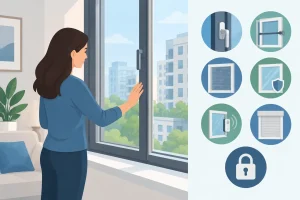
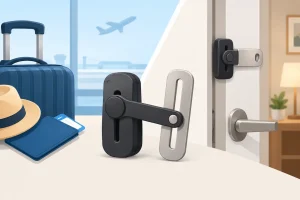
Personal safety isn’t only about walking to your car. It’s also about feeling secure behind a door—at home, in a dorm, or in a hotel.
Door alarms and simple contact alarms are effective because they remove uncertainty. You’ll know if a door opens. That reduces the “freeze” response and gives you time to act. For travel, small alarms can add peace of mind in unfamiliar places.
The trade-off is that home security tools don’t replace situational awareness, and they won’t help you off-property. Think of them as a layer—one that’s cheap, easy, and worth having.
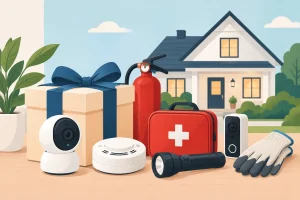
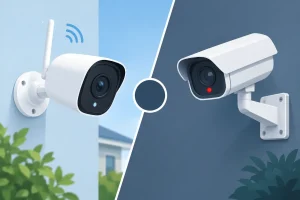
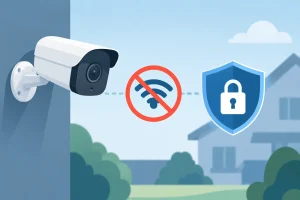
Some security products work without ever being “used.” Visible deterrents—like dummy cameras, signage, or obvious alarm placement—can shift your home from “easy” to “not worth it.”
Deterrence is about psychology. Most criminals don’t want a challenge, attention, or time pressure. Visible security adds all three.
The trade-off is that deterrents are not evidence and not response. They’re best when paired with real alarms, good lighting, and locked entry points.
If you’ve ever thought, “If someone broke in, what would I lose first?” the answer is usually small valuables: cash, spare keys, backup cards, and personal documents.
Diversion safes hide items in plain sight, which is often more effective than a tiny lockbox that screams “valuables inside.” They’re not a substitute for a true safe for firearms or large amounts of cash, but they’re an excellent layer for everyday protection.
The trade-off is that you must be disciplined about what goes in them and where they’re placed. Choose a spot that fits your home’s normal “clutter pattern,” not a dramatic hiding place you’ll forget.
Most people don’t need five tools. They need one primary tool, one backup, and one habit.
A strong everyday setup often looks like pepper spray for distance plus a personal alarm for attention. If you prefer close-range tools, a stun gun or tactical pen can be your primary, but you’ll want to be honest about access and comfort.
Practice is the multiplier. That doesn’t mean turning your living room into a dojo. It means doing quick, realistic reps: where your tool sits, how you draw it, how you orient it, and what your first movement is after you deploy it. You’re training your hands to act while your brain is catching up.
And don’t skip the “boring” skills. Walk with purpose. Keep your head up. Don’t get pinned between your car door and the frame. If something feels off, you don’t owe anyone politeness.
Quality matters, but accessibility matters too. You want gear you can trust, priced so you can actually outfit yourself (and your family) without hesitation. If you’re looking for a one-stop shop for practical self-defense and home security essentials—pepper sprays, stun guns, personal alarms, tactical pens, and more—you can find a wide range at Elite Warrior Defense.
One last thing: whatever you choose, commit to carrying it consistently. Confidence doesn’t come from owning a product—it comes from knowing exactly what you’ll do with it when it counts.

YOU’RE IN!
Use this code on every order
🎉
Here’s Your Code!
Use it now an on every future order.
YOUR DISCOUNT CODE
We also sent this code to your email for safekeeping.
EXCLUSIVE OFFER
Every order – not just your first!
Unlock Your Discount Instantly
Enter your email below and your personal 15% discount code appears right here – no need to check your inbox.
🔒 We respect your privacy. Unsubscribe anytime.