
A late walk back from the library, a parking garage after an evening class, a dorm entrance that feels too quiet – these are the everyday moments when personal safety devices for college students stop being a nice idea and start being a practical decision. College life is busy, social, and unpredictable. The right device will not turn someone into a superhero, but it can give them time, attention, and options when they matter most.
That distinction matters. Good safety gear is not about fear. It is about being prepared, staying aware, and choosing tools that fit the reality of campus life. For students, the best option is usually not the biggest or most aggressive product. It is the one they will actually carry, can use under stress, and understand well enough to deploy quickly.
The best safety device is the one that matches the setting. A college student moving between dorms, classrooms, parking lots, public transit, and off-campus housing has different needs than someone buying for home defense only. Portability matters. Speed matters. Local rules matter. So does comfort level.
A device can be powerful on paper and still be a poor fit in real life. If it is too bulky for a pocket, too complicated to activate, or not allowed on campus, it is less useful than a simpler tool that is legal, easy to reach, and second nature to carry. That is why students should think beyond product categories and focus on daily use.
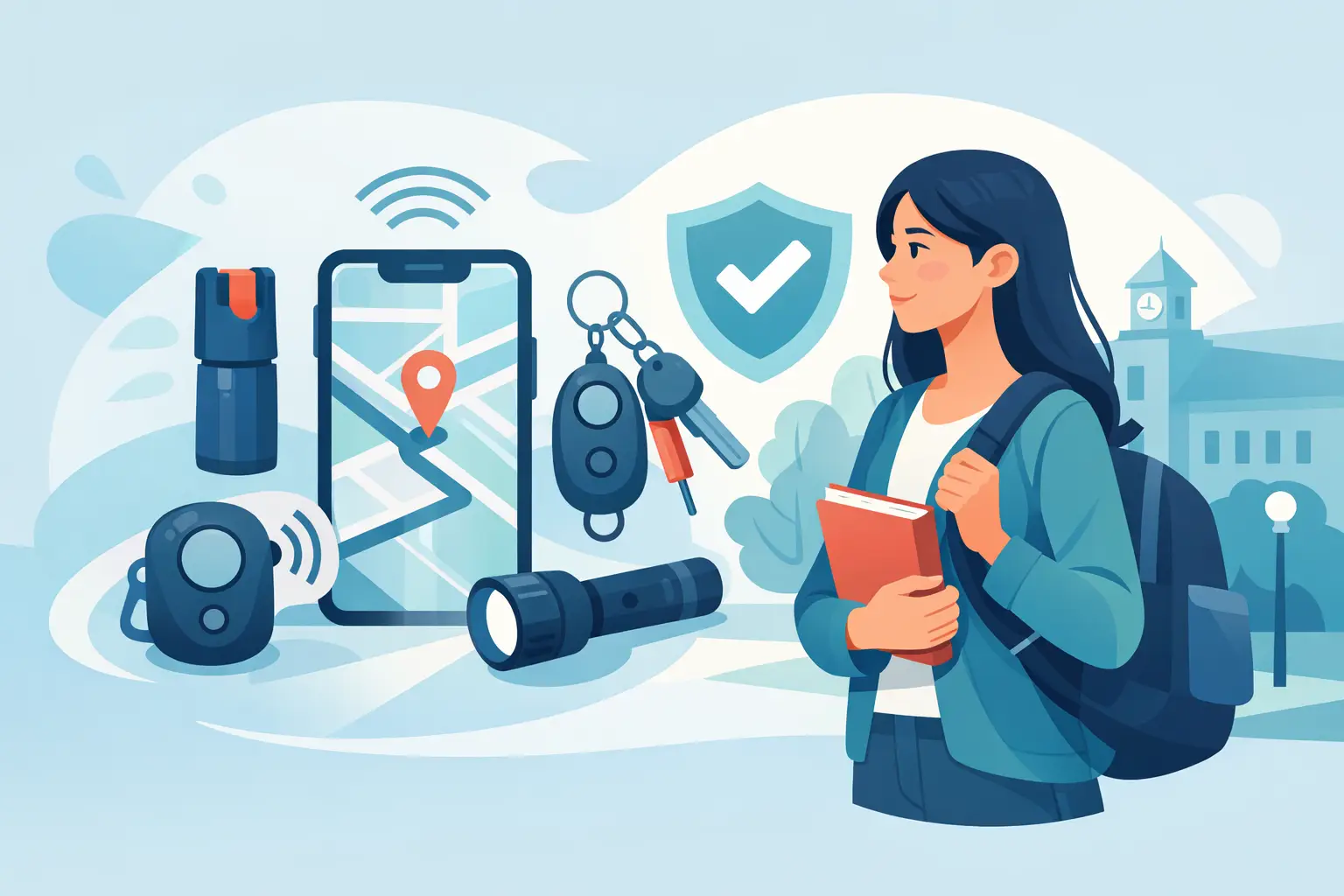
Another factor is confidence. The right product should make a student feel more in control, not overwhelmed. A loud personal alarm, for example, can be a strong choice for someone who wants to draw attention and create a moment to escape without needing close physical contact. Pepper spray may be a better fit for someone comfortable with a defensive tool that creates distance, but only if they understand how and when to use it.
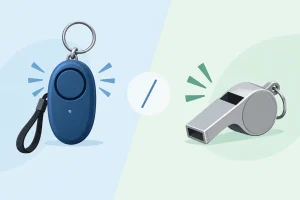
Personal alarms are one of the smartest starting points for many students. They are simple, compact, and designed to attract immediate attention. On a campus where people are often nearby but distracted, a piercing alarm can break that bubble fast. The trade-off is that it does not physically stop an attacker. Its value is disruption, visibility, and creating a chance to get away.
Pepper spray is another popular option because it gives range and can interrupt an attacker long enough for a student to escape. It is especially appealing for walks to a car, an apartment, or a bus stop after dark. That said, pepper spray is not a casual purchase. Students need to check campus rules and state laws, practice how to access it quickly, and understand environmental risks like wind or enclosed spaces.
Safety lights deserve more attention than they usually get. A compact, high-output light can help a student scan a dark path, identify who is nearby, and avoid stepping into a vulnerable area without realizing it. Some lights are also disorienting when aimed at an aggressor’s eyes, buying a second or two to move. They are not a replacement for stronger defensive tools, but they are useful every day, which means they are more likely to be carried.
Self-defense keychains can also make sense, but this category requires caution. Some are designed primarily for grip and quick access, while others may fall into a legal gray area depending on the state or campus. The biggest mistake is buying something that looks tactical but is awkward to use. A keychain tool should be easy to hold, easy to find, and realistic for the student carrying it.
Tactical pens appeal to students because they blend into daily life. A pen is normal in a backpack, tote, or jacket pocket, and a durable design can serve as both a writing tool and an emergency option. The upside is discretion and utility. The downside is that it is a close-contact tool, which means it requires confidence and presence of mind in a high-stress moment.
Stun devices are another option, including compact stun guns and larger stun batons. These can be powerful defensive tools, but they are not universally allowed and they demand more consideration than many first-time buyers expect. Students should verify legality, understand charging requirements, and think honestly about whether they are willing to use such a device under pressure. A strong tool is only effective if the person carrying it is prepared to deploy it.
Start with routine, not worst-case scenarios. A student who regularly walks from a late lab to a distant parking lot may prioritize pepper spray and a bright light. A student living in a dorm with campus escorts available may prefer a personal alarm and a compact keychain tool. Someone taking public transit may want something discreet and instantly accessible rather than buried in a backpack.
The next step is checking rules before buying. Colleges and universities vary. Some allow pepper spray with restrictions. Some prohibit stun devices entirely. Off-campus housing rules may differ from campus housing rules. There is no benefit in carrying gear that can lead to disciplinary issues or has to stay behind when it is needed most.
Ease of access is just as important as the device itself. If a tool lives at the bottom of a tote bag under chargers, notebooks, and snacks, it is not ready. Students should decide exactly where they will carry it – clipped to a key ring, attached inside an outer bag pocket, or kept in a jacket pocket – and keep that setup consistent.
It also helps to keep expectations realistic. No device replaces awareness, strong boundaries, and smart habits. Safety gear works best as part of a bigger approach that includes sharing locations with trusted friends, using campus escort services when available, keeping phones charged, and avoiding isolated shortcuts.
There is a temptation to think bigger means safer. Often, the opposite is true. A smaller, simpler product carried every day beats a larger device left in a dorm room. Students do not need to build a tactical loadout for class. They need practical protection that fits inside a real routine.
For many people, the strongest setup is layered. A personal alarm can draw attention. A safety light can improve awareness before trouble starts. Pepper spray can create distance if a threat escalates. That kind of combination covers more situations than one oversized tool that is inconvenient to carry.
Budget matters here too. Students are already paying for books, food, transportation, and housing. Safety should be accessible, not treated like a luxury purchase. That is one reason shoppers often look for a source that offers a broad range of options at reasonable prices, such as Elite Warrior Defense, where it is easier to compare practical tools without overcomplicating the decision.
Owning a device is not the same as being ready to use it. Students should practice locating their tool without looking, unlocking or activating it, and bringing it into a ready position quickly. That does not mean reckless testing. It means familiarity.
They should also think through likely scenarios. What would they do if someone followed them into a parking area? What if a stranger blocked a path? What if they felt uneasy before anything overt happened? Clear mental rehearsal helps reduce hesitation, and hesitation is often what costs time.
There is also a social piece to safety that should not be ignored. Friends should know what each person carries and how they plan to use it. Roommates can help check campus policies. Group chats, shared rides, and simple check-ins are not dramatic. They are smart. Personal safety is stronger when it is supported by community.
One mistake is buying based on hype instead of fit. A flashy product can sound impressive and still be uncomfortable, impractical, or restricted on campus. Another is assuming any device will work automatically under stress. Without practice, even a simple alarm can feel harder to use than expected.
Students also sometimes rely too heavily on their phones. A phone is valuable, but it can die, lose signal, or be out of reach. A dedicated safety tool fills that gap. Finally, some people wait until after a frightening experience to prepare. It is far better to think ahead and choose calmly than to shop from panic.
College is supposed to expand freedom, not shrink it. The right safety device supports that freedom by helping students move through campus with more confidence, better awareness, and a plan they can trust when a moment feels off.


YOU’RE IN!
Use this code on every order
🎉
Here’s Your Code!
Use it now an on every future order.
YOUR DISCOUNT CODE
We also sent this code to your email for safekeeping.
EXCLUSIVE OFFER
Every order – not just your first!
Unlock Your Discount Instantly
Enter your email below and your personal 15% discount code appears right here – no need to check your inbox.
🔒 We respect your privacy. Unsubscribe anytime.