
An attacker usually counts on one thing more than strength – surprise. The most effective non-lethal self-defense tools are built to break that advantage fast. If you have ever wondered how are non-lethal self-defense tools designed to stop an attacker, the answer comes down to a simple goal: interrupt the attack long enough for you to escape, call for help, and survive the moment.
That sounds straightforward, but good design is never accidental. A pepper spray canister, stun device, personal alarm, or tactical tool is not meant to “win a fight” in the movie sense. It is meant to create a short, crucial window where the attacker loses momentum and you gain control of your next move.
At the core, these tools work by targeting the attacker’s ability to continue aggressive action. Some overwhelm the senses. Some trigger pain and muscle disruption. Some create fear, noise, or confusion. The best ones do this quickly, with simple operation under stress, because real self-defense is messy, fast, and unforgiving.
Designers of non-lethal tools focus on a few practical questions. Can the user activate it in seconds? Does it work when adrenaline is high and fine motor skills drop? Can it create distance? Can it help someone escape without requiring advanced training? If the answer is no, the tool may look impressive but fail when it matters most.
That is why many modern self-defense products are built around immediate effects rather than complicated techniques. A tool that demands perfect timing or strong grip may not be the right fit for everyone. A tool that delivers a fast sensory or pain response with minimal setup has a better chance of helping an everyday person in a real emergency.
Different tools stop attackers in different ways, and each comes with strengths and trade-offs.
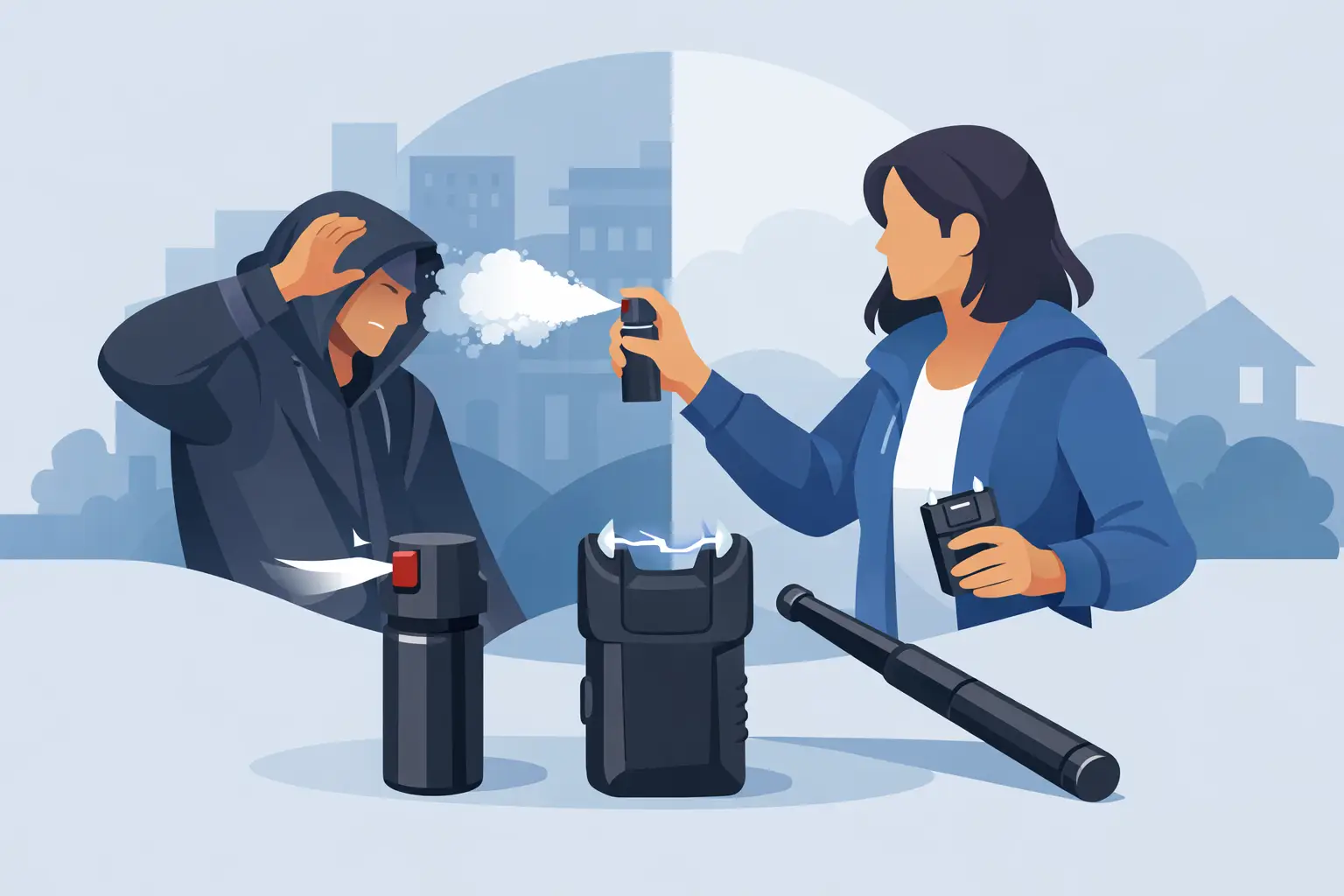
Pepper spray is one of the clearest examples. It is designed to attack the eyes, skin, and respiratory system all at once. The goal is not permanent injury. The goal is to cause intense irritation, involuntary eye closure, coughing, and panic. When an attacker cannot see clearly, breathe comfortably, or focus, their ability to keep advancing drops sharply.
That matters because sensory overload can work even against a larger or stronger person. It does not depend on you overpowering someone. It depends on disrupting their capacity to function for those critical seconds when you need to move.
Still, effectiveness depends on range, aim, wind conditions, and product strength. A spray that is easy to carry but hard to deploy under pressure is less useful than one you can access instantly. Good design keeps activation simple and reduces the risk of accidental discharge while still being fast enough for emergencies.
Some non-lethal tools rely on sharp, immediate pain to force distance. Stun guns and contact stun devices fall into this category. They do not rely only on fear. They are designed to create an intense shock that causes pain, surprise, and momentary disorientation.
The psychological effect is part of the design too. A visible arc or crackling sound can act as a deterrent before contact even happens. In some situations, that alone may cause an attacker to back off. In others, it may not. That is the trade-off. A determined attacker, especially one under the influence or highly aggressive, may not respond to intimidation the same way another person would.
This is why contact-based tools are often best understood as close-range emergency options. They can be powerful, but they require the threat to be near enough for physical engagement. That makes them useful in some scenarios and less ideal in others.
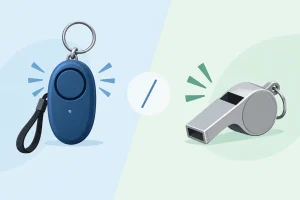
Other tools are not designed to incapacitate in a strict sense. They are designed to interrupt an attacker’s timing. A tactical flashlight with a high-lumen output, for example, can temporarily disorient vision in low light. A personal safety alarm can trigger hesitation by drawing attention and destroying the attacker’s sense of privacy or control.
These tools are often underestimated because they do not look aggressive. But in real-world self-defense, hesitation matters. A split second of uncertainty can be enough to run, get behind a locked door, or alert people nearby.
Some products help by extending your ability to control distance. Pepper gel, for example, is often designed to reduce blowback compared with traditional spray. Batons increase reach. Dog and bear repellents are built with different delivery patterns and range needs based on the threat they are intended to stop.
This is an important point many people miss. Non-lethal does not mean one-size-fits-all. The way a tool is designed should match the type of threat, the setting, and the user’s comfort level. A compact keychain tool may be perfect for daily carry in a parking lot. A larger home-defense option may make more sense by the front door or bedside.
The best self-defense tool on paper can still be the wrong choice if it is complicated. Under stress, people lose dexterity. Hands shake. Vision narrows. Memory can falter. That is why strong product design puts so much emphasis on intuitive use.
Simple safety switches, textured grips, quick-access holsters, compact form factors, and obvious activation methods are not small details. They are the difference between fumbling and responding. A device that takes too many steps to use may fail before it ever delivers its intended effect.
This is also why realistic expectations matter. No non-lethal tool is magic. None can guarantee a stop in every encounter. What they can do is shift the odds in your favor by creating pain, confusion, visibility, noise, or distance at the exact moment an attacker wants control.
A tool meant for a college student walking to a dorm may be different from one meant for a rideshare driver, a jogger, or a homeowner. Good design accounts for carry method, storage, hand size, local laws, and the likely environment.
For everyday carry, weight and accessibility matter. If it is too bulky, people leave it at home. For home defense, a slightly larger device may be acceptable if it offers easier grip or stronger output. For older adults or users with limited hand strength, activation pressure and ergonomics become even more important.
This is where a practical brand approach matters. At Elite Warrior Defense, the focus on accessible, straightforward security tools fits the reality most people live in. Buyers are not looking for fantasy. They are looking for products they can understand, carry, and trust when they need them most.
Even the smartest design works better with familiarity. Knowing where you carry your tool, how it activates, what range it needs, and what its limitations are can save precious time. You do not need to become an expert in combat, but you do need to remove uncertainty.
That means practicing safe handling, reading product instructions, and thinking through likely scenarios. If you carry pepper spray in your bag, can you reach it quickly? If you keep a stun device at home, can you access it in the dark? If you carry a personal alarm, do you know how loud it is and how it activates?
Design gives you an advantage. Training helps you use that advantage under pressure.
The most useful way to understand non-lethal self-defense is this: these tools are designed to stop an attacker by stopping the attack, not by delivering revenge. That distinction matters.
A product is successful if it helps you break contact and get to safety. Sometimes that means temporary blindness and coughing from pepper spray. Sometimes it means a painful shock that forces space. Sometimes it means a shrieking alarm that attracts witnesses. The effect may last seconds or minutes, but that window can be everything.
There are also legal and ethical reasons this matters. Many people want a way to protect themselves without carrying a lethal weapon. Non-lethal tools offer an option that can still be forceful, practical, and effective while aligning with a more measured response.
That said, non-lethal does not mean harmless. These products should be chosen responsibly, carried legally, and used only in legitimate self-defense situations. The right mindset is not aggression. It is readiness.
The smartest self-defense tool is the one you can use quickly, confidently, and lawfully when your safety is on the line. Choose for your real life, not for appearances, and you give yourself something every attacker hates losing – control.





YOU’RE IN!
Use this code on every order
🎉
Here’s Your Code!
Use it now an on every future order.
YOUR DISCOUNT CODE
We also sent this code to your email for safekeeping.
EXCLUSIVE OFFER
Every order – not just your first!
Unlock Your Discount Instantly
Enter your email below and your personal 15% discount code appears right here – no need to check your inbox.
🔒 We respect your privacy. Unsubscribe anytime.