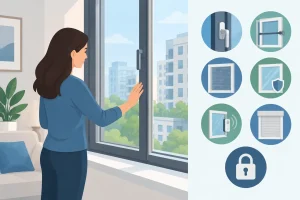

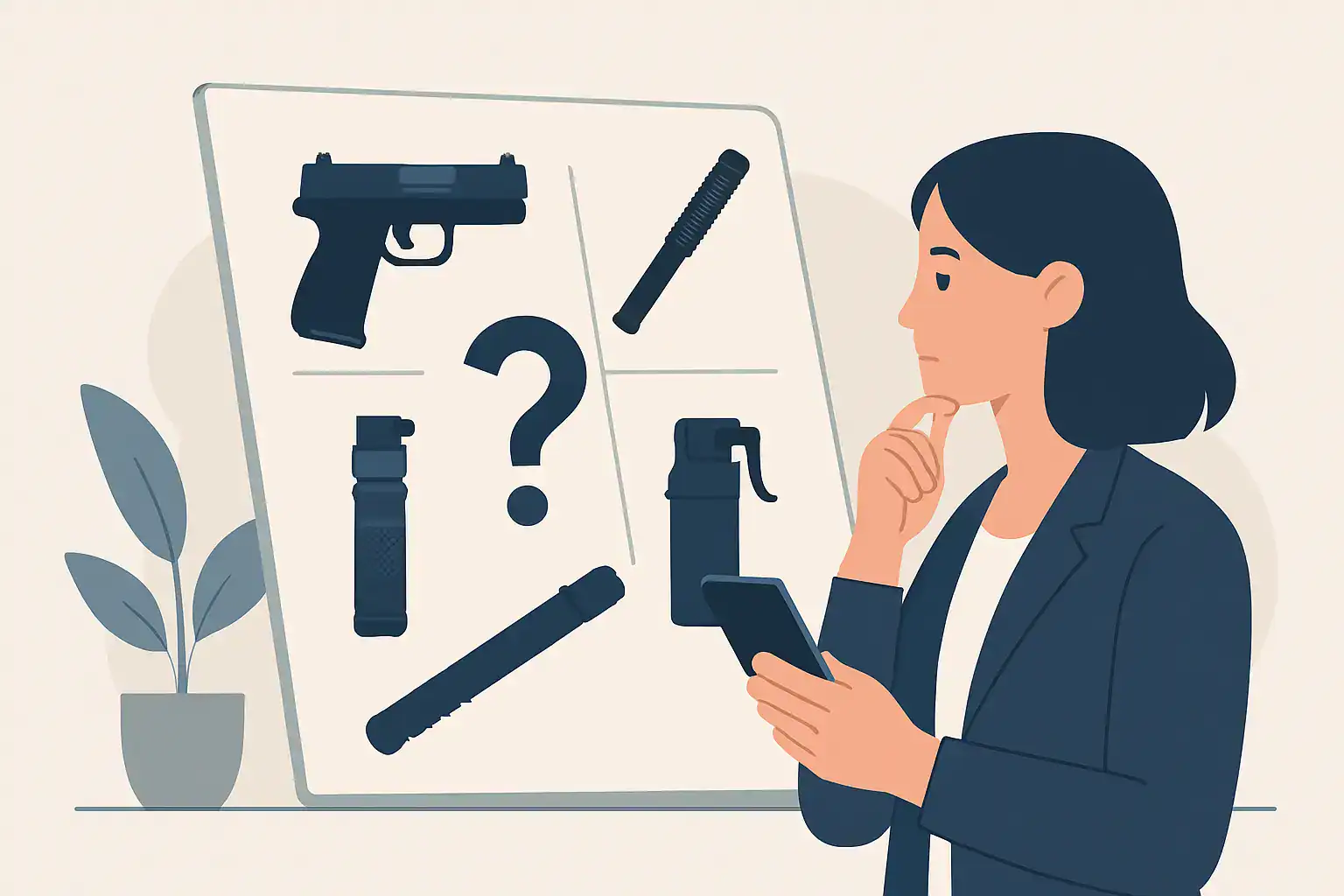
Your safety plan should work on your worst day – when you are tired, carrying bags, or walking to your car with your mind on everything except danger. That is exactly why choosing a self-defense weapon is not about what looks toughest or what someone else swears by. It is about what you can access fast, use correctly under stress, and legally carry where you actually live and travel.
This guide is built for real life. Not fantasy scenarios. Not complicated jargon. Just clear thinking, honest trade-offs, and practical choices you can stand behind.
Different tools solve different problems. Before you compare pepper spray vs. a stun gun vs. a tactical pen, get specific about where you want protection.
If your biggest concern is the parking lot, you need something you can deploy one-handed and quickly. If you travel for work, you need something that makes sense across different environments and rules. If your focus is home entry points, you may care less about pocket carry and more about visibility, deterrence, and buying time.
Also be honest about distance. Some threats happen at arm’s length. Others start with someone closing space from 10-15 feet away. The right tool often depends on whether you can create space or need something that works when space is already gone.
This part is not exciting, but it is non-negotiable. Self-defense tools are regulated differently from state to state, and sometimes city to city. Some places restrict blade length, certain sprays, or stun devices. Certain locations can also prohibit carry even when your state allows it.
The safest approach is to check your local rules and think through your routine: work buildings, schools, government facilities, venues, flights, and any regular travel. The “best” tool is worthless if it sits at home because you cannot carry it where you need it.
A self-defense tool that stays in your glove box does not protect you when you are walking across a dark lot. When people regret a purchase, it is usually because the item was too bulky, too awkward, or too slow to access.
Think about how you dress and what you carry daily. If you do not wear a belt, belt holsters might be a dead end. If your pockets are small, a big device may be unrealistic. If you carry a purse or bag, consider whether you can reach the tool instantly or if it will get buried under everything else.
One of the most overlooked factors is grip and confidence. If a tool feels awkward in your hand, you will hesitate. Under stress, hesitation is the enemy.
Pepper spray is popular for a reason. It gives you a chance to stop a threat without being within arm’s reach. It can also create an opportunity to escape, which is the real goal.
The trade-off is that spray is affected by wind, distance, and your ability to aim under stress. It is not magic. You need to practice drawing it, pointing it, and using it quickly. You also need to understand that in tight spaces, you could be affected too.
Pepper gel and spray patterns can matter. Gel is often chosen because it reduces airborne blowback and tends to stick, while a wider spray pattern can be more forgiving for aim but more vulnerable to wind. Your best choice depends on your environment. If you are mostly outdoors, wind is a real factor. If you are mostly in enclosed areas, controlling blowback becomes more important.
Pepper spray is a smart choice for many people who want a straightforward tool that is affordable, easy to carry, and effective when used decisively.
Stun guns can be a powerful option for someone comfortable carrying an electronic device and getting close enough to use it. The main advantage is that it does not rely on wind, and its effect is immediate when contact is made properly.
The trade-off is obvious: it is a close-range tool. If someone is already grabbing you, a stun gun may be usable. If someone is still several feet away, you may not have a way to stop them from closing distance unless you can move and create space. Another practical consideration is that you need to keep it charged and ready. A tool you forget to charge is a false sense of security.
Some people also feel more confident with a stun gun because it is a physical device in hand, not a spray that can be affected by conditions. That confidence can matter, as long as it is backed by practice.
Keychain tools are popular because they are easy to carry and easy to keep consistent. If you always have your keys, you are more likely to have your self-defense tool too.
The strength here is access and habit. A tool that is already in your hand as you walk to your door or car gives you a head start. The trade-off is capability. Many keychain tools are designed for close-range encounters and rely on your ability to use them decisively.
Keychain options can be a smart part of a layered plan, especially for people who want something simple, discreet, and always within reach.
A tactical pen is one of the most discreet choices, and that is exactly why some people prefer it. It can be carried in professional settings without drawing attention, and it is useful as a normal pen.
The trade-off is that it is skill-dependent. A tactical pen is not a “press button, problem solved” tool. It works best for someone willing to learn basic targeting, grip, and how to create an opening to escape. If you like the idea of something low-profile that can still be a serious option, it is worth considering, but do not skip the practice.
When people ask how to choose self defense weapons, what they often mean is, “What should I buy so I feel safer?” The honest answer is that feeling safer comes from readiness, not just a purchase.
If you want distance and a chance to stop someone before they touch you, pepper spray or gel is often a top pick. If you are comfortable with a contact-based option and can commit to keeping it charged, a stun gun may fit. If you want something you can carry every single day without changing your routine, a keychain tool or tactical pen may be more realistic.
Your comfort matters because hesitation wastes time. The right tool is the one you can deploy quickly without second-guessing yourself.
A smart safety plan usually includes more than one tool or tactic. Not because you are trying to look intimidating, but because situations vary.
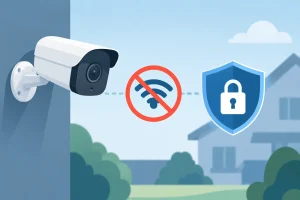
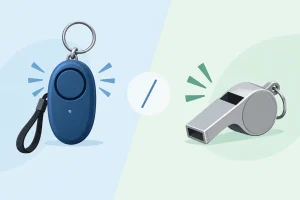
You might carry pepper spray for distance and keep a keychain tool for the moments when your keys are already in hand. You might keep a personal alarm for attention and deterrence, plus a defensive tool for worst-case scenarios. For home, you might add alarms, dummy cameras, or diversion safes to reduce your risk of becoming a target in the first place.
Layering is how you reduce reliance on one perfect moment. Real life is messy. Your plan should be ready for that.
A self-defense weapon should be easy to carry, quick to access, and simple to operate. That sounds basic, but it is where most people go wrong.
Pay attention to size, grip, and how it will be stored. If it is spray, check the safety mechanism and whether you can operate it with your thumb under pressure. If it is a stun gun, consider ergonomics and charging. If it is a keychain item, make sure it will not snag or become uncomfortable to carry, because discomfort leads to leaving it behind.
Quality matters too. A tool that fails under stress is worse than having nothing, because it can cost you critical seconds.
Owning a tool is not the same as being prepared. Practice does not mean hours of training. It means building a simple routine so your hands know what to do.
Practice accessing your tool from where you actually carry it. Practice doing it one-handed. Practice while holding a bag. Practice while seated in your car. The goal is not perfection. The goal is reducing fumble time.
Also practice decision-making. You should know your own boundaries: when you will use it, when you will escape, and what your next move is after deployment. For most people, the best next move is creating distance and getting to safety while calling for help.
When you are buying self-defense gear, you are not shopping for a gadget. You are choosing peace of mind and a tool that could matter in seconds. That means you want clear options, practical descriptions, and equipment designed for real-world carry.
If you want a one-stop shop for personal and home security basics like pepper sprays, stun guns, self-defense keychains, tactical pens, and home deterrents, you can find reliable options at Elite Warrior Defense.
The strongest choice is the one you will carry consistently, can use without hesitation, and can justify legally and ethically. Pick the tool that fits your life, then earn your confidence by practicing until “ready” feels normal.

YOU’RE IN!
Use this code on every order
🎉
Here’s Your Code!
Use it now an on every future order.
YOUR DISCOUNT CODE
We also sent this code to your email for safekeeping.
EXCLUSIVE OFFER
Every order – not just your first!
Unlock Your Discount Instantly
Enter your email below and your personal 15% discount code appears right here – no need to check your inbox.
🔒 We respect your privacy. Unsubscribe anytime.