
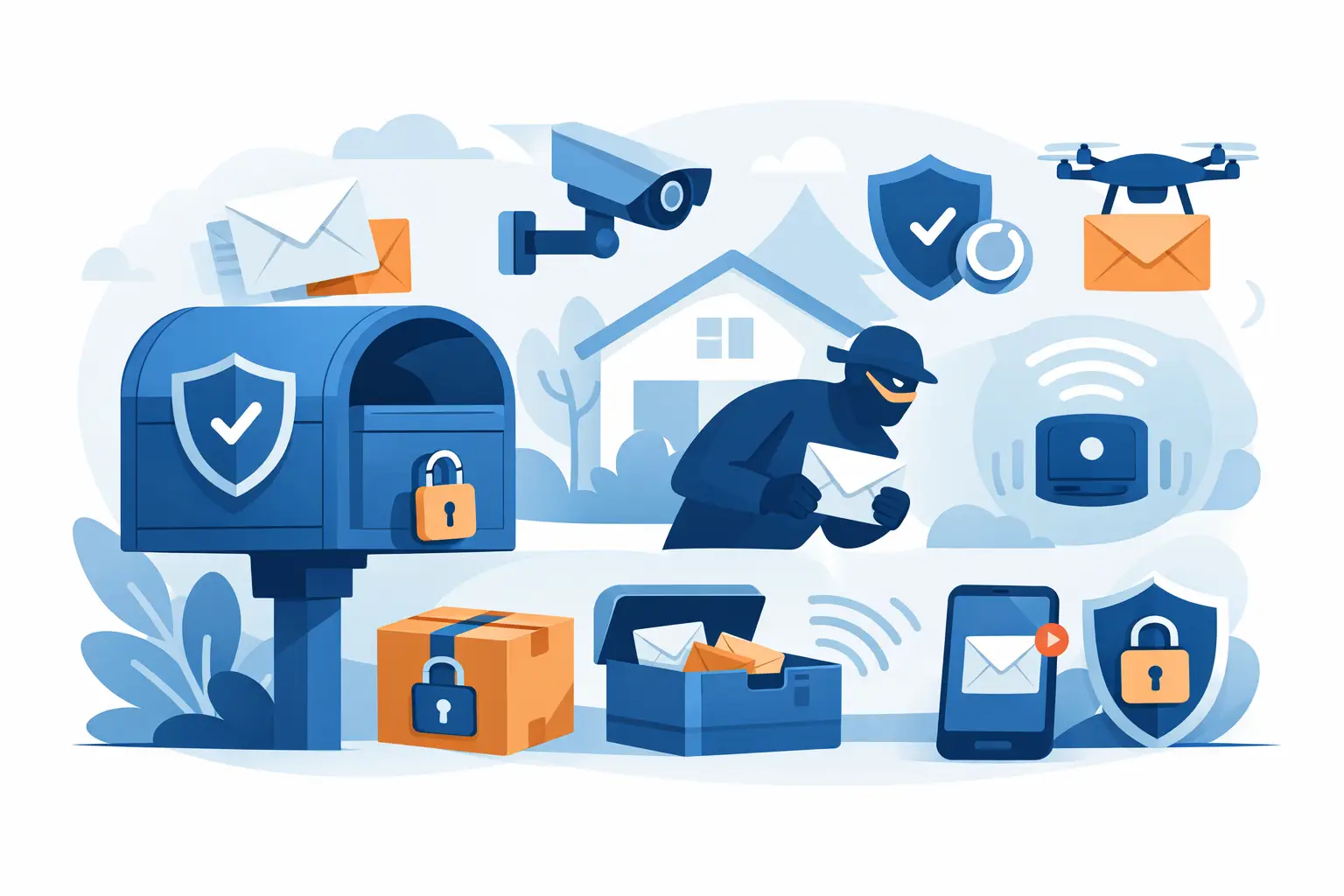
A stolen envelope can create far more trouble than a missing bill. Checks, replacement cards, tax documents, medical notices, and account details can all pass through a mailbox. The best mail theft prevention ideas make your mail harder to access, limit how long it sits outside, and help you respond quickly if something goes missing.
Mail theft is often a crime of opportunity. A thief sees an overflowing box, an unsecured outgoing envelope, or a package sitting in plain view and acts fast. You do not need to turn your front yard into a fortress, but you do need a routine that removes easy opportunities.
A locking mailbox is one of the strongest practical improvements you can make. It allows your mail carrier to deliver letters through a slot while keeping the contents behind a locked door. Choose a model made from durable metal with a protected lock, a narrow outgoing-mail area, and hardware designed to resist tampering.
Not every locking mailbox is equally useful. Some models protect incoming mail well but leave outgoing envelopes exposed in a flag-up compartment. If you mail checks or documents containing personal information, take those items directly to the post office or place them in a secure USPS collection box instead.
Criminals prefer privacy. Trim shrubs, low branches, and tall ornamental grass that create a hiding place around a curbside mailbox or front entry. If possible, position the box where it can be seen from a window, driveway, or frequently used area of your home.
Visibility is a deterrent, but it should not make your address hard for emergency services or delivery drivers to find. Keep house numbers clear, reflective, and easy to read from the street.
A dark porch or driveway gives thieves cover, especially during early-morning or evening delivery windows. Motion-activated lights can draw attention to activity near the mailbox, front door, side gate, or package drop area.
Aim lights toward access points rather than directly at the street or a neighbor’s property. The goal is useful illumination when someone approaches, not a constant glare that becomes background noise.
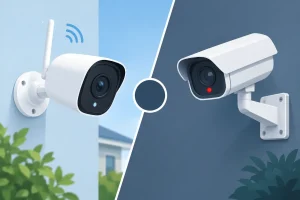
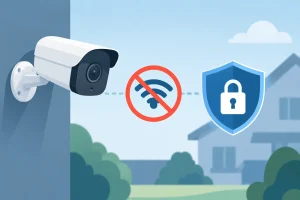
A visible camera near your entrance can discourage theft and provide evidence if an incident occurs. It should cover the route a person would take to reach your mailbox or porch, while still respecting neighbors’ privacy. Check that the camera captures faces clearly in daytime and at night, and test its view after installation.
A hidden camera can provide another angle, but it should support, not replace, visible deterrents and secure physical barriers. Cameras record what happened. A locking mailbox and prompt mail retrieval can stop the opportunity before it starts.
The simplest habit is still one of the most effective: do not let mail pile up. Retrieve it as soon as practical after delivery, particularly if you are expecting a check, financial document, replacement card, prescription, or tax-related notice.
If your schedule makes daily pickup difficult, ask a trusted household member to help. An empty mailbox gives a thief very little reason to stop.
Incoming mail gets attention, but outgoing mail can be just as valuable to a thief. A raised mailbox flag can advertise that there is something worth taking, especially during tax season or around the holidays.
Avoid leaving checks, money orders, gift cards, or paperwork with account information in an unlocked residential mailbox. Drop these items inside the post office whenever possible. If you use a blue USPS collection box, choose one in a well-traveled, well-lit location and avoid depositing mail after the last scheduled pickup of the day.
Consider electronic payments for bills when it makes sense for your household. Digital payment is not risk-free, so use strong, unique passwords and account alerts. Still, it removes a paper check from the path between your home and the mail stream.
Mail theft prevention extends beyond the mailbox. Discarded account statements, preapproved offers, prescription labels, and shipping records can reveal enough information for someone to target you. Use a cross-cut shredder for documents containing names, addresses, account numbers, barcodes, or other personal details.
Do not assume a torn envelope is safe. If it contains identifying information, shred it.
Set up paperless billing and statements for accounts you monitor regularly. This can reduce the volume of financial information arriving at your home. Keep in mind that some notices may still come by mail, so paperless settings are not a reason to stop checking your box.
You can also review which businesses and organizations have your current address. Old accounts, former employers, and insurance providers may continue sending documents long after you no longer need them.
Mail theft and package theft often happen together because both depend on predictable deliveries and easy access. Protecting one without considering the other leaves a gap in your home-security routine.
Turn on carrier notifications when available. A delivery alert gives you a chance to bring packages inside promptly or ask a trusted neighbor to retrieve them. Tracking is especially helpful for high-value purchases, replacement bank cards, medications, and items that clearly reveal their contents through the packaging.
For items that cannot be left unattended, choose a pickup location, signature requirement, or delivery window that fits your schedule. The best option depends on your work hours, neighborhood, and the value of the shipment.
A package box, lockable parcel locker, enclosed porch area, or approved alternate delivery location can reduce exposure. If packages are normally left at your front door, make that area less inviting to thieves with clear sightlines, lighting, and a camera.
Avoid leaving a note that tells drivers to hide packages behind a gate if the location is still accessible from the street. A location is only secure when a thief cannot easily reach it without being noticed or blocked.
A full mailbox is a clear signal that nobody is home. Before a trip, arrange for mail to be held or ask a trusted person to collect it regularly. Do the same for packages, newspapers, flyers, and anything else that advertises an empty home.
Be thoughtful about travel posts on social media. Sharing vacation photos in real time can unintentionally tell strangers that your property is unattended. Save the public updates for after you return.
Missing mail does not always mean theft. Delivery delays, a misdelivered item, or a neighbor receiving your envelope by mistake are all possible. But if you see a damaged mailbox, opened envelopes, unfamiliar people taking mail, or a pattern of missing items, treat it seriously.
Write down dates, expected senders, tracking numbers, and any camera footage or photos. Report suspected mail theft to the appropriate postal authorities and notify local law enforcement when there is evidence of a crime or an immediate safety concern. If checks, cards, or identity documents may have been taken, contact the issuing organization promptly and monitor the affected accounts for unauthorized activity.
Do not confront a suspected thief. Your property matters, but your personal safety matters more. If you see someone actively stealing mail, keep your distance, observe details only if it is safe, and call emergency services when there is an immediate threat.
The most effective plan combines layers: a secure mailbox, timely pickup, safer outgoing-mail habits, lighting, camera coverage, and delivery alerts. You may not need every measure on this list. A homeowner with a curbside mailbox may prioritize a locking box and motion lighting, while an apartment resident may focus on package tracking, secure pickup options, and reporting damaged community mailboxes.
Elite Warrior Defense believes practical security starts with clear decisions made before a problem occurs. Walk outside this week, look at your mailbox and delivery area from a stranger’s point of view, and fix the easiest vulnerability first. One stronger habit today can prevent a stolen envelope from becoming a much larger problem tomorrow.

YOU’RE IN!
Use this code on every order
🎉
Here’s Your Code!
Use it now an on every future order.
YOUR DISCOUNT CODE
We also sent this code to your email for safekeeping.
EXCLUSIVE OFFER
Every order – not just your first!
Unlock Your Discount Instantly
Enter your email below and your personal 15% discount code appears right here – no need to check your inbox.
🔒 We respect your privacy. Unsubscribe anytime.