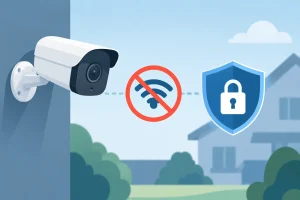
A ground-floor bedroom window, a balcony door, or a window hidden behind a stairwell can create an easy access point if it is not protected. The best window alarms for apartments give you an immediate warning when a window is opened, moved, or struck – without requiring a permanent installation or a complicated security contract.
For renters, the right alarm is not necessarily the most expensive or most connected option. It is the one you can install correctly, hear clearly, and rely on every day. A loud, simple alarm on a vulnerable window can make an intruder think twice while alerting you and nearby neighbors that something is wrong.
Why Apartment Window Security Needs a Different Approach
Apartment living comes with security advantages and limitations. You may have neighbors close by, secured entrances, cameras in common areas, or an on-site manager. But you also have less control over exterior doors, shared hallways, maintenance access, and building rules. A window alarm gives you a layer of protection that stays focused on your own space.
Renters also need to consider lease restrictions. Drilling holes, running wired systems, or making permanent changes can cause problems when it is time to move out. Battery-powered alarms with adhesive mounting are usually the practical choice because they can be installed in minutes and removed with far less hassle.
Not every window needs the same level of protection. Start with first-floor windows, windows beside fire escapes, balcony-access windows, basement-level units, and windows that cannot be seen easily from the street or a shared walkway. If a window gives someone privacy while they try to force it open, it deserves attention.
Best Window Alarms for Apartments: The Main Options
The best choice depends on how the window operates, where it is located, and what kind of warning you need. Most apartment residents get the strongest results by combining basic contact alarms with a second type of detection on their most exposed windows.
Magnetic contact alarms for opening windows
A magnetic contact alarm uses two small pieces: one attaches to the window frame and the other to the moving sash. When the window opens and the pieces separate, the alarm sounds. These are among the best options for standard sliding, single-hung, double-hung, and casement windows.
Their biggest advantage is simplicity. They are affordable, easy to understand, and often loud enough to bring immediate attention to an entry attempt. Many models have an on/off switch, while others offer a chime setting that alerts you whenever a window is opened normally. A chime can be useful for a child’s room or for keeping track of a window that should remain closed.
Contact alarms do have one limitation: they usually will not sound if someone breaks the glass without opening the window. That does not make them a poor choice. It simply means they work best as part of a practical plan rather than as the only safeguard for every situation.
Vibration alarms for glass and frames
Vibration alarms respond when the glass or window frame is shaken, struck, or tampered with. They can be useful on windows where a magnetic sensor will not align properly, or where you want an alert before the window is fully opened.
Sensitivity matters here. Set too high, a vibration alarm may react to heavy traffic, loud thunder, or a window rattling in strong wind. Set too low, it may miss a real attempt to force entry. Test the alarm after installation and adjust it based on normal activity around your apartment. This extra step is what separates a useful deterrent from an alarm you stop trusting after repeated false alerts.
Glass-break alarms for exposed windows
Glass-break alarms are designed to detect the sound or vibration associated with breaking glass. They make the most sense for large ground-floor windows, patio doors, and windows that are highly visible but still vulnerable to a quick smash-and-reach attempt.
Some glass-break alarms mount directly on the pane, while others listen for the sound of breaking glass from nearby. Direct-mount options are straightforward but may need careful placement. Sound-based units can cover more than one window, although their performance depends on room layout, distance, curtains, and background noise. In a small apartment, this may be a smart way to cover a living room with multiple windows.
Smart window sensors for remote alerts
Smart sensors can send an alert to your phone when a window opens. They are a strong fit if you travel, work long shifts, or want to know whether a window was opened while you were away. Depending on the system, they may also connect with door sensors, cameras, lights, or a central hub.
The trade-off is that smart systems require more setup and depend on batteries, Wi-Fi, and app notifications. A phone alert is helpful, but it should not replace an audible alarm at the window. If your phone is on silent, has no service, or is in another room, a loud local alarm can still draw attention at the moment it matters.
What to Look for Before You Buy
Sound level should be near the top of your list. A window alarm needs to be loud enough to startle an intruder and alert you from another room. In a larger apartment or one with closed bedroom doors, choose a higher-decibel alarm and test whether you can hear it from where you sleep.
Battery access is another practical detail. You want to be able to replace batteries without removing the entire unit or damaging the adhesive. Check the alarm regularly, especially after moving furniture, cleaning windows, or returning from a long trip. An alarm with weak batteries is not a dependable layer of defense.
Pay attention to the mounting surface. Adhesive works best on clean, dry, smooth areas of the frame. Older painted frames, textured vinyl, dusty aluminum, and condensation-prone windows may need extra preparation. Clean the mounting spot, let it dry fully, and hold the sensor firmly in place according to its instructions.
You should also consider how the window is used. A window you open every day for fresh air needs an alarm that is easy to switch on and off. A window that stays closed year-round can use a more permanent alarm setting. For renters, convenience is not a minor feature. If an alarm is difficult to manage, it is more likely to be left off when you need it most.
Placement Matters as Much as the Alarm Itself
For magnetic contact alarms, keep the two sensor pieces closely aligned when the window is closed. Even a small gap can prevent proper function. On sliding windows, place the sensor where the moving panel separates from the fixed frame. On double-hung windows, place it where the bottom sash meets the upper sash or frame, depending on the alarm design.
Vibration alarms should be installed where tampering will transfer movement effectively, often on the glass or close to the locking area of the frame. Avoid placing them where loose blinds, curtains, or normal window movement may constantly trigger the sensor.
Do not place an alarm where it will interfere with emergency escape. Bedroom windows may serve as an exit during a fire or other emergency. Everyone in the household should know how to turn off or remove the alarm quickly, open the window, and exit safely. Security should never block a safe way out.
Make the Alarm Part of a Stronger Apartment Safety Plan
Window alarms work best when they support good daily habits. Keep windows locked whenever they are closed, even if you are home. Do not leave a ground-floor window cracked open while you sleep or while you are away. Close blinds or curtains at night so strangers cannot easily see valuables, room layouts, or who is home.
For higher-risk windows, add a visible deterrent such as a window lock or security bar that still allows emergency release. Motion-activated lighting near a private patio or balcony can help where your lease and building layout allow it. A visible alarm sticker may also discourage a person looking for an easy target, but the real protection comes from having a working alarm behind it.
Elite Warrior Defense focuses on practical security tools because protection should not feel out of reach or overly complicated. A simple alarm you install and test today can be more valuable than an elaborate plan you never put into action.
Before you settle in for the night, walk through your apartment and look at each window from the outside-in. Ask which one offers the easiest opportunity, then protect that one first. A well-placed alarm does more than make noise – it helps you stay alert, prepared, and in control of your space.