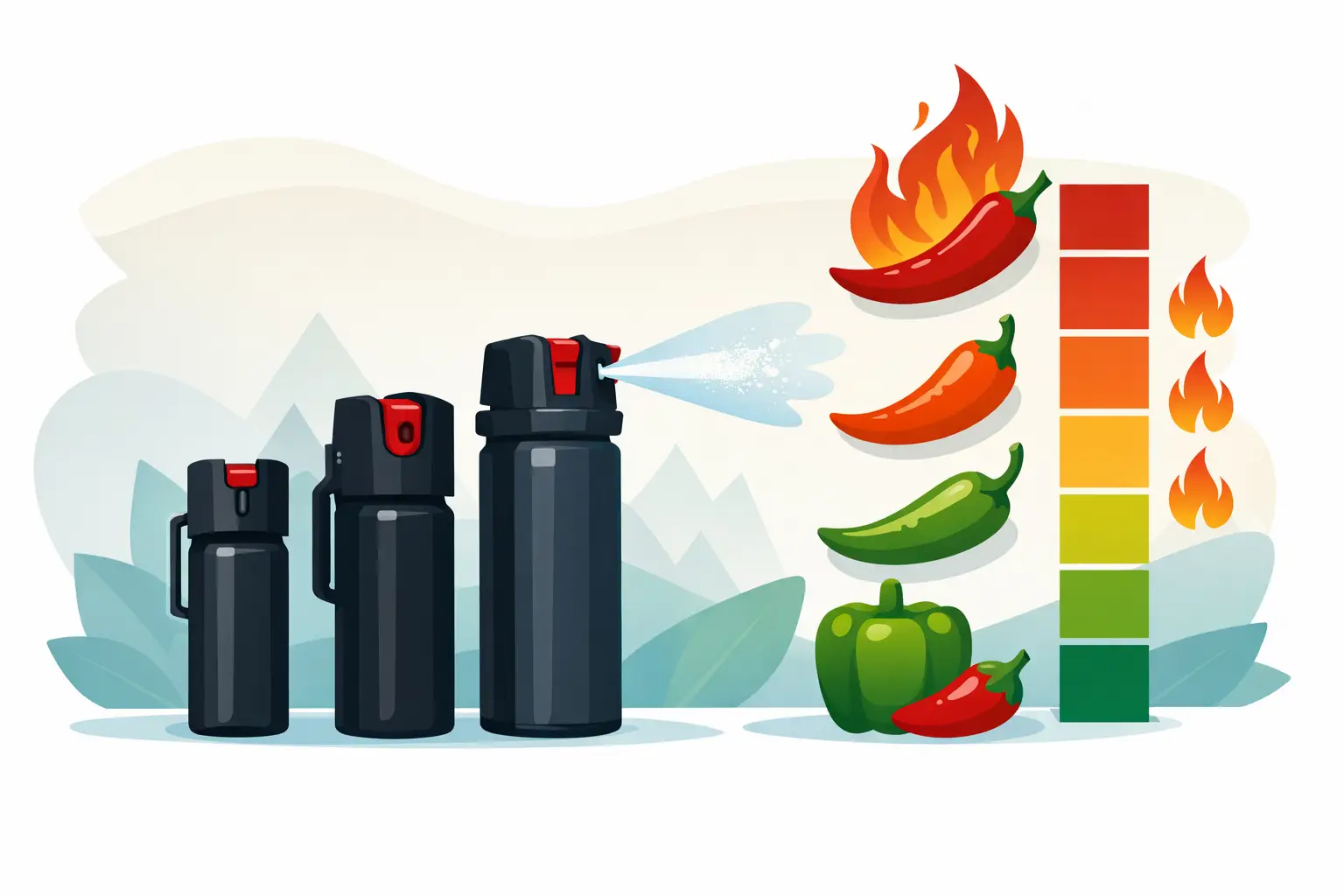
When people shop for self-defense spray, they often ask the same question first: how many Scoville units is it? That is exactly why a pepper spray strength scoville guide matters. The problem is that Scoville numbers can sound impressive while telling only part of the story. If you want protection you can trust, you need to know what the label means, what it does not mean, and what actually affects stopping power in a real encounter.
What a pepper spray strength scoville guide should really explain
The Scoville scale was originally designed to measure the heat of peppers. It gives a number called SHU, or Scoville Heat Units, based on how hot a pepper feels. Jalapenos are relatively low. Habaneros are much higher. Pure capsaicin sits at the extreme end of the scale.
That sounds useful, but there is a catch. Pepper spray is not a fresh pepper. It is a manufactured defensive product made from oleoresin capsicum, often called OC, plus a delivery system. The heat number attached to the raw pepper or extract is not always the same thing as the strength of the final spray coming out of the canister.
This is where buyers get misled. A brand can advertise a very high SHU number, but that may refer to the pepper source rather than the finished formula. In self-defense, that difference matters.
SHU vs. capsaicinoids – the part most labels gloss over
If you remember one thing from this pepper spray strength scoville guide, make it this: SHU is not the only number that matters. In many cases, total major capsaicinoids gives a clearer picture of the active ingredients that create the burning, inflammation, and involuntary eye closure associated with pepper spray exposure.
Capsaicinoids are the chemical compounds responsible for the effect. The most discussed one is capsaicin, but there are related compounds in the mix. Some manufacturers list a percentage of OC, such as 5%, 10%, or even higher. That can also be misleading, because OC percentage refers to the amount of pepper resin in the formula, not necessarily the amount of active heat compounds.
A 10% OC spray is not automatically stronger than a 2% OC spray if the lower-percentage product has a better concentration of major capsaicinoids. That is why experienced buyers do not judge strength by a single big number on the front label.
Why extremely high Scoville claims can confuse buyers
You may see pepper spray marketed with claims like 2 million SHU or 5.3 million SHU. Those figures grab attention, but they do not always mean the spray will perform better on the street. Sometimes they refer to the raw pepper extract used before it is diluted into a final product.
For practical self-defense, performance depends on several factors working together. The formula matters. The spray pattern matters. The canister size matters. The distance matters. The user matters too. A product with realistic, well-tested output can be more dependable than one that leans on extreme heat marketing.
That does not mean SHU is useless. It does help explain the potential heat of the source material. It just should not be treated as the only measure of defensive effectiveness.
What actually affects pepper spray stopping power
A strong self-defense spray needs more than a big SHU claim. It needs to perform under stress. In real-world use, stopping power comes from the combination of active ingredient concentration, delivery pattern, range, and reliability.
A stream pattern is often favored for outdoor use because it reaches farther and reduces blowback risk. A fog or cone can create a wider cloud, which may help with aim at close range, but it can also increase the chance that the user gets exposed, especially in wind. Gel formulas can reduce airborne contamination and may stick to the target, but they can require more precise aiming.
This is where buying for your environment matters. Someone carrying for urban daily use may want compact size and a controlled stream. Someone concerned about aggressive dogs may think more about range and pattern. Someone using a home defense spray may prioritize ease of deployment in a confined area. The best choice depends on your likely scenario, not just the headline number.
How to read a pepper spray label without getting fooled
A smart buyer looks beyond the biggest printed claim. Start with the type of formula. Look for information about major capsaicinoids if it is provided. Then check the spray pattern, estimated range, number of bursts, and safety mechanism.
Also pay attention to whether the product is designed for human attackers, dogs, or bears. These are not interchangeable categories. Bear spray, for example, is regulated differently and designed for specific wildlife defense use. A compact keychain spray meant for personal defense is built for a very different situation.
You should also check expiration dates. Pepper spray does not last forever. Pressure can drop over time, and formula effectiveness can degrade. A reliable product today may not be reliable years past its recommended shelf life.
Pepper spray strength scoville guide for real-world buyers
If your goal is dependable self-protection, think in layers. First, choose a reputable defensive spray rather than chasing the wildest SHU number. Second, match the canister to how you will carry it. Third, learn how it deploys before you need it.
Pocket sprays are easy to keep on hand, and that matters because a defensive tool only helps if it is accessible. Larger units may offer more bursts and better grip, but they are less convenient for daily carry. Keychain options are popular because they stay with your keys and are harder to leave behind. The trade-off is usually smaller volume.
For many adults, the best balance is a compact unit with a secure safety and a strong stream pattern. That setup gives speed, control, and enough capacity for multiple bursts if needed. If you are buying for a family member who is new to self-defense tools, simplicity matters just as much as formula strength.
Training matters more than people expect
Even the best spray can fail if the user freezes, fumbles the safety, or has no idea how far the stream reaches. Confidence comes from familiarity. Read the instructions. Practice your draw. Know which way the nozzle faces. Understand the effective range before an emergency decides it for you.
That does not mean you need complicated training. It means you should be realistic. Stress changes fine motor skills. A product that feels easy in the living room can feel very different when your heart rate spikes. Reliable self-defense is not about fear. It is about preparation.
At Elite Warrior Defense, that practical mindset is the right one. You are not buying a novelty item. You are choosing a tool meant to help create an opportunity to escape and get safe.
The legal and practical side of choosing pepper spray
Pepper spray laws vary by state and sometimes by local jurisdiction. Before carrying any spray, check the rules where you live and where you travel. Size limits, labeling rules, age restrictions, and purchase conditions can differ.
There is also a practical side to ownership. Store it where heat and direct sun will not damage it. Replace expired units. If the spray includes a practice option or inert trainer, that can be worth it, especially for first-time users. A little preparation goes a long way when seconds matter.
So how strong should pepper spray be?
Strong enough to be effective, but not judged by hype alone. That is the honest answer. A quality defensive spray should have a proven OC formula, a delivery pattern that fits your environment, a safe and intuitive design, and a size you will actually carry.
The strongest-looking claim on the package is not always the smartest buy. In self-defense, reliability beats marketing. A spray that deploys quickly, reaches the target, and gives you a chance to break contact is the one that counts.
If you are comparing products, use SHU as one piece of the picture, not the whole picture. Look for a formula built for defense, not just a number built for attention. Your safety deserves more than a flashy label. It deserves a tool you can trust when pressure is real.
The best choice is usually the one that fits your hand, your routine, and your response plan – because confidence comes from carrying something you understand, not something that just sounds extreme.