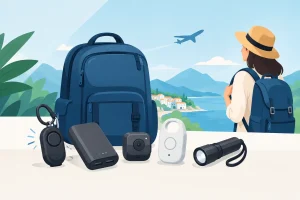
A hotel door that does not feel solid. A rental with a lock you do not fully trust. A dorm room where people come and go at all hours. Those are the moments when portable alarms for travel stop feeling optional and start feeling smart.
Travel security is rarely about one dramatic threat. More often, it is about reducing your exposure to small vulnerabilities that stack up fast when you are away from home. You are sleeping in an unfamiliar place, carrying valuables, and relying on doors and windows you did not choose. A portable alarm gives you another layer of control without asking you to install anything permanent or carry bulky gear.
Why portable alarms for travel matter
The biggest advantage is simple – they work in the gap between awareness and response. A locked door is your first barrier. An alarm is what helps if that barrier is tested. Whether it is a door alarm, wedge alarm, or compact window alert, the goal is not to turn you into security staff. The goal is to create noise, draw attention, and give you time to react.
That matters because travel environments are unpredictable. Hotels vary. Vacation rentals vary even more. Even well-rated properties can have weak doorframes, loose latches, or window access points that make you uneasy once the lights are out. Portable alarms are useful because they do not depend on the building being perfect.
They also make sense for travelers who want protection without carrying something complicated. Most people are not looking for a full security system in their luggage. They want something fast, lightweight, and reliable. That is exactly where these alarms earn their place.
What a good travel alarm actually does
Not every alarm marketed to travelers is worth packing. The best ones solve a clear problem in seconds. If setup takes too long, if the battery is unreliable, or if the device can be knocked loose too easily, it becomes one more piece of gear you stop using.
A good portable alarm should be loud enough to get attention immediately. It should be easy to arm when you are tired, checking in late, or moving between locations. It should also fit naturally into your routine. If you can secure the room in under a minute, you are far more likely to use it every night.
Size matters too, but smaller is not always better. Ultra-tiny devices can be easy to lose and harder to position correctly. What you want is compact, not flimsy. There is a difference.
Door alarms and wedge alarms
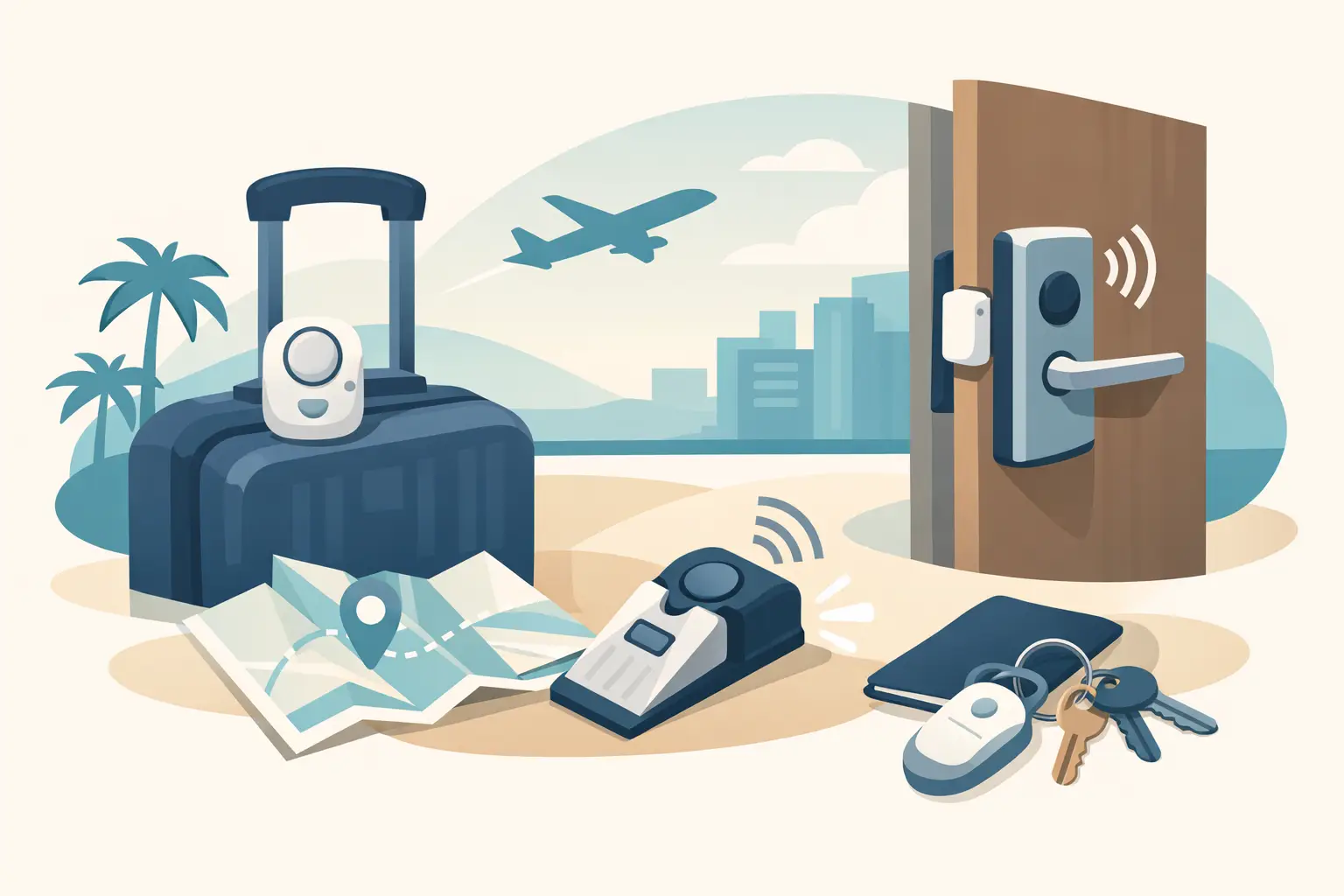
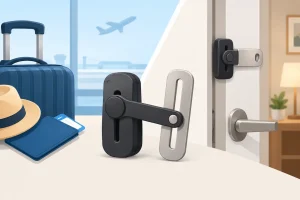
Door-focused alarms are usually the most practical choice for travel. Some hang on or attach near the handle and trigger when the door opens. Others sit on the floor as a wedge and sound off when pressure is applied.
Wedge alarms are popular for a reason. They combine resistance with noise. If someone pushes inward, the wedge can slow entry while the alarm sounds. That said, they depend on the floor surface. On thick carpet or uneven flooring, performance can vary. In those cases, a door-handle or contact-style alarm may be the better pick.
Window alarms and compact contact alarms
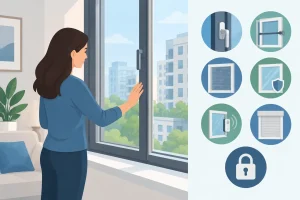
Ground-floor rooms, rentals, and some dorm setups may call for window protection too. Compact contact alarms can help if a window is a realistic access point. They are especially useful when the window lock feels weak or the opening is easy to reach from outside.
The trade-off is that not every trip requires them. If you are on an upper floor in a hotel with sealed windows, carrying extra window alarms may not add much value. Travel security should be intentional, not overloaded.
Choosing the right portable alarms for travel
Start with where you stay most often. If your trips are mostly hotels, focus on a strong door solution first. If you stay in short-term rentals, motels, hostels, or campus housing, a slightly broader setup may make more sense because layouts and security standards are less consistent.
You should also think about how you travel. Business travelers often want speed and simplicity because they are checking in late and leaving early. Solo travelers may prioritize anything that creates a strong audible deterrent. Families may want one alarm that can move between the main door and an interior connecting door depending on the setup.
Battery type deserves more attention than it gets. Some alarms use replaceable batteries, which is practical if you travel often and want a quick fix. Others use built-in rechargeable power, which is convenient until you forget to top it off. There is no universal winner here. The best option is the one you will actually maintain.
It is also worth checking whether an alarm can be triggered accidentally during normal movement. A sensitive device may sound great in theory but become frustrating in a cramped hotel room at midnight. Reliability includes avoiding false alarms, not just sounding loudly when needed.
What portable travel alarms can and cannot do
This is where realistic expectations matter. A portable alarm is a force multiplier, not a guarantee. It adds warning, creates stress for an intruder, and can buy you precious seconds. That is a meaningful advantage, but it does not replace awareness, strong locking habits, or common-sense room selection.
For example, an alarm does not fix a bad choice of lodging. If a property feels poorly managed, has broken access points, or leaves you seriously uneasy, the smarter move may be to leave. Likewise, an alarm cannot compensate for leaving doors unsecured or ignoring obvious safety issues around entrances and windows.
What it does do is strengthen your response window. Noise changes the situation fast. It can wake you, alert other people nearby, and force an intruder to deal with immediate attention. In personal security, that kind of disruption matters.
Using travel alarms the smart way
The best security tool is the one you use consistently. That means building a simple routine every time you enter a room. Lock the door, inspect the frame and latch, check secondary entry points, then set your alarm. Do it the same way each night so you do not have to think twice.
Placement matters. A wedge alarm only works well if it is firmly positioned and tested. A contact or hanging alarm should be checked before you settle in. Take ten seconds to confirm it is armed correctly. You do not want to discover a problem when it is too late.
It is also smart to keep your essentials within easy reach while you sleep. Phone, light, keys, wallet, and any legal self-defense item you carry should not be buried across the room. An alarm gives you warning. Your next few seconds still matter.
Who benefits most from portable alarms for travel
Solo travelers are an obvious fit, but they are not the only ones. Parents booking adjoining rooms for their kids, college students in temporary housing, truck drivers resting overnight, and business travelers moving city to city can all benefit from an added layer of room security.
These alarms also make sense for people who simply sleep better with extra protection in place. Peace of mind is not a small thing. Rest matters, especially when you are on the road, making decisions, meeting schedules, or navigating unfamiliar places.
That practical confidence is why many security-minded travelers keep an alarm in the same bag every trip. It becomes part of the routine, like carrying a charger or checking your ID before leaving home.
A small tool that earns its space
Travel security does not have to be dramatic to be effective. Portable alarms are one of those rare tools that stay simple while still solving a real problem. They are affordable, easy to carry, and useful in the exact moments when unfamiliar environments test your comfort level.
If you are building a smarter travel kit, start with gear that creates time, attention, and options. That is what a solid portable alarm does. And when you are far from home, having one more layer between you and a bad situation is a decision that makes sense.