A lot of people start with the front door because that feels like the obvious weak point. Then they realize a break-in does not always start there. When comparing window alarm vs doorbell camera options, the real question is not which device sounds more advanced. It is which one covers the risk you actually face at home.
That matters because these two products solve different problems. One is built to alert you the second a window is opened or disturbed. The other is built to show you who is approaching, lingering, or moving near your front entry. Both can improve home security, but they do it in very different ways.
Window alarm vs doorbell camera: what each one does best
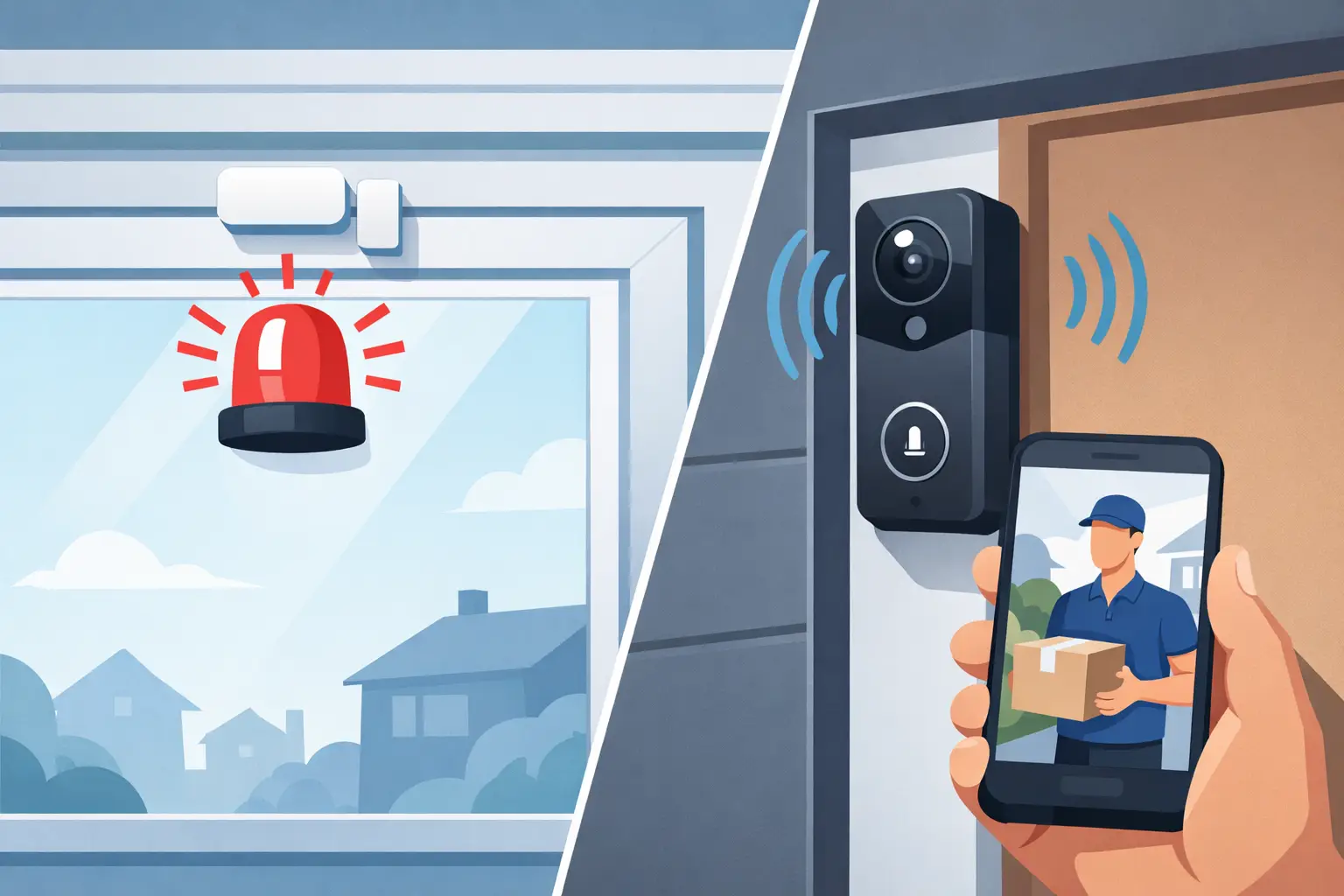
A window alarm is direct and simple. It is designed to trigger when a window opens or when vibration or impact is detected, depending on the model. Its strength is immediate notice. If someone tries to force entry through a window, the alarm creates noise right away, which can scare off an intruder and alert people inside the home.
A doorbell camera works more like an early warning and evidence tool. It watches the space outside your door, records motion, and often sends an alert to your phone when someone approaches. It helps you see who is there, whether it is a package thief, a stranger checking your porch, or someone you were not expecting.
So right away, the trade-off is clear. A window alarm reacts to entry attempts at the window itself. A doorbell camera gives visibility and awareness at the front door area. If your concern is forced entry through side or back windows, a doorbell camera will not cover that gap. If your concern is porch theft, suspicious visitors, or screening unknown callers, a window alarm will not help much.
Coverage matters more than features
People often compare specs before they compare blind spots. That is backwards.
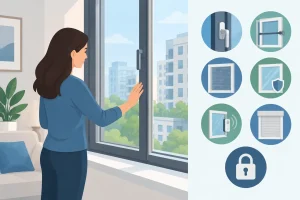
If you live in a single-family home with several ground-floor windows, window alarms can close a major vulnerability fast. Back windows, basement windows, and side windows are common points of entry because they are less visible from the street. A front door camera may make you feel watched over, but it does not watch the whole home.
On the other hand, if you live in an apartment with one main entry and limited window access, a doorbell camera may cover the risk that matters most. In that setup, your front door is the choke point. Knowing who is outside, talking to them remotely, and recording motion can be more useful than placing alarms on windows that are hard to reach from outside.
This is why there is no honest one-size-fits-all answer in the window alarm vs doorbell camera debate. Your layout changes the decision.
When a window alarm makes more sense
A window alarm is often the better first buy if you want affordable protection with very little setup. It is especially useful for renters, families, people with older homes, and anyone securing first-floor windows. Many models are easy to install, do not require wiring, and start doing their job immediately.
It also helps if your goal is deterrence through noise. An audible alarm can break the momentum of an intrusion. That matters. Criminals usually want quick, low-risk access. Loud attention is the opposite of that.
Window alarms also tend to be cost-effective when you want to protect multiple access points. Covering several windows with alarms is often less expensive than building out a camera-based system around the home.
When a doorbell camera makes more sense
A doorbell camera is often the better choice if awareness is your top priority. It gives you eyes on your front door whether you are home or away. That can be valuable for deliveries, unexpected visitors, attempted package theft, and spotting suspicious behavior before someone ever touches the house.
There is also the evidence factor. Video clips can help you review what happened, identify patterns, or share footage with law enforcement if needed. A standard window alarm can alert and deter, but it usually does not document.
For many homeowners, convenience is a major selling point too. Motion alerts, two-way audio, and app access make a doorbell camera feel active and connected. That does not make it automatically better. It just means it serves a broader daily-use role beyond intrusion detection.
The biggest trade-offs people overlook
The strongest security choices are usually the ones made with clear eyes. Both products have limits.
Window alarms are powerful in the moment, but they are narrow by design. They do not tell you who is outside. They do not record footage. They also may not help if someone is casing your home, stealing a package, or trying your front door without touching a window.
Doorbell cameras provide visibility, but they are not magic. They rely on power, Wi-Fi, app performance, and camera placement. A missed alert, poor angle, or limited field of view can reduce their usefulness. They also do not stop someone from entering through a back window or side access point outside the camera’s view.
There is also a practical difference in how each one performs under stress. A window alarm is simple. If triggered, it sounds. A doorbell camera often asks more from the user: checking notifications, reviewing footage, speaking through the app, or reacting after seeing motion. That is not a flaw, but it is a different kind of security.
Cost, maintenance, and ease of use
If budget is driving the decision, window alarms usually win on affordability. They are typically less expensive upfront and easier to deploy across multiple windows. For households trying to improve security without overspending, that matters.
Maintenance is usually straightforward too. You install them, test them, and replace batteries as needed. There is very little learning curve.
Doorbell cameras can still be a smart value, but the total cost may be higher. Some require wiring or more involved installation. Some work best with app subscriptions for storing footage or accessing full video history. Even if the hardware price looks manageable, the long-term cost can be higher depending on how the system is set up.
Ease of use depends on the person. If you want simple, direct protection, window alarms are hard to beat. If you are comfortable using smartphone alerts and want more interaction with your security setup, a doorbell camera may feel worth it.
Should you choose one or combine both?
For many homes, the best answer is not either-or. It is layering.
A doorbell camera covers the approach to your front entry. A window alarm protects vulnerable windows where an intruder may try to get in. One helps you see activity before contact. The other reacts when someone tries to breach the home. Together, they cover more ground and reduce blind spots.
That layered approach is especially useful for homes with front porch traffic, side access paths, or secluded windows. It is also a strong option for people who want security that is practical, not complicated. You do not need an oversized system to make smart improvements. You need coverage where it counts.
For shoppers focused on accessible, no-nonsense protection, that is where products like affordable window alarms and entry-point security tools can make a real difference. Elite Warrior Defense serves people who want to take safety seriously without turning it into a high-cost tech project.
How to make the right call for your home
Start with your most likely risk, not the trendiest product. If your front step gets constant traffic, if package theft is common in your area, or if you want to screen visitors while away, a doorbell camera may be the stronger first step. If your home has easy-to-reach windows, dark side access, or entry points that sit out of sight, a window alarm may give you more immediate protection.
Ask yourself one plain question: where would someone test your home first? That answer usually tells you where to begin.
Security should make you feel prepared, not overwhelmed. Choose the tool that covers your real exposure now, then build from there if needed. The strongest setup is the one you will actually use, maintain, and trust when it matters most.