The moment you realize your safety plan depends on whatever happens to be in your bag or pocket, it becomes clear why a real guide to personal safety devices matters. The right tool can create time, attract attention, stop an attack, or help you get away. The wrong tool can be hard to reach, hard to use, or poorly matched to your daily routine.
Personal safety devices are not about fear. They are about preparedness. Most people are not looking for military-grade gear or complicated tactics. They want something reliable, legal in their area, easy to carry, and simple enough to use under stress. That is the standard worth using when you decide what belongs in your everyday carry.
What a guide to personal safety devices should actually help you do
A good buying decision starts with one question: what problem are you trying to solve? Some devices are built to deter. Some are built to disable. Others are meant to alert people nearby or help you keep control of your space long enough to escape.
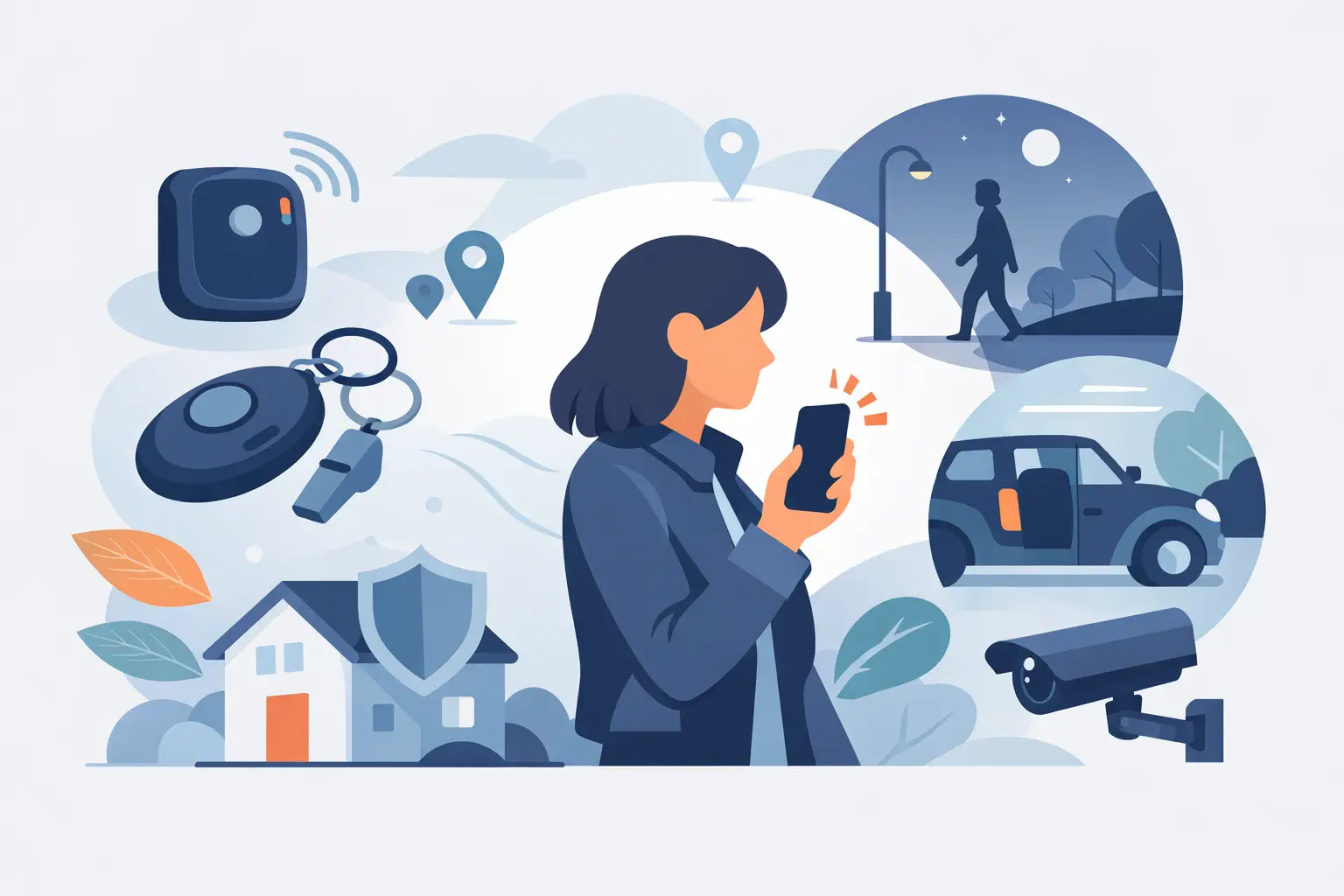
That difference matters. If you walk to your car after dark, a bright safety light or a pepper spray with a quick-access design may make sense. If you want a discreet tool on your keychain, a self-defense keychain or tactical pen may fit your lifestyle better. If your concern includes aggressive animals on runs or hikes, dog or bear repellent belongs in a different category than a device meant for human threats.
The goal is not to buy the most intimidating product. It is to carry something you will actually have with you, know how to use, and feel confident deploying if a situation turns bad fast.
The main types of personal safety devices
Pepper spray and gel
Pepper spray remains one of the most practical self-defense tools for a reason. It gives you distance, can cause immediate disruption, and does not require close physical contact. For many adults, it is the first place to start.
That said, the details matter. Spray patterns can vary, and so can range. Wind can affect traditional spray outdoors. Gel formulas may reduce blowback risk, but they can require more accurate aim. If you want a tool for commuting, parking garages, or evening walks, this category offers strong value, but only if you practice drawing and understand how your specific model operates.
Stun guns and stun batons
Stun guns appeal to people who want a direct-contact defensive tool with immediate stopping power. They can be compact enough for a purse or jacket pocket, and many models include added features like flashlights or alarms.
The trade-off is distance. Unlike pepper spray, a stun gun generally requires close contact. That means it may be better suited for users who are comfortable with a more aggressive defensive response at short range. Stun batons extend reach and can feel more secure for some users, but they are larger and less discreet for everyday carry.
Personal alarms and safety lights
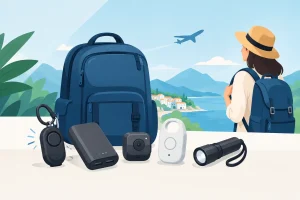
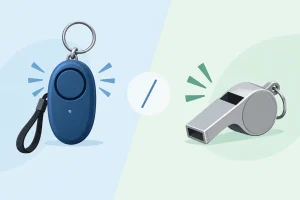
Not every threat calls for force. Sometimes the fastest way to break a dangerous moment is to create noise, confusion, and attention. Personal alarms are useful for students, runners, seniors, and anyone who wants a low-barrier tool with no complicated operation.
Safety lights add another layer. A strong light can help you identify what is ahead, improve your visibility to others, and in some cases disorient a threat long enough to move away. These are especially practical if you spend time walking at dawn, at night, or in poorly lit areas.
Self-defense keychains and tactical pens
These tools are popular because they are compact, easy to carry, and generally less obvious than larger defensive items. A tactical pen can function as an everyday writing instrument while also offering a stronger frame for emergency use. Self-defense keychains come in several styles, and some users like them because they are already attached to something they never leave behind.
This category works best when expectations are realistic. Small tools can be valuable, but they usually require closer proximity and more user confidence than an alarm or spray. They are often best seen as part of a broader safety setup, not your only layer of protection.
Animal repellents
If your risk profile includes loose dogs on neighborhood walks or wildlife on the trail, specialized repellents matter. A product intended for animal deterrence is not the same as a general-purpose personal defense tool. Using the right product for the situation improves both effectiveness and safety.
For outdoor users, this can be one of the smartest additions to a daily or weekend carry setup. It depends on where you go and what you are likely to encounter.
How to choose the right device for your lifestyle
The best personal safety device is the one you can access quickly under pressure. That sounds obvious, but many people buy based on features and ignore carry reality. A device buried in a tote bag under receipts and chargers may as well be at home.
Start with your routine. Think about where you are most often when you feel vulnerable. Walking from work to your car. Jogging before sunrise. Taking public transit. Traveling alone. Answering the door at home. Your environment should shape your decision more than trends or social media recommendations.
Then think about comfort level. Some people want a non-contact option like pepper spray. Others prefer an alarm plus a light because they want something simple and low maintenance. Some want layered tools, such as a flashlight in one pocket and a spray canister clipped for fast access. There is no universal answer. There is only the setup you can use decisively.
Budget matters too. Effective protection does not have to be expensive. Reliable, affordable options often beat flashy gadgets with too many features. Elite Warrior Defense has built its reputation around that idea – practical protection should be accessible, not out of reach.
What people often get wrong
One common mistake is buying a device and never testing how it feels in hand. Grip, activation method, and carry style all affect response time. If you cannot operate it smoothly, the extra features do not help.
Another mistake is ignoring maintenance. Batteries die. Safety caps get stiff. Expiration dates matter on sprays. A personal safety tool is not a one-time purchase you forget about in a drawer. It needs occasional checks, just like a smoke alarm or a spare tire.
People also underestimate stress. Fine motor skills can drop when adrenaline spikes. That is why simple tools often outperform more complicated ones. Ease of use is not a bonus feature. It is a core requirement.
Legal and practical considerations
Before carrying any defensive device, check your state and local laws. Rules can vary on what is legal to own, carry, or use, and those differences matter. A tool that is legal in one place may have restrictions somewhere else.
You should also think about where the device will be stored and who may access it. If children are in the home, secure storage is part of responsible ownership. If you travel often, consider whether your preferred device can be carried in certain buildings, workplaces, or transit systems.
Practical use matters as much as legal use. A personal safety device is most effective when paired with awareness. Keep your phone charged. Know your route. Avoid getting trapped in blind spots or isolated corners. A tool helps, but it should support smart habits, not replace them.
Building a simple, realistic safety setup
For most people, one tool is good, but two layers are better. A common setup might be pepper spray for distance and a safety light for visibility. Someone who wants a less force-focused option may prefer a personal alarm and a bright flashlight. A runner may choose a compact spray plus an animal repellent depending on the route.
What matters is balance. Carrying too much can make your setup less practical. Carrying nothing because you cannot decide is worse. Start with the risk you face most often, choose one dependable device, and build from there if needed.
Confidence comes from clarity. Know where your tool is. Know how to activate it. Know when you would use it. That kind of preparation changes how you move through the world. Not because danger disappears, but because you are no longer relying on luck.
Personal safety devices are not about acting paranoid. They are about refusing to be unprepared. Choose tools that fit your life, respect the law, and give you a clear advantage when seconds count. Peace of mind is stronger when it is backed by something real in your hand, pocket, bag, or home.