

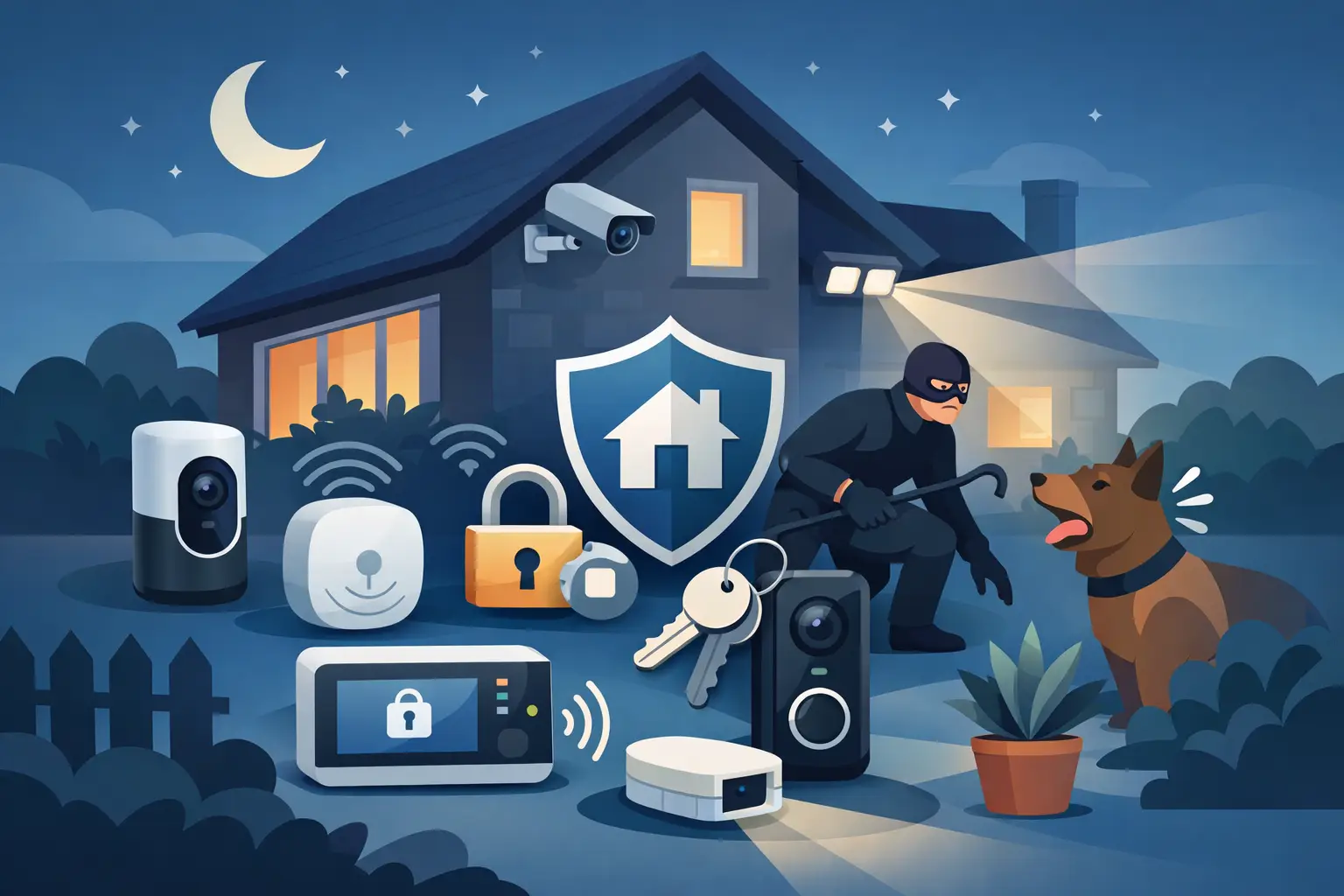
A locked door is a start. It is not a strategy. The homes that look harder to target usually are harder to target, and that is exactly why the right home break in deterrent tools matter. Most burglars are looking for speed, low visibility, and easy access. If your property creates doubt, noise, light, or delay, many will move on.
The good news is that effective home protection does not have to mean a full custom security system or a massive budget. A smart deterrent plan is built in layers. Some tools are meant to be seen. Others are meant to alert you fast. The strongest setups do both.
A deterrent tool works best when it changes the risk calculation for an intruder. That can happen in a few ways. It can increase the chance of being seen, make entry take longer, create immediate noise, or suggest that someone inside is prepared and paying attention.
That last part matters more than many homeowners realize. Criminals often pick homes that appear empty, distracted, or easy to enter without resistance. A front porch with motion lighting, visible cameras, and secured windows sends a very different message than a dark entryway and a weak side gate.
There is also an important trade-off to keep in mind. Some tools are strong visual deterrents but offer limited real protection by themselves. Others are excellent at alerting you but do nothing until someone has already tried to get in. The best approach is not choosing one category over another. It is combining visible deterrence with fast warning.
If you want a simple, affordable way to make an intruder regret the attempt, door and window alarms deserve a close look. These devices are straightforward. When a protected entry point opens, the alarm sounds immediately.
That sudden noise changes the situation fast. A quiet break-in can turn into a rushed exit in seconds. For many homeowners, this is one of the easiest first upgrades because it does not require a complicated installation process.
They are especially useful for apartments, rental homes, garages, and secondary entry points that people forget to monitor. A back window or side door may not seem like the main vulnerability until someone tests it. The downside is that alarms do their job at the moment of entry, not before. That is why they are even more effective when paired with visible deterrents outside the home.
Darkness gives cover. Motion lighting takes that cover away.
A bright light over a driveway, walkway, backyard gate, or side entrance can be one of the most practical home upgrades you make. It does not just help cameras capture better footage. It tells anyone approaching that they have been noticed.
Placement matters. One light near the front door is helpful, but it will not do much for a shadowed side yard or fenced back entrance. Focus first on the areas where someone could approach without being seen from the street or by neighbors.
The trade-off is simple. Motion lights are effective, but they should be reliable enough not to trigger constantly from normal activity. If they go off all night for no reason, people start ignoring them. Good positioning and sensitivity settings make a difference.
Cameras change behavior. Even the appearance of surveillance can make a potential intruder think twice.
For homeowners on a tighter budget, this is where a mix of real and dummy cameras can make sense. Visible cameras near the main entrance, garage, or driveway tell people the property is being watched. Dummy cameras can help extend that appearance in less critical areas where full coverage may not be practical right away.
That said, it is worth being honest about the difference. A dummy camera can discourage an opportunist, but it does not record anything. A real camera provides evidence, alerts, and peace of mind. If you can only invest in a few live cameras, place them where they matter most and use visual deterrents elsewhere with a clear purpose.
For many households, the strongest camera strategy is not trying to cover every square foot. It is making sure the most likely approach points are visible and obvious.
Many people think about alarms and cameras first, but the front door is still one of the most common points of attack. If the frame is weak or the hardware is basic, a determined kick can do more damage than you would expect.
This is where deterrence and resistance meet. Reinforced strike plates, longer screws, quality deadbolts, and door security bars make forced entry harder and louder. That delay matters. A criminal who expected a quick push-in may give up when the door does not move.
This is not the flashiest category of protection, but it is one of the most practical. Strong door security is especially important if you travel often, live alone, or have entry points that are partially hidden from public view. It may not be as visible as a camera, but it strengthens the layer that often gets tested first.
Windows are often treated like an afterthought, especially on the first floor or in rear sections of the home. That is a mistake. A side or back window can offer a fast, quiet route in if it is left unsecured.
Window alarms are a solid first step, but physical barriers and secondary locks add another layer. Even simple window stops can prevent a window from being opened far enough to allow entry. In some homes, security film can also help by making glass harder to shatter quickly.
The right setup depends on the window style and the people living in the home. For example, families with children may want window security that still allows for safe emergency exit planning. That is the kind of real-world balance that matters. Security should make your home safer, not create confusion when speed is needed for the people inside.
Signs and stickers may seem small compared with hardware and electronics, but they play a role. A warning that a property is under surveillance or protected by alarms can increase uncertainty for anyone deciding whether to approach.
On their own, signs are not enough. A sign without any visible support behind it is a weak bluff. But combined with lights, cameras, or alarms, they help reinforce the message that this is not an easy target.
The same idea applies to general appearance. Collected packages, overflowing mail, or a dark home for days can make a property look unattended. Timers for lights and a lived-in appearance are part of deterrence too. A secure home does not just resist entry. It looks occupied, alert, and prepared.
Home security is not only about the perimeter. It is also about what happens if a threat gets closer than it should.
For some adults, keeping accessible personal defense tools inside the home provides an added layer of confidence. Items like pepper spray, stun devices, or tactical flashlights can support a personal safety plan, especially in bedrooms or other areas where quick access matters. The right choice depends on comfort level, local laws, and who else has access to the home.
This is where responsible planning matters most. A tool is only useful if the person using it understands how it works and can access it quickly under stress. It should also be stored in a way that protects children and prevents accidental misuse. Confidence comes from preparation, not just ownership.
The best home break in deterrent tools are the ones that work together. A motion light without a strong door still leaves a weak point. A camera without lighting may miss key details. An alarm without visible warning may only respond after the attempt begins.
A small home or apartment might do well with a focused setup of entry alarms, a visible front camera, and a strong personal safety plan. A larger property may need lighting around multiple approaches, backyard camera coverage, and stronger reinforcement on side doors and first-floor windows. There is no single perfect kit for every address.
That is why action beats guesswork. Walk your property like someone looking for the easiest way in. Where is it dark? Which door has the least visibility? Which window could be tested without anyone noticing? Those answers will tell you where to start.
For many homeowners, affordability is part of the decision. That does not mean settling for weak protection. It means building smart, starting with the areas of highest risk, and adding layers over time. Elite Warrior Defense speaks to that practical mindset because real security should be within reach, not reserved for high-end homes.
If you want your home to look less inviting to the wrong person, start with what they notice first – visibility, noise, delay, and the clear signal that someone inside takes security seriously.




YOU’RE IN!
Use this code on every order
🎉
Here’s Your Code!
Use it now an on every future order.
YOUR DISCOUNT CODE
We also sent this code to your email for safekeeping.
EXCLUSIVE OFFER
Every order – not just your first!
Unlock Your Discount Instantly
Enter your email below and your personal 15% discount code appears right here – no need to check your inbox.
🔒 We respect your privacy. Unsubscribe anytime.