

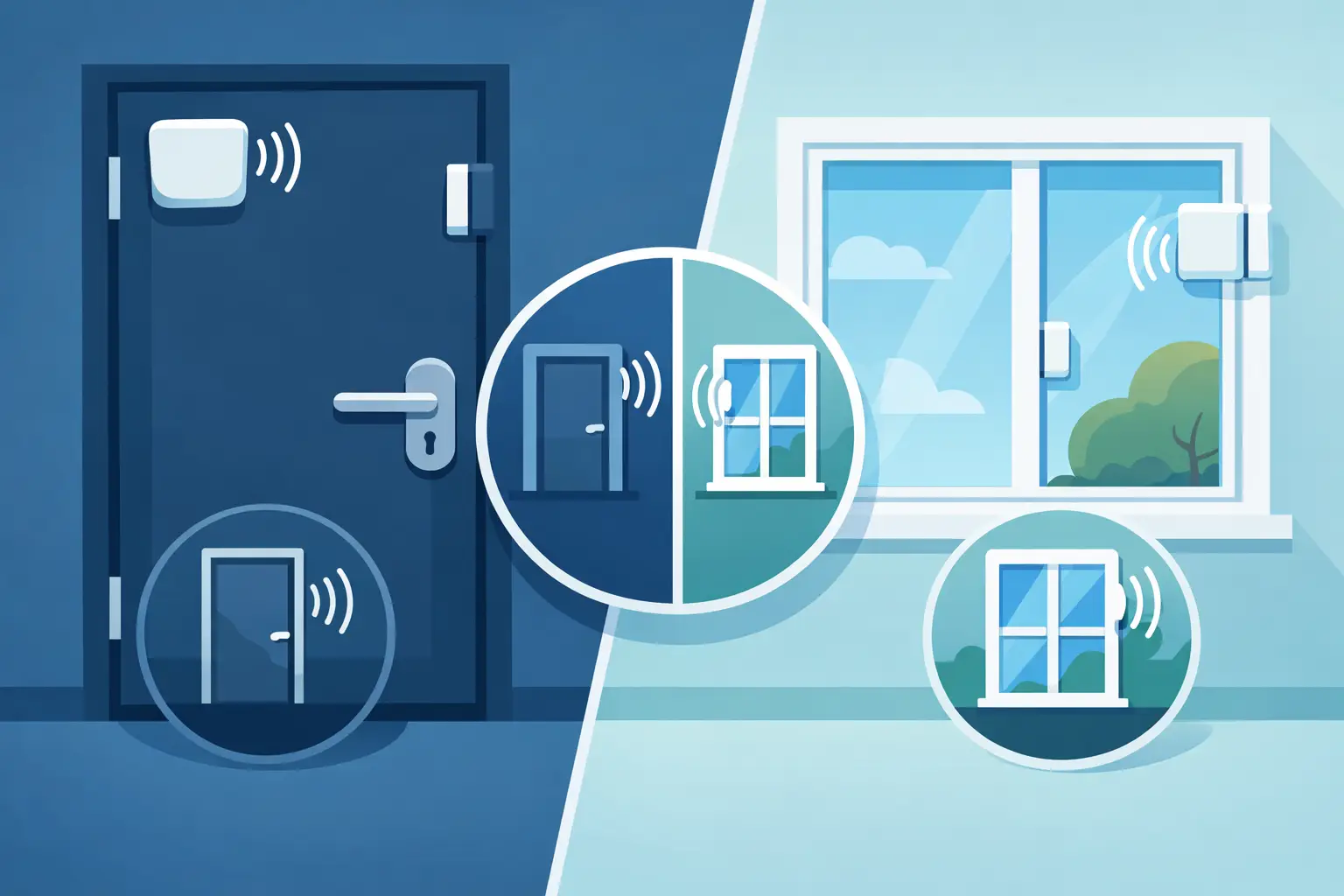
A break-in rarely starts in the middle of your living room. It starts at an entry point, and that is exactly why the door alarm vs window alarm question matters. If you want a smarter home security setup without overspending, the better choice depends on how your home is laid out, how you use each space, and where you are most exposed.
Some homeowners assume one type of alarm covers everything. It does not. Doors and windows create different security problems, and the right solution should match the risk. A front door sees regular traffic. A ground-floor bedroom window may sit out of sight for hours. Treating those two entry points the same can leave gaps.
At the most basic level, both devices alert you when an entry point is opened or disturbed. The difference is in placement, behavior, and purpose. A door alarm is built around a high-use access point. A window alarm protects a more vulnerable, often less monitored opening.
Door alarms are usually installed on front doors, back doors, garage entry doors, and sometimes interior doors that protect restricted spaces. They are especially useful because doors are the most common legal and daily point of entry, which means any unauthorized opening stands out fast. When a door alarm sounds, it gets your attention immediately because that door is supposed to be controlled.
Window alarms serve a different role. Windows are often targeted because they are quieter, less visible, and easier to test without being noticed. A window alarm can warn you when a window is opened, and some models also react to vibration or glass impact. That makes them valuable in spots where an intruder may try to avoid the obvious route.
If you are deciding between the two, do not ask which one is better in general. Ask which opening is more exposed in your home.
If you live in an apartment, condo, townhouse, or smaller home, a door alarm often gives you the fastest improvement in security. Most break-ins through standard access points happen at doors, especially front doors, side doors, and rear entries. These locations carry heavy daily use, but they also represent your clearest line of control.
A door alarm is a strong choice when you want a straightforward alert system that is easy to install and easy to hear. It works well for people who want protection without a complicated setup. It is also useful for families who want to know when a child opens a door, when a garage-to-house entry is accessed, or when an exterior door is opened late at night.
There is another advantage here: door alarms tend to be easier to live with. You open and close doors intentionally, so you quickly learn how the alarm fits your routine. That can reduce frustration and improve long-term use. Security tools only help if you actually keep them active.
Still, there are trade-offs. A door alarm covers one access point at a time. If your home has multiple first-floor windows, sliding glass doors, or a basement window hidden from view, relying only on door protection may create blind spots.
Window alarms become more important when your home has several vulnerable windows, especially on the first floor. They are also a strong option for bedrooms, back-facing rooms, basement spaces, and areas blocked by fencing, landscaping, or poor lighting.
A window alarm makes sense if you worry about someone trying the quieter route. Many intruders look for access points that let them stay out of sight. A side window near an air conditioning unit, a rear sliding window, or a basement opening can feel less risky to a criminal than forcing a front entry.
This is also where placement matters more than price. A modest window alarm in the right location is more valuable than an expensive device protecting a low-risk opening. If your bedroom window faces a dark yard or alley, that is a priority. If your kitchen window sits behind a locked gate and motion lights, it may not be the first place to start.
The downside is that windows can create more complexity. Some are opened for ventilation. Some are hard to reach for maintenance. Some may need a different alarm style depending on whether they slide, lift, or swing. If you like to keep windows cracked open, you will need a setup that works with your habits rather than against them.
Your layout can settle this decision faster than product specs.
In an apartment, the front door is often the highest priority because it is the primary entry point and the most likely target. A window alarm may matter too, but mostly if you are on the ground floor or near a fire escape, breezeway, or common access area.
In a single-family home, the answer is usually broader. Front and back doors deserve coverage, but ground-floor windows often need it just as much. A side window hidden by shrubs can be more vulnerable than the front door because it offers privacy to the intruder.
In a home with a basement, window alarms can carry extra value. Basement windows are easy to overlook, and criminals know that. If they are below sight lines from the street or neighbors, they should not be ignored.
For homes with sliding glass doors, the line between door alarm and window alarm can blur. A sliding patio door functions like a door, but it carries some of the same risks as a large window. It is visible, fragile, and often located at the rear of the home. That area deserves special attention.
For many households, the real winner in the door alarm vs window alarm debate is not one or the other. It is a layered setup. Door alarms cover the obvious entry points. Window alarms protect the quieter opportunities. Together, they make your home a harder target.
That does not mean you need to alarm every opening on day one. A practical approach works better. Start with the highest-risk points first. Cover your main exterior doors. Then move to first-floor windows that are hidden, easy to access, or close to bedrooms. Build from there.
This approach is effective because home security is not about perfection. It is about reducing opportunity, increasing detection, and making forced entry more difficult and more stressful for anyone trying it. Even a simple alarm can change the equation when it creates noise, attention, and lost time.
That is the kind of protection people actually use. Practical. Affordable. Immediate.
If you want a clear decision, focus on three things: visibility, access, and routine.
Visibility means how easily someone could approach the entry point without being seen. A front door under a porch light is one thing. A side window behind a fence is another.
Access means how easy it is to reach and use that opening. Ground-floor windows, rear doors, and basement entries usually rank higher than second-story windows with no nearby access.
Routine matters because alarms have to fit real life. A back door used ten times a day needs an alarm you will manage consistently. A window that stays closed most of the year is easier to secure without interruption.
If a single device is all your budget allows, protect the most likely target first. For many people, that is the main entry door. For others, it is the secluded first-floor window no one else sees. There is no one-size-fits-all answer, but there is a right answer for your home.
A good rule is simple: secure the opening that gives an intruder the easiest, quietest chance.
One common mistake is protecting only the front of the house. Criminals notice patterns. If the front door looks secure but the side windows are exposed, the weak point becomes obvious.
Another mistake is choosing based only on convenience. People tend to protect what they use most, not what is most vulnerable. That is understandable, but security should be built around risk, not habit.
Some also assume an alarm has to be complicated to be effective. It does not. Reliable, easy-to-use alarms can make a major difference, especially when they are placed with intention. Elite Warrior Defense focuses on practical security for exactly that reason. Protection should be strong, simple, and within reach.
Your home does not need guesswork. It needs coverage where it counts most. If a door is your biggest exposure, start there. If your windows create the softer target, address that first. The strongest setup is the one that matches the way your home is actually used and the way a threat would actually approach it.
Security works best when it is honest about risk. Pick the alarm that closes your most obvious gap, then keep building from there.







YOU’RE IN!
Use this code on every order
🎉
Here’s Your Code!
Use it now an on every future order.
YOUR DISCOUNT CODE
We also sent this code to your email for safekeeping.
EXCLUSIVE OFFER
Every order – not just your first!
Unlock Your Discount Instantly
Enter your email below and your personal 15% discount code appears right here – no need to check your inbox.
🔒 We respect your privacy. Unsubscribe anytime.