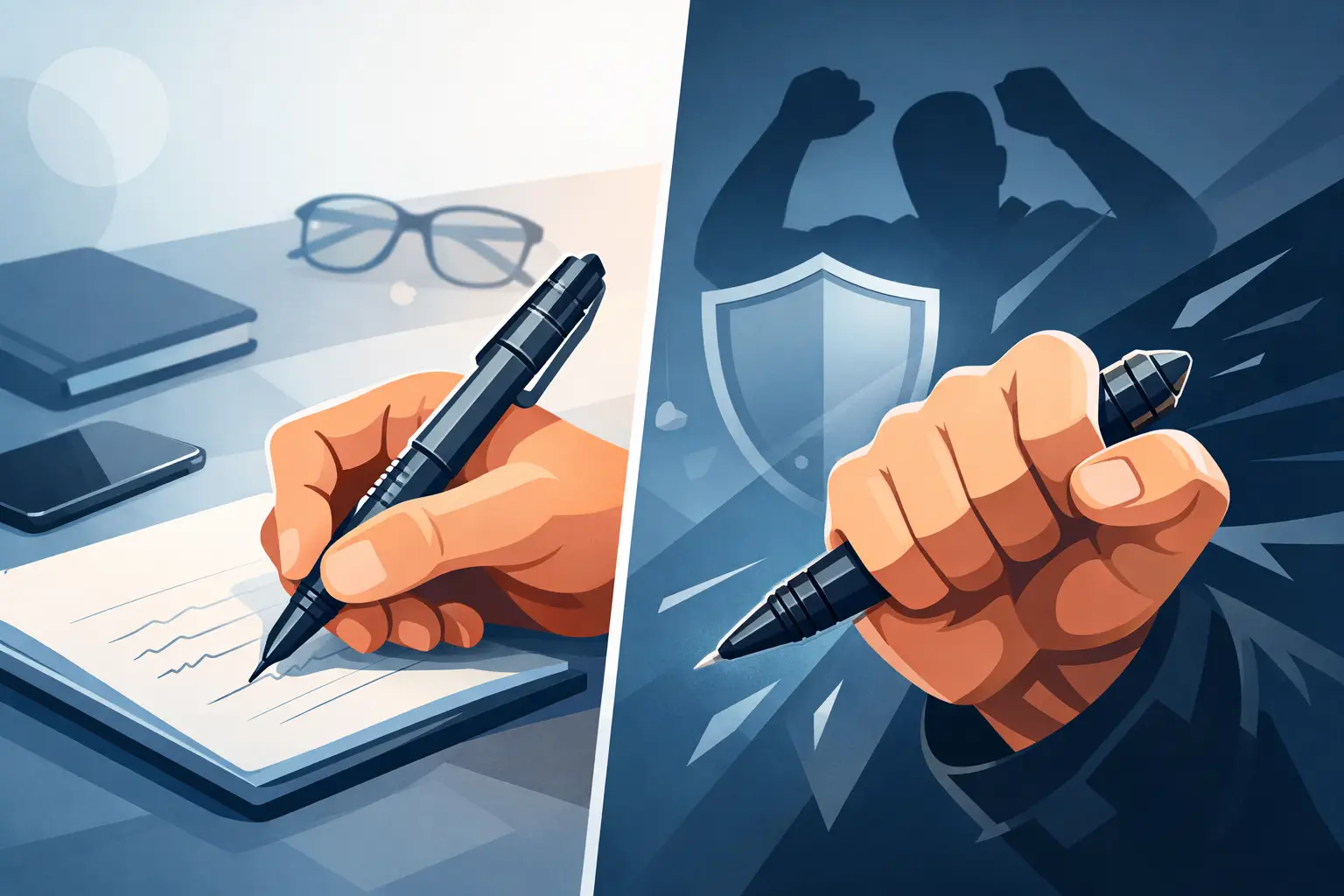
A tactical pen only earns its place in your pocket if it works when life is normal and when life is not. That is what makes tactical pen writing and defense use worth understanding. A good tactical pen should write smoothly in meetings, in your car, or on a delivery slip, while also giving you a stronger, more reliable option for emergency self-protection.
That balance matters. If a tool is awkward for daily use, most people stop carrying it. If it looks good but fails under stress, it is not doing its job. The value of a tactical pen is simple – it blends an everyday task with a layer of preparedness that can make a real difference when seconds count.
What makes tactical pen writing and defense use different
A standard pen is built to write and little else. A tactical pen is built with tougher materials, a stronger body, and a shape that can hold up to hard use. Most are made from aircraft-grade aluminum, steel, or another durable metal. Many include a reinforced tip, textured grip, and a pocket clip that keeps the pen secure and accessible.
The writing side still matters. If the ink skips, leaks, or dries out quickly, the pen becomes a gimmick. A dependable tactical pen should feel like a real writing instrument first. That means a comfortable diameter, solid balance, and ink that performs on common paper surfaces. Some users prefer pressurized cartridges because they write more consistently in awkward positions or poor weather, but even a standard refill can work well if the pen body is designed properly.
The defense side is where design details start to matter more. Weight, grip texture, and tip shape affect control. A pen that is too slick can shift in your hand. One that is too bulky may be uncomfortable for everyday carry. The best option is usually the one you will actually carry every day, not the most aggressive-looking model in the case.
Why daily carry matters more than specs
A lot of people shop for self-defense tools by focusing on the biggest feature list. That is understandable, but with tactical pens, real-world carry matters more. If the pen is too heavy for a shirt pocket, too sharp for daily handling, or too awkward to use at work, it often gets left behind.
That creates the main trade-off. A heavier pen can feel more substantial and may offer more impact in an emergency, but it can also be less comfortable to carry for long hours. A slimmer pen disappears into a pocket and feels more natural for writing, but it may not give the same level of confidence in the hand. There is no perfect answer for everyone.
For office workers, commuters, rideshare drivers, students, and anyone who spends time moving between public spaces, comfort and accessibility usually win. A tactical pen should be there when you need to sign a receipt and still be there when you step into a parking garage late at night.
Writing performance is not a small detail
People sometimes treat the writing function like a bonus. It is not. If you plan to carry this tool every day, writing performance is what keeps it in rotation.
A tactical pen should open quickly, whether it uses a cap, twist mechanism, or click design. Capped pens often feel more secure and durable, but they can be slower under pressure if you need to jot down a license plate or emergency note. Click pens are faster and more familiar, though the mechanism needs to be strong enough to avoid failure. Twist pens can offer a clean design, but some users find them less convenient with one hand.
Grip comfort matters here too. A deeply textured body may help under stress, especially with wet hands, but it can feel rough during longer writing sessions. A smoother pen may be nicer at a desk, yet less secure in a defensive grip. Again, it depends on how you live and what situations you are preparing for.
If your day includes paperwork, note-taking, or frequent use, choose a model that feels natural as a pen first. The more often you use it in normal situations, the more familiar it becomes in your hand. That familiarity is a real advantage if you ever need it in a high-stress moment.
Defensive use starts with mindset and legality
A tactical pen is not a shortcut around training or awareness. It is one layer in a broader personal safety plan. Situational awareness, distance management, verbal de-escalation, and understanding your surroundings are still the first line of defense.
Before carrying any self-defense tool, know your state and local laws. Rules can vary, and what is acceptable in one area may not be treated the same way somewhere else. A tactical pen is often attractive because it is an ordinary-looking item with practical use, but that does not remove your responsibility to carry and use it lawfully.
It is also important to understand the intended role of a tactical pen. It is generally a close-range emergency tool designed to help create an opening to escape danger. It is not something to rely on as a first choice if you have safer options, and it should never replace good judgment. The goal in a confrontation is not to stand and fight longer than necessary. The goal is to interrupt the threat, create space, and get to safety.
How to hold and deploy a tactical pen
Most people benefit from keeping things simple. In a stressful moment, fine motor skills drop. Complicated techniques often fall apart. A secure, natural grip is more useful than trying to memorize flashy moves.
A common defensive grip places the pen firmly in the hand with the reinforced end positioned to make contact while the thumb and fingers lock the body in place. Retention is critical. If the tool slips on impact, it is not helping you. That is why grip texture and hand fit matter so much.
Deployment should also be realistic. If your tactical pen is buried in a bag under headphones, keys, and receipts, access will be slow. Pocket clips are valuable because they keep the pen in a predictable position. Consistency matters. Carry it in the same place every day so your hand knows where to go without thinking.
Training should focus on drawing the pen safely, establishing a strong grip, and moving off the line of danger. Even light practice with an inert trainer or under controlled instruction can build confidence. The point is not to become flashy. The point is to become efficient.
Choosing the right tactical pen for your routine
The right tactical pen depends on where and how you live. If you want a true everyday carry tool, pay attention to size, refill type, grip, and clip strength before you focus on cosmetic extras.
A pen for office use should look clean and professional enough to blend in without drawing unnecessary attention. A pen for vehicle carry may benefit from a slightly larger body that is easier to grab quickly. Someone who spends time outdoors may want stronger weather resistance and ink performance in heat or rain.
Build quality should be obvious in the threads, cap fit, and overall finish. Cheap tactical pens often fail in boring ways – loose clips, poor ink cartridges, stripped threads, or a body that feels solid until it takes one hard drop. Reliability is what you are paying for.
This is where a trusted source matters. Companies focused on personal security, like Elite Warrior Defense, understand that people are not shopping for novelty. They are looking for practical protection they can afford, carry, and use with confidence.
Who benefits most from a tactical pen
A tactical pen makes sense for people who want an everyday item with dual purpose and a low learning curve. It can be especially useful for professionals who cannot carry more obvious defensive tools in every setting, as well as for adults who want a discreet layer of preparedness during travel, commuting, or daily errands.
That said, it is not the best fit for everyone. If you never carry a pen, you may not build the habit. If you want a self-defense option with more stand-off distance, another tool may better suit your needs where legal. The smart choice depends on your environment, comfort level, and willingness to practice.
Preparedness works best when it is honest. Choose tools you will carry, learn, and respect. A tactical pen does not need hype to prove its value. If it writes well, rides comfortably, and gives you one more option in an emergency, it is doing exactly what it should. Carrying confidence often starts with simple decisions made before anything goes wrong.