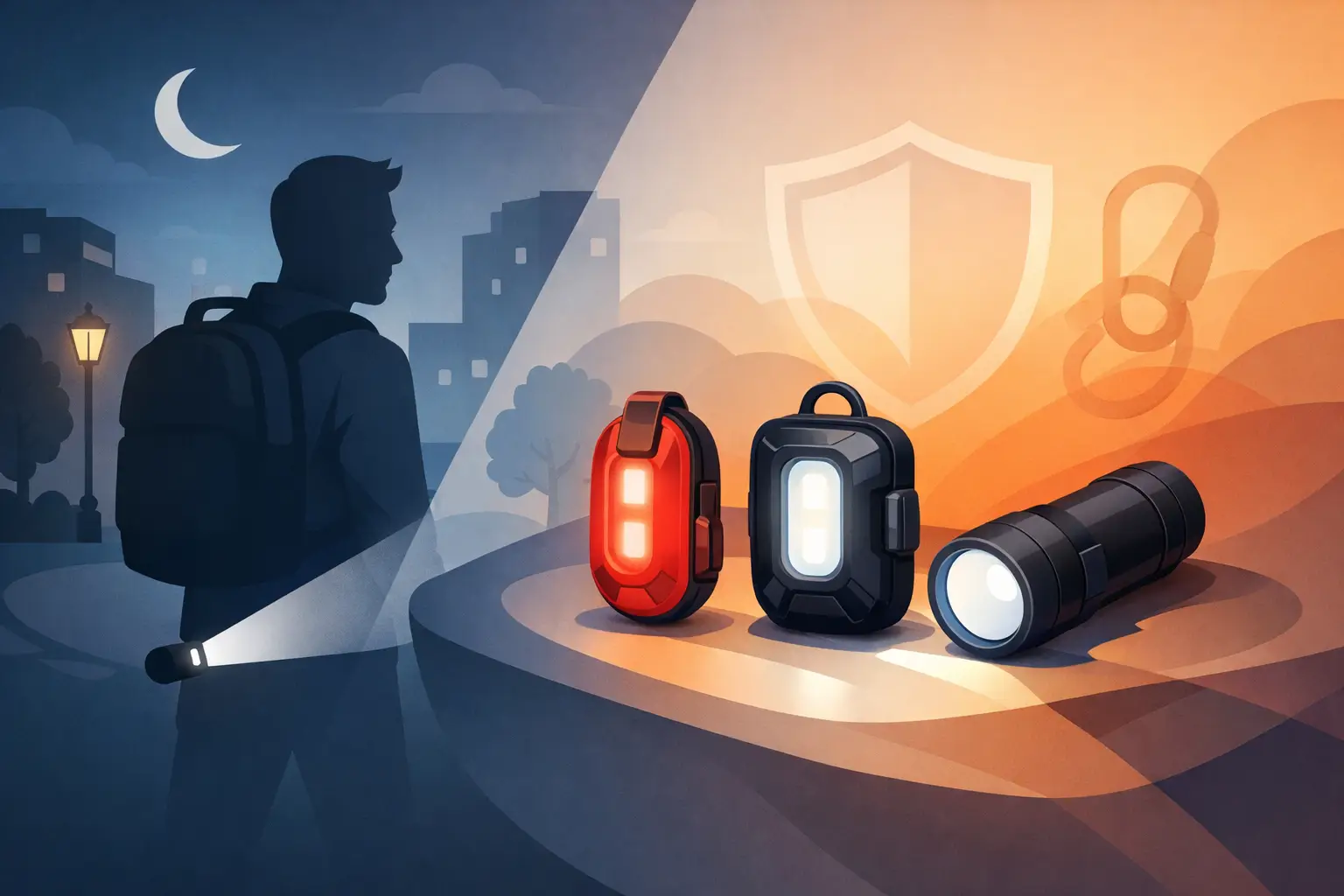
A personal safety light review should start with the moment it matters: you are walking from a store to your car, unlocking your front door after dark, or moving through a poorly lit parking garage. You do not need a complicated tool. You need fast, dependable light that helps you see your surroundings, be seen by others, and make smart decisions without fumbling in the dark.
A safety light is not a replacement for awareness, a charged phone, or a complete personal-security plan. It is a practical layer of protection. The right one can reveal trip hazards, improve your visibility to drivers, help you locate keys or door locks, and create a burst of attention-getting light if a situation feels wrong.
What a Personal Safety Light Should Do
The best personal safety lights balance two jobs. First, they provide usable illumination for everyday tasks. Second, they offer quick-access features that can help you attract attention or create a moment to move toward safety.
That balance matters because a light that is only designed for emergencies may be awkward for routine use, while a basic keychain flashlight may not have the output, modes, or activation speed you want when you are under stress. A dependable personal safety light should be easy to locate, easy to activate, and comfortable enough that you will actually carry it.
For most people, the practical test is simple: Can you turn it on immediately with one hand while holding a bag, a leash, or your phone? If the answer is no, it may be a capable flashlight, but it is not the strongest choice for personal safety.
Personal Safety Light Review: Features That Matter Most
Marketing can make every flashlight sound powerful. Look beyond broad claims and focus on the features that affect real use.
Brightness is more than a lumens number
Lumens measure light output, but the highest number is not automatically the best choice. A very bright light can be useful for seeing farther down a path or identifying movement near a vehicle. But beam pattern, color, and control are just as important.
A focused beam reaches farther and can help you examine an area ahead. A wider flood beam is better for seeing your immediate surroundings, finding a dropped item, or navigating stairs. Many people benefit from a light that offers both a high setting and a lower everyday setting. High output is there when you need distance or attention. Lower output prevents glare when checking a lock, purse, or car interior.
Also consider how the light performs in the first second after activation. A strong, immediate beam is more useful than a device that cycles through several dim modes before reaching its brightest setting.
Strobe can draw attention, but it is not magic
A strobe setting rapidly flashes the light. Used appropriately, it can make you more noticeable, draw the attention of people nearby, and create visual disruption that may give you a chance to leave. It can also be valuable if you are signaling for help near a road, trail, or parking area.
The trade-off is that strobe modes can be disorienting for the person holding the light, especially at close range or indoors. They may also be difficult to access on poorly designed devices. Before carrying a light for protection, practice locating the strobe control without looking at it. If the feature requires multiple clicks, a long press you cannot remember, or scrolling through every other mode, it may not be dependable under pressure.
A strobe should support your exit, not tempt you to stay and confront someone. Create distance, move toward people or a safer location, and call for help when needed.
Controls should work under stress
Small buttons and complicated settings are common weaknesses. A safety light should have a button or switch you can identify by touch. Raised controls, a textured grip, and a simple on-off action make a difference when your hands are cold, wet, or shaking.
Some lights use a tail switch, while others use a side button. Neither design is always better. A tail switch can be quick to press when holding the light in a forward grip. A side button may be easier when the light is clipped in a pocket or attached to a bag. The best fit depends on how you carry it.
Avoid relying on memory alone. Spend a few minutes practicing at home. Pick up the light from where you normally keep it, turn it on, switch modes if necessary, and place it back. Familiarity turns a product feature into a useful tool.
Size and carry options decide whether it stays with you
A powerful light left in a drawer does nothing for you in a dark parking lot. For daily carry, choose a size that fits your habits. A compact light can ride on a key ring, in a jacket pocket, or in an outer purse compartment. A larger model may offer longer runtime and a stronger beam, but it can become inconvenient if it is too bulky.
Clips, lanyards, and key-ring attachments are not minor extras. They determine access. A sturdy pocket clip can keep a light upright and predictable. A lanyard can reduce the chance of dropping it while walking a dog or carrying groceries. A key-ring model is always close by, though keys can be difficult to manage quickly in a stressful moment.
Think about your routine. Someone who walks to a train station may prefer a pocket clip. A student moving between campus buildings may want a compact model that fits in a backpack’s outer pocket. A homeowner checking the yard at night may be better served by a slightly larger light kept near the door.
Battery reliability deserves serious attention
A rechargeable safety light is convenient, especially if it uses a common charging cable. The downside is that it is useless if you forget to recharge it. Battery-powered models can be ready for long periods, provided you keep fresh batteries available and replace them on schedule.
There is no universal winner. Rechargeable models are excellent for frequent use, while replaceable batteries can be reassuring for emergency kits and occasional use. What matters is having a maintenance routine. Check the charge monthly, inspect the lens and switch, and replace damaged clips or straps.
Look for a clear low-battery indicator if possible. A light that quietly fades without warning can leave you with less visibility than expected. For a device meant to build confidence, predictable power matters more than flashy features.
Where Safety Lights Fit in a Personal Security Plan
A safety light works best as part of layered preparation. Keep your phone charged, share your plans when appropriate, trust your instincts, and avoid distractions when moving through isolated areas. Light helps you assess your environment, but it cannot make a poor location safe.
For walkers, runners, and dog owners, a light can illuminate uneven pavement and increase visibility near traffic. For commuters, it can help check the back seat before entering a vehicle and make it easier to find a dropped key. For travelers, it can provide a familiar source of light in hotel parking lots, stairwells, and unfamiliar entrances.
If you carry other personal-defense tools, keep them organized and accessible. Do not bury a safety light at the bottom of a crowded bag. Elite Warrior Defense encourages practical preparation because a tool only helps when you can reach and operate it with confidence.
Common Buying Mistakes to Avoid
Do not choose solely based on the largest brightness claim. A light with good output but poor controls, uncomfortable size, or weak battery management can be frustrating when you need it most.
Do not assume water resistance means every light can handle every condition. If you frequently walk in rain, work outdoors, or keep a light in a vehicle, check whether the construction is designed for that exposure. Likewise, metal bodies often feel durable, but they can add weight. Lightweight polymer options may be easier to carry, though quality varies.
Finally, do not wait for an emergency to learn how your light works. Turn it on during an evening walk. Use it to find your door lock. Learn how it feels in your hand and where the button sits. The right personal safety light is the one that becomes an instinctive part of your routine, ready before darkness catches you unprepared.