A hidden camera is only useful if it captures a clear, meaningful view when something happens. So, where should hidden cameras go? Start with the areas an intruder, thief, or unwanted visitor is most likely to use – not the places that simply feel convenient to monitor.
The strongest placement strategy protects your home while respecting privacy and following applicable laws. A camera aimed at an entry point or a valuables area can provide valuable evidence. A camera placed where people reasonably expect privacy can create serious legal and ethical problems. The goal is simple: deter threats, document activity, and protect the people and property that matter most.
Where Should Hidden Cameras Go for Home Security?
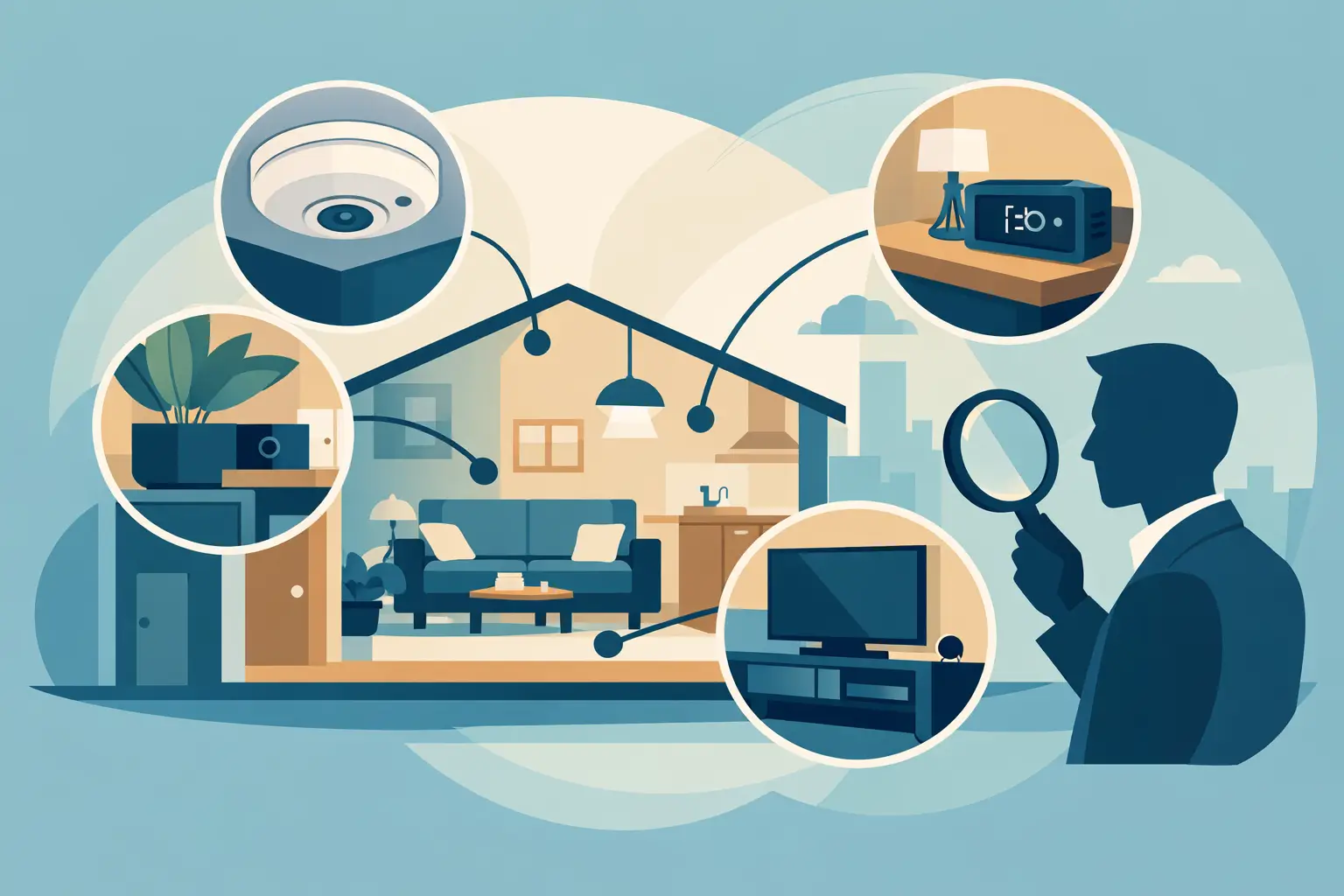
For most homes, the best locations are common areas and access points. These are the places where a camera can capture a face, clothing, direction of travel, or suspicious behavior without recording private moments.
Main entrances and secondary doors
The front door is often the first priority. Position a hidden camera to see the doorway, porch, or interior entry area where visitors pass. A camera with a clear angle on faces can help you verify deliveries, identify unexpected visitors, and document anyone attempting to enter.
Do not stop at the front door. Side doors, back doors, garage entries, and basement entrances are often less visible from the street and may be more attractive to an intruder. If your home has an attached garage, a camera facing the door leading from the garage into the home adds an important layer of coverage.
Placement matters more than concealment alone. Avoid aiming directly into bright windows or toward a strong outdoor light, which can turn a useful recording into a silhouette. Test the image during daylight and after dark before you rely on it.
Hallways and common pathways
A hallway connects key areas of the house, which makes it one of the most efficient places for a hidden camera. A properly positioned camera can show who moved from an entryway toward bedrooms, an office, or a storage area without requiring a device in every room.
Focus on the direction of travel. Place the camera where a person will naturally walk toward it or across its field of view. A camera pointed at the back of someone’s head is far less useful than one positioned to capture a recognizable face.
Living rooms and shared spaces
Living rooms, family rooms, and other shared spaces can be appropriate choices, particularly if you have service workers, house sitters, caregivers, contractors, or unfamiliar guests in the home. These areas may also contain televisions, gaming systems, laptops, purses, or other items that can be easy targets for theft.
A hidden camera in a common room should cover the room’s primary entrance and the area where valuables are kept. Keep the angle practical. You do not need to record every inch of the room. You need a reliable view of the activity that would matter if a problem occurs.
Home offices and valuables storage areas
A home office can hold more than a computer. It may contain financial records, identification documents, spare keys, business equipment, prescription medication, or personal information that could be used for fraud. If you work from home, a camera covering the office doorway and desk area may be a sensible addition to locks and secure storage.
The same approach applies to a room where you keep firearms, collectibles, emergency supplies, or other high-value property. Aim the camera at the access route and storage location, but avoid placing it where it can easily be blocked by an open door, furniture, or stacked boxes.
Places Hidden Cameras Should Never Go
Security does not give anyone permission to ignore privacy. In the United States, hidden-camera laws vary by state, and audio recording can trigger additional consent rules. Before installing any device, check the laws that apply where you live and consider who may be recorded.
Never place a hidden camera in a bathroom, bedroom used by guests or tenants, changing area, or any place where a person has a reasonable expectation of privacy. These locations can expose you to serious legal consequences and destroy trust with family members, guests, renters, and employees.
Be especially careful in homes with live-in caregivers, roommates, domestic workers, or tenants. Even if a shared area seems acceptable to monitor, recording audio may be regulated differently from recording video. When in doubt, use visible notice, disable audio, seek legal guidance, and choose a placement that protects property without crossing a line.
How to Choose a Placement That Actually Works
A small camera can disappear into a room, but hidden does not automatically mean effective. Before mounting or setting up your device, walk through the space as if you were a visitor. Which door would you use? Where would you set down a bag? Which route leads to valuables or private areas?
Then check four practical factors:
- Field of view: The camera should see a doorway, pathway, or target area without major blind spots.
- Lighting: Avoid direct glare, harsh backlighting, and locations that become completely dark if the camera lacks night vision.
- Height and angle: A slightly elevated view can prevent tampering, but it still needs to capture faces rather than only the tops of heads.
- Power and access: Make sure the camera can remain powered, connect reliably if needed, and be reached for charging or maintenance without disrupting its position.
Do a real-world test. Walk through the area at normal speed, open the door, sit on the couch, and move around the expected path. Review the footage on the device you would use during an actual incident. If faces are unclear, the image is washed out, or a door blocks the view, reposition the camera now rather than after a security event.
Match the Camera to the Job
The best hidden-camera location also depends on what you need to monitor. A compact camera near an entry may need motion activation and dependable low-light performance. A camera used to watch a package area may need a wider field of view. A device monitoring a room with valuables may benefit from longer recording capacity.
Avoid relying on one camera to cover an entire property. A single device may document one important area, but it cannot see around corners, through closed doors, or outside every entrance. A layered plan is stronger: use cameras for documentation, door and window alarms for immediate alerts, exterior lighting for visibility, and secure locks to delay unauthorized entry.
For personal safety, remember that a camera records what happened. It does not physically stop a threat in progress. Keep your response plan realistic. Know who will receive alerts, how you will contact law enforcement, and where you and your family can move safely if someone enters the home.
Hidden Cameras in Cars, Rentals, and Work Areas
The same privacy principles apply beyond the house. In a personal vehicle, a camera should focus on protecting the vehicle or documenting the driver’s area, not secretly recording passengers in situations where privacy laws or consent requirements may apply. A visible dash camera is often the clearer choice for driving incidents.
In a rental property, landlord-tenant rules can be strict. Cameras may be appropriate at exterior entrances or shared common areas in some circumstances, but never inside a tenant’s private living space. For short-term rentals, transparency is essential. Secret indoor surveillance is not a security solution – it is a liability.
For a home-based business or workspace, cameras can help protect inventory, equipment, and records. Keep them focused on work areas and entrances, and let employees or visitors know when required by law. Security works best when your boundaries are clear and defensible.
A Smarter Way to Protect What Matters
The right hidden-camera placement is not about watching everything. It is about covering the moments and locations where risk is highest: someone entering, moving through the home, approaching valuables, or tampering with protected property. A carefully chosen camera can give you evidence, awareness, and greater confidence without turning your home into a place where privacy disappears.
Build your setup around your actual risks, test every view, and keep lawful boundaries front and center. That practical approach gives your security plan the strength it needs when it matters most.