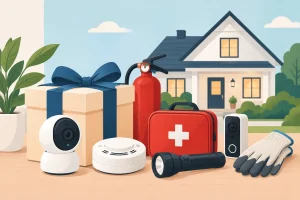

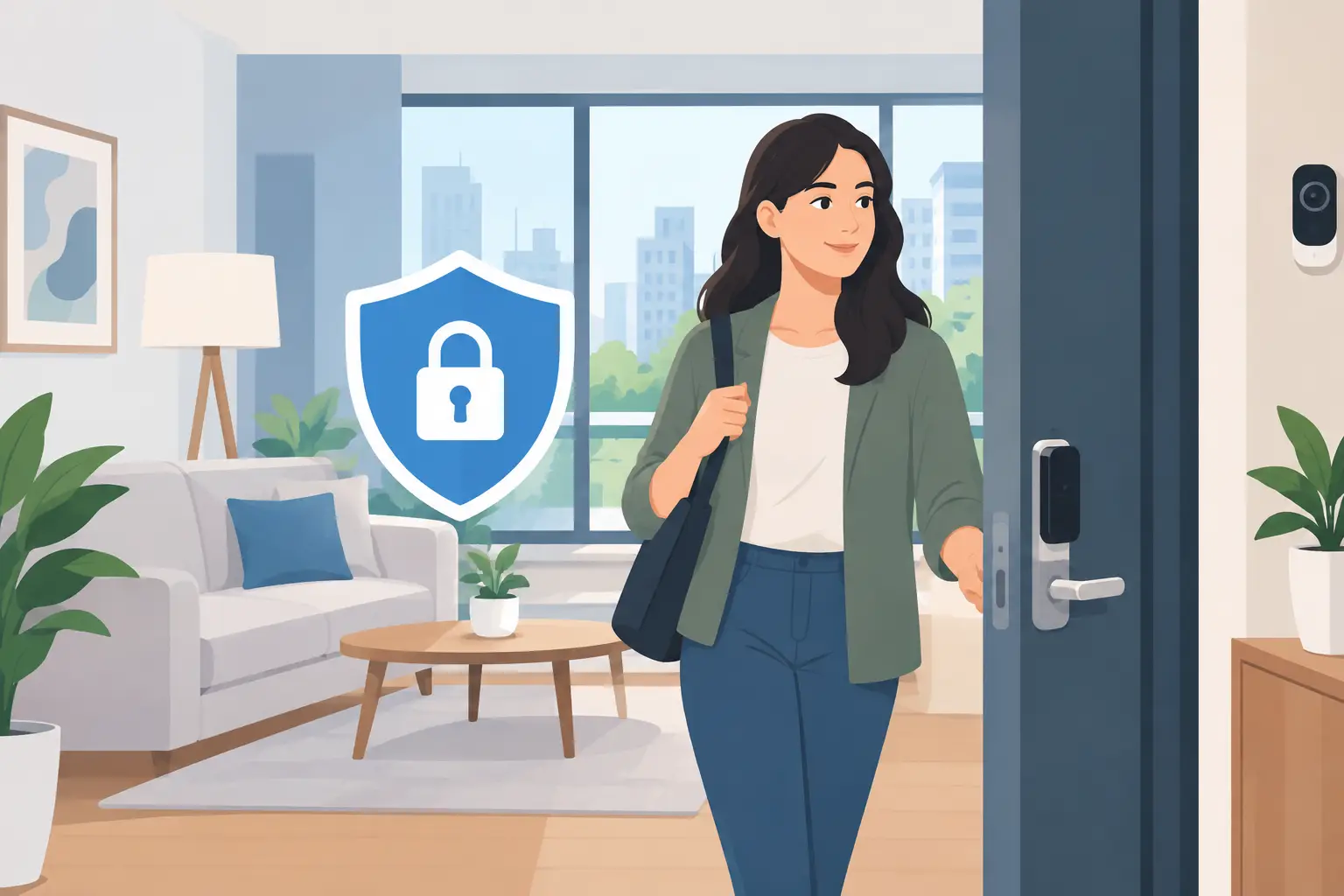
The front door to your apartment is not just a piece of hardware. It is the line between your private space and the outside world. A strong renter security guide starts there, but real protection goes beyond one lock or one alarm. It means building layers that make your home harder to enter, help you notice problems early, and give you a clear plan if something feels wrong.
Renters can take meaningful action without drilling into walls, replacing permanent fixtures, or risking a lease violation. The goal is not to turn your apartment into a fortress. It is to make smart, practical choices that protect you, your belongings, and your peace of mind.
Before adding anything, look closely at what your lease says about locks, cameras, mounting hardware, and changes to doors or windows. Many properties allow temporary devices but require written approval for new deadbolts, permanent cameras, or anything that alters a common area. Rules vary by state, city, and landlord, so do not assume you can make a change simply because it improves security.
Walk through your apartment with a critical eye. Check whether the entry door closes tightly and whether the strike plate is secured with long screws. Test every window lock. Make sure sliding doors do not lift easily from their tracks. Look at exterior lighting near your unit, parking space, stairwell, or mail area. If something is broken, loose, or poorly lit, document it and notify management in writing.
Landlords are generally responsible for maintaining safe, working building features, but the details depend on local law and the lease. Reporting a damaged lock or window promptly creates a record and gives management a chance to fix it. Do not wait until after a break-in attempt to raise the issue.
Apartment doors deserve the most attention because they are the most common point of entry. If your lease permits it, ask management whether they will install a deadbolt, reinforce a strike plate, or rekey the lock after a prior tenant moves out. These are often the strongest long-term improvements because they address the door’s basic hardware.
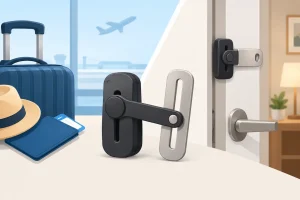
For renters who cannot alter the door, portable door security devices can add another layer when you are inside. A door jammer or portable lock can help resist forced entry, especially when paired with a working deadbolt. Choose a device designed for your door type and practice using it before you need it. Security equipment that is difficult to install under stress is less useful than a simple tool you can deploy in seconds.
A door alarm is another practical option. These devices can sound when the door opens or moves, drawing attention to unauthorized entry and alerting you while you are home. They are also useful for hotel stays, dorm rooms, and temporary rentals. The alarm is a deterrent, not a replacement for a secure lock, but it can buy valuable seconds and make an intruder reconsider.
Do not open the door just because someone knocks, claims to be maintenance, or says they have the wrong address. Use a peephole, door viewer, or camera where legally allowed. If a worker arrives unexpectedly, call the property office using a number you know is legitimate before letting anyone in.
Ground-floor windows, balcony doors, and accessible side windows deserve the same attention as the front entrance. Keep windows locked whenever they are closed, including when you are home. It is easy to leave one cracked window unsecured for fresh air, but that can create an easy opportunity if it is accessible from a walkway, fire escape, or balcony.
Window and door alarms are affordable, renter-friendly tools because many attach with adhesive and require no permanent installation. Place them where you will hear them, and test them regularly. A visible alarm can also act as a deterrent by signaling that entry will not go unnoticed.
Sliding doors need special consideration. Check that the factory latch works, then add a removable security bar or a properly sized dowel in the lower track. This limits how far the door can slide even if the latch is defeated. Keep the track clean so the door closes fully, and report any damaged lock, frame, or roller to management.
Avoid blocking emergency exits. If a window is your required escape route, any added security device must be quick and easy to remove from the inside. Fire safety and personal security must work together, not compete.
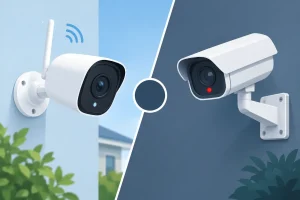
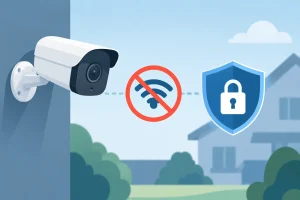
A visible camera near an entry can discourage package theft and help document suspicious activity, but renters need to be careful about placement. Indoor cameras should point only at your private living space. Exterior cameras may be subject to lease rules and privacy laws, particularly if they capture shared hallways, neighbors’ doors, or common areas.
A camera cannot physically stop a crime, and it should not create a false sense of security. Its real value is awareness and evidence. If you use one, make sure you understand how footage is stored, protect the account with a unique password, and turn on two-factor authentication if available. An unsecured camera account can become its own privacy risk.
Lighting matters just as much. A dark entryway gives someone privacy to test a lock, hide near a door, or take a package. If management controls the exterior lights, report outages. Inside your unit, use timers or smart bulbs when you are away so the apartment does not look empty night after night. A simple routine can make a real difference.
Security is not only equipment. The strongest setup can be undermined by predictable routines or small oversights. Lock doors and windows each time you leave, even if you are only running downstairs. Do not hide a key under a mat, planter, or decorative rock. If you need a backup key, leave one with a trusted person who lives nearby.
Be cautious about what you share online. Posting a vacation countdown, a photo of your building entrance, or a real-time location can reveal more than intended. Wait until you return home to share travel photos. When receiving deliveries, use package lockers, pickup locations, or delivery instructions that keep boxes out of sight when possible.
Get familiar with your neighbors without giving away personal details too quickly. A respectful relationship with nearby residents can make a building safer because people are more likely to notice an unfamiliar person lingering around doors, vehicles, or mailboxes. Trust your instincts, but avoid confronting suspicious people alone. If there is an immediate threat, move to a safe location and call 911.
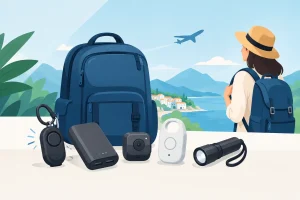
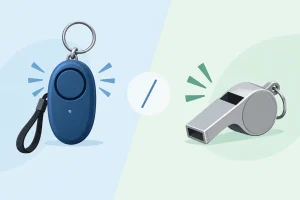
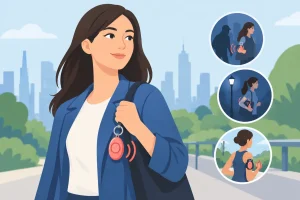
For personal protection, keep lawful self-defense tools accessible where you can reach them, not buried in a drawer across the room. Pepper spray, a safety light, or a personal alarm may be useful depending on your circumstances and local laws. Know how your chosen tool works, store it responsibly, and check state and local restrictions before carrying or using it. Confidence comes from preparation, not from owning gear you have never practiced with.
A security plan gives you options when adrenaline makes clear thinking harder. Decide where you would go if someone tried to enter your apartment. That may be a bedroom with a lock, a neighbor’s unit, or a safe exit route. Keep your phone charged and nearby at night. If you live with roommates, agree on basic rules for visitors, locking up, and responding to unknown knocks.
It also helps to prepare for the less dramatic but more common problems: lost keys, a former partner with access, a broken lock, or repeated package theft. If keys are lost or access needs to be revoked, notify management immediately and request rekeying. If you feel threatened by someone who knows where you live, tell your landlord or property manager, save relevant messages, and contact law enforcement or a local victim-support resource as appropriate.
Keep a simple inventory of valuables, including photos, serial numbers, and receipts when available. Store a copy securely outside the apartment or in a protected digital account. If theft or fire occurs, this documentation can make a police report and insurance claim far less difficult.
The best renter security setup is the one you will actually use every day. A student in a shared apartment may prioritize a portable door lock, personal alarm, and secure storage for valuables. A family on the ground floor may need window alarms, a sliding-door bar, and stronger coordination with property management. Someone who travels frequently may benefit most from timers, cameras used within lease rules, and a trusted neighbor who can check in.
Elite Warrior Defense supports this kind of practical, layered approach with accessible personal and home security options built for everyday readiness. Start with your highest-risk area, choose tools that fit your lease and routine, and build from there.
Your apartment may be temporary, but your safety should never feel temporary. Take the next small step today: test a lock, report a broken light, create an emergency plan, or add one reliable layer of protection where it matters most.
YOU’RE IN!
Use this code on every order
🎉
Here’s Your Code!
Use it now an on every future order.
YOUR DISCOUNT CODE
We also sent this code to your email for safekeeping.
EXCLUSIVE OFFER
Every order – not just your first!
Unlock Your Discount Instantly
Enter your email below and your personal 15% discount code appears right here – no need to check your inbox.
🔒 We respect your privacy. Unsubscribe anytime.