

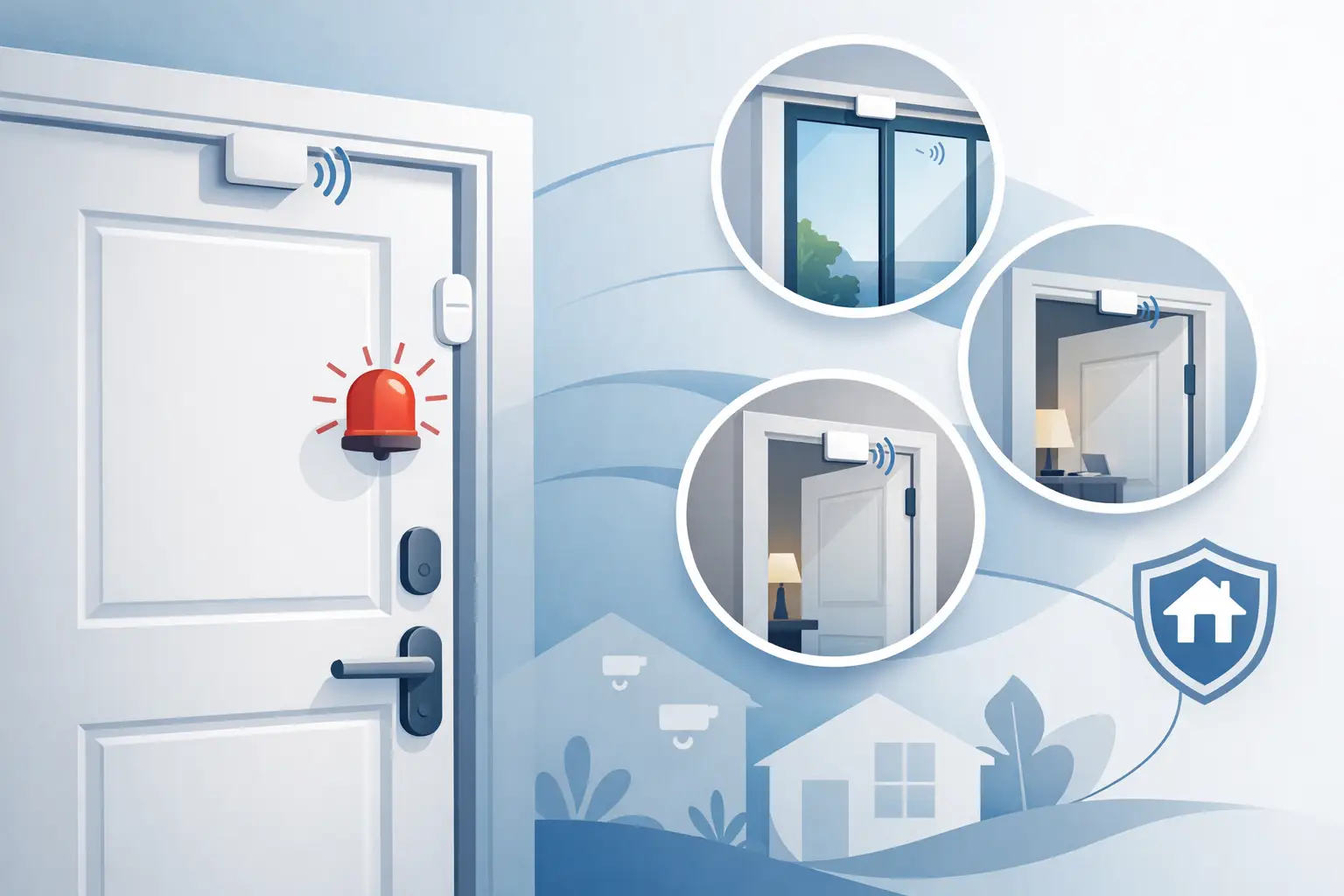
A door alarm only helps if it trips at the right moment. If you have ever wondered where to place door alarms, the answer is not just “on the door.” Placement decides whether you get an instant warning when someone opens an entry point or a device that chirps at the wrong time and gets ignored.
The best setup starts with your highest-risk doors, then matches the alarm type to how that door actually works. Front entries, back doors, patio sliders, garage access doors, and even certain interior doors all deserve a different approach. A smart placement plan gives you faster alerts, better coverage, and more confidence when you are home or away.
Start with the doors an intruder is most likely to test. For most homes, that means the front door, the back door, and the door from the garage into the house. If you have a first-floor patio or sliding glass door, that belongs near the top of the list too.
The front door matters because it is used constantly and often sits in plain view, which makes people assume it is secure. The back door matters because it offers more privacy to anyone trying to force entry. The garage-to-house door is often overlooked, but if someone gets into the garage, that interior access point becomes the real problem.
If you are working with a limited budget, protect those doors before anything else. A smaller setup placed correctly beats a bigger setup scattered without a plan.
For most magnetic door alarms, the main unit goes on the door frame and the magnetic contact goes on the moving door itself. You want both pieces close together when the door is closed, usually within the gap recommended by the manufacturer. In most cases, placing them high on the door, near the top corner opposite the hinges, works best.
That high placement gives you a few advantages. It is less likely to be bumped by kids, pets, bags, or daily traffic. It is also harder for someone to notice and tamper with quickly. On many doors, the upper corner opposite the hinges has cleaner movement, which helps the sensor separate cleanly the second the door opens.
If the alarm has a built-in siren, think about audibility as well. Mount it where the sound can carry into the home, not where it is muffled by heavy trim, curtains, or nearby furniture. You want to hear it fast, especially at night.
In most cases, place the alarm on the inside of the home, not the exterior-facing side of the door. Indoor placement protects the device from weather, temperature swings, and easy access by anyone outside. It also keeps the alarm more discreet.
If you are deciding between the hinge side and the opening side, the opening side is usually better for magnetic contact alarms. That is where the separation becomes most obvious as the door starts to open. The sensor tends to respond more consistently there.
Your front and back doors need reliable alerts without creating daily frustration. Since these doors open often, bad placement can lead to nuisance alarms, weak adhesion, or misalignment.
On a front door, mount the alarm high enough to stay out of routine contact but not so high that battery changes become a chore. The top inside corner is usually the sweet spot. Make sure the sensor pieces line up perfectly when the door is shut. Even a slight offset can cause false alarms or missed triggers over time.
For a back door, use the same high inside placement, but pay extra attention to door play. Back doors sometimes shift more from humidity, heat, or heavier use. If the frame is slightly uneven, test the alarm several times after installation. A device that works once is not enough. It needs to trigger every time the door opens, not just when everything sits perfectly.
Sliding glass doors are one of the most common weak points in a home. They are large, visible, and often less solid than a front entry door. If you are asking where to place door alarms on sliders, the answer depends on whether you are using a contact alarm, a vibration alarm, or both.
For a basic magnetic contact alarm, place the sensor where the moving panel meets the fixed frame when fully closed. Many people install it near the top of the sliding door frame because it stays out of the way and reduces accidental bumps. The key is making sure the moving panel cleanly separates from the magnetic contact the moment the door starts to slide.
For extra protection, a vibration or glass-break style alarm can help on the glass itself or nearby frame, especially if you worry about forced entry rather than simple opening. Sliders are a good example of why one placement strategy does not fit every door. If the door can be lifted, jostled, or tampered with before it opens, backup coverage matters.
Many sliding doors have a locking point in the middle section. That does not mean the alarm belongs there. Place the sensor where the opening movement is most consistent, not where the lock looks most obvious. Consistent triggering always beats visual symmetry.
A detached garage side door and the interior door from the garage into the home are both smart places for alarms. These doors are often quieter, more hidden, and less likely to be watched by neighbors. That makes them attractive entry points.
On the garage-to-house door, mount the alarm on the house side of the frame if possible. You want to hear the alert inside the home right away. If your garage gets very hot or cold, check the alarm’s temperature tolerance before installation. Extreme garage conditions can affect adhesive backing and battery life.
On an exterior side garage door, use the same top-corner placement rule as a standard entry door. Just make sure the surface is clean and dry before mounting. A poorly attached sensor is a weak link no matter how good the product is.
Not every door alarm belongs on an exterior entry. Interior placement can make sense if you want to know when someone enters a restricted room, a home office, a gun safe room, a storage area, or a child’s bedroom door at night.
In those cases, the same general rule applies: place the alarm high, inside the room or hallway where you want the sound and awareness. The reason matters here. If your goal is to be alerted when someone enters a room, position the alarm so the person cannot easily disable it before the door opens wide.
Interior alarms are also useful for apartment living. If you cannot modify an exterior building entrance, you can still secure your own apartment door and key interior points.
The biggest mistake is mounting the two sensor pieces too far apart. If the magnet and alarm unit are not within the required range, the system may act unreliable from day one. Follow the spacing guidance exactly and test it repeatedly.
Another mistake is placing alarms too low. Low placement makes them easier to spot, kick, knock loose, or tamper with. It also exposes them to more daily wear.
People also forget to account for door movement. Some doors sag, stick, or shift with the seasons. If your door alignment changes even slightly, an alarm that seemed fine in mild weather may fail later. That is why post-install testing matters.
Finally, do not place a door alarm where curtains, blinds, decor, or stored items interfere with its function. Security gear should not fight your house setup. It should work with it.
Once the alarm is mounted, open and close the door multiple times at different speeds. Open it slowly to see when the alarm triggers, then open it normally as you would in real life. If the device only sounds after the door is already halfway open, the placement may need adjustment.
Test the sound from the rooms where you are most likely to be sleeping, working, or relaxing. A loud alarm in the hallway may sound much weaker behind a closed bedroom door. If you cannot hear it where it matters, repositioning may be worth it.
Battery access also matters. If changing batteries is annoying, people delay it. Practical security is the kind you will actually maintain.
There is no single perfect answer for every home, but there is a strong rule of thumb: place door alarms on the inside, high on the frame, aligned tightly with the contact piece, and focused first on the doors most likely to be used for entry. Front, back, garage-access, and sliding doors usually deserve attention before anything else.
That kind of setup does more than make noise. It gives you earlier warning, more control, and a stronger sense that your home is not an easy target. If you take a few extra minutes to place each alarm with purpose, you are not just installing a device – you are building a smarter first line of defense.






YOU’RE IN!
Use this code on every order
🎉
Here’s Your Code!
Use it now an on every future order.
YOUR DISCOUNT CODE
We also sent this code to your email for safekeeping.
EXCLUSIVE OFFER
Every order – not just your first!
Unlock Your Discount Instantly
Enter your email below and your personal 15% discount code appears right here – no need to check your inbox.
🔒 We respect your privacy. Unsubscribe anytime.